
Jan 20, 2026
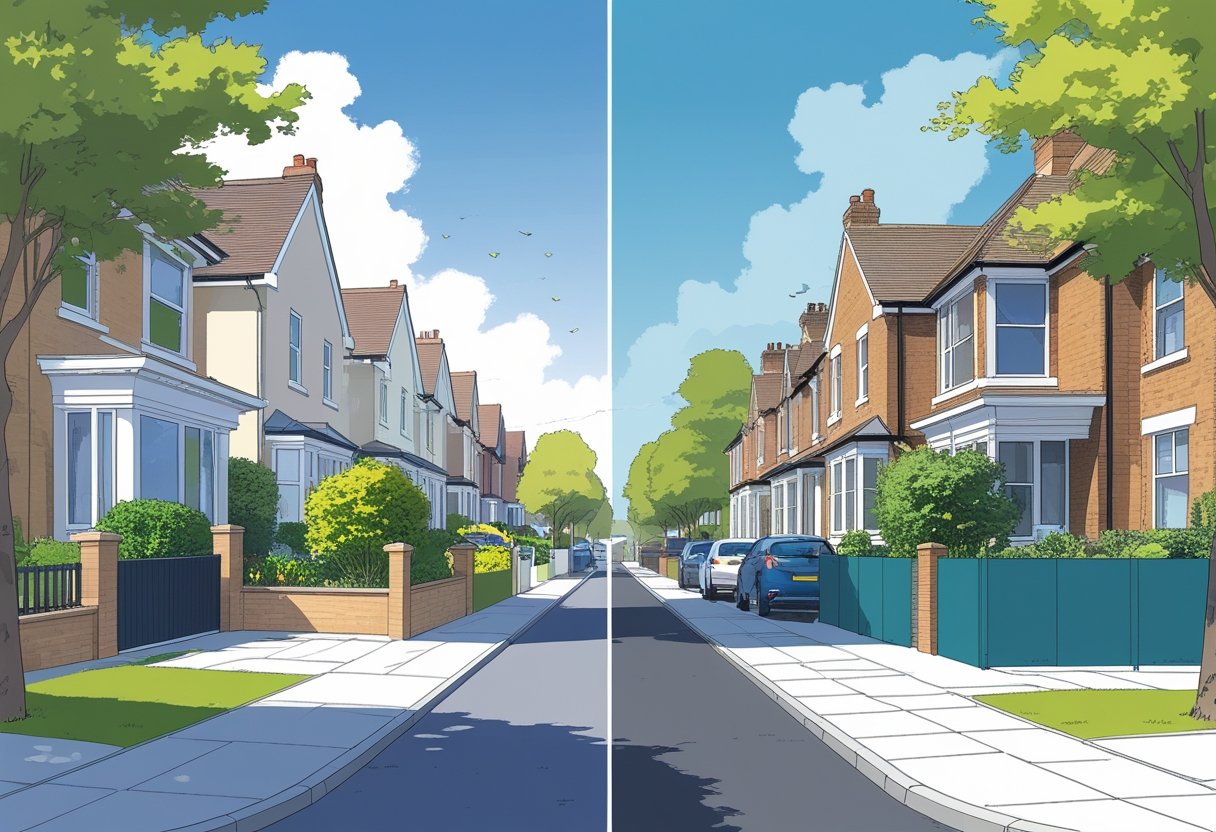
You might see two nearly identical extensions on the same street, yet one gets approved and the other gets refused. This happens more often than you think, and it leaves many homeowners confused and frustrated.
The difference between approval and refusal usually comes down to specific design details, local planning policies, and how well the application addresses council concerns about character, impact on neighbours, and streetscape appearance. Even when neighbours have similar extensions already built, councils sometimes refuse new applications. They may argue that each case needs individual assessment or that planning policies have changed since earlier approvals.
Understanding what separates successful applications from rejected ones can save you time, money, and disappointment. Some councils apply stricter standards to certain extension types, particularly two-storey side extensions and visible front alterations. Learning the key factors that influence these decisions helps you design an extension that stands a better chance of approval.
Key Takeaways
The same type of extension can receive different decisions on the same street based on design details and how well it meets local planning policies
Councils consider factors like visual impact, neighbour effects, and streetscene character when deciding between approval and refusal
Understanding permitted development rights and local authority requirements helps you avoid common refusal reasons before you apply
Defining Extension Approval and Refusal: Core Principles
Extension decisions hinge on specific planning criteria that local planning authorities must apply consistently. Understanding what qualifies for approval versus refusal helps you predict outcomes and strengthen your application.
What Constitutes Extension Approval
Your extension receives approval when it meets all relevant planning criteria set by your local planning authority. For permitted development rights, this means staying within size limits and height restrictions without needing full planning permission.
Prior approval applications require the council to assess specific aspects only. These include impact on neighbouring amenity, external appearance, and compliance with size parameters. The authority cannot consider broader planning matters outside these defined areas.
Full planning applications undergo more detailed scrutiny. Your proposal must demonstrate acceptable impacts on:
Neighbouring amenity - privacy, light, and outlook
Design quality - materials, scale, and architectural merit
Character - fit with the street scene and local area
Access - parking and highway safety
Approval means your plans satisfy the relevant policies and guidance. The decision confirms your extension will not cause unacceptable harm to neighbours or the surrounding area.
Typical Reasons for Refusal
Extensions get refused when they breach planning policies or cause significant harm. The most common grounds involve excessive impact on adjoining premises through overlooking, loss of light, or overbearing presence.
Design failures trigger refusals frequently. Your extension might use inappropriate materials, poor proportions, or clash with the existing building's character. Local planning authorities assess external appearance beyond just the principal elevation.
Size and scale problems lead to refusals even under permitted development. Going beyond height limits or encroaching too close to boundaries breaks the rules. Some councils refuse prior approval when extensions appear too large compared to neighbouring properties.
Inadequate information causes refusals too. Missing drawings, unclear measurements, or incomplete forms prevent proper assessment. You need accurate plans showing all elevations and dimensions.
Impact of Previous Decisions on the Same Street
Past approvals on your street do not guarantee your extension will succeed. Each planning application gets assessed on its own merits against current policies.
However, previous decisions create useful context. If neighbouring properties have similar extensions already approved, this strengthens your case for consistency. Planning authorities must treat comparable situations equally unless material differences exist.
Recent refusals matter more than older approvals. Planning policies change over time, and newer decisions reflect current standards. A refusal next door for similar reasons suggests your proposal faces similar obstacles.
The cumulative effect carries weight. Multiple extensions on one street can alter its character significantly, even when individual projects seem acceptable. Your local planning authority may refuse further extensions to prevent overdevelopment.
Permitted Development: When No Permission Is Needed
Some extensions can be built without applying for planning permission through permitted development rights. The key is understanding whether your property qualifies, what size limits apply, and how to prove your development is lawful.
Eligibility Criteria for Permitted Development
Your property must meet specific criteria to use permitted development rights. Flats and maisonettes don't qualify at all. Houses created through change of use from commercial buildings (shops, offices, or agricultural buildings) are also excluded.
Your location matters significantly. Properties in conservation areas, National Parks, the Broads, Areas of Outstanding Natural Beauty, and World Heritage Sites face stricter rules. On these protected sites, many standard permitted development rights don't apply.
Check if your local planning authority has issued an Article 4 Direction for your area. This removes permitted development rights for specific types of work. Previous planning permissions for your house might also have removed these rights through planning conditions.
The curtilage of your property is important too. This is the land that forms part and parcel with your house, usually your garden. All permitted development must happen within this area.
Limits and Conditions for Extensions
Single storey rear extensions can extend up to 6 metres from the original house for detached properties and 4 metres for terraced or semi-detached houses. The extension height can't exceed 4 metres overall.
Two storey extensions have tighter restrictions. They can extend up to 3 metres beyond the rear wall and must be set back at least 7 metres from any rear boundary.
The 50% rule is crucial. All buildings within your curtilage (excluding the original house) can't cover more than 50% of the total curtilage area. This includes your proposed extension, existing extensions, sheds, and garages.
Key height restrictions:
Extensions can't be higher than the highest part of the existing roof
Eaves height can't exceed the existing eaves
Side extensions can't exceed 4 metres in height
Materials should match the existing house where reasonably practicable. Extensions can't project beyond the principal elevation facing a highway.
Role of Lawful Development Certificates
A lawful development certificate provides formal confirmation that your proposed work doesn't need planning permission. You apply to your local planning authority, who must respond within 8 weeks.
This certificate protects you legally. Without it, you're relying on your own interpretation of complex rules. If you get it wrong, the council can take enforcement action requiring you to remove the extension.
The certificate is particularly valuable when selling your property. Buyers and mortgage lenders want proof that extensions were built lawfully. Missing documentation can delay or derail sales.
The application costs less than full planning permission and requires detailed drawings showing the proposed work. The council reviews your plans against permitted development rules. If approved, you have legal proof your extension is lawful.
Types of Extensions Approved or Refused
Different extension types face different approval rates on the same street because each comes with specific size limits, design rules, and impact on neighbours. A loft conversion might sail through whilst a two-storey side extension gets refused, even though both properties sit next door to each other.
Loft Conversions and Dormers
Loft conversions often receive approval because they sit within the existing roof space and cause minimal impact on street appearance. Single rear dormers that stay within permitted development limits rarely face objection.
Front-facing dormers and multiple roof extensions attract more scrutiny. Councils refuse applications when dormers break the roofline too much or when window positions overlook neighbouring gardens. Conservation areas restrict permitted development rights, which means even modest loft work needs full planning permission.
Box dormers that span the full width of a roof usually get refused in areas with traditional character. Hip-to-gable conversions may be approved on one property but refused next door if the original roof form contributes to the street's character. Officers examine each roof design against local policy, not just against what neighbours have built.
Single-Storey and Two-Storey Rear Extensions
Single-storey rear extensions succeed more often than two-storey versions because they follow clearer permitted development rules. Detached houses can extend up to four metres beyond the rear wall, whilst other house types are limited to three metres under permitted development.
Two-storey rear extensions need planning permission and face stricter tests on neighbour amenity. Councils apply the 45-degree or 25-degree rule from neighbouring windows to check for overshadowing and loss of light. One application might pass whilst another on the same street fails if the second extension breaks these angles.
The larger home extension scheme allows single-storey rear extensions beyond standard limits—up to eight metres for detached houses and six metres for others—but requires prior approval. Councils must run a 21-day neighbour consultation and decide within 42 days. Extensions that block too much daylight or feel overbearing get refused even under this route.
Side and Side Return Extensions
Side extensions face the toughest approval process because they change the street scene. Councils refuse side extensions that remove gaps between houses or create a terracing effect, particularly when spacing defines the street's character.
Single-storey side return extensions on semi-detached and terraced houses often gain approval because they fill underused space without affecting the front elevation. Two-storey side extensions must step back from the front wall and use matching materials to appear subordinate to the original house.
On Article 2(3) designated land such as conservation areas, all side extensions require planning permission. One neighbour's approval does not guarantee yours will pass. Officers assess each design individually against policy on spacing, scale, and materials.
Wraparound and Outbuildings
Wraparound extensions combine rear and side return extensions to maximise ground floor space. These succeed when the side element respects street spacing and the rear portion meets standard depth limits.
Councils refuse wraparound schemes that bulk up a property disproportionately or overshadow multiple neighbours. The combined footprint must not overwhelm the original house or break local design guides on roof form and materials.
Outbuildings and garden rooms usually fall under permitted development if they stay below 2.5 metres at the eaves when within two metres of a boundary. Larger garden rooms need planning permission and get refused if they overlook gardens, block light, or feel overbearing. Officers treat substantial outbuildings as extensions and apply the same amenity tests, which explains why one garden room passes whilst another nearby gets rejected.
Factors Influencing Approval vs Refusal
Two neighbouring properties can submit almost identical extension plans, yet one gets approved whilst the other is refused. The outcome usually hinges on how well the design respects local character, whether it harms a neighbour's living conditions, and how much previous development has already taken place on the plot.
Design, Character and Streetscape
Your extension needs to fit the rhythm and appearance of your street. Councils assess whether your proposed materials, roof pitch and window proportions match the surrounding homes. A two-storey side extension on a semi-detached house might be refused if it creates a terracing effect that disrupts the visual gap between properties, whilst a similar design with a recessed front wall and lower eaves height could sail through.
Height restrictions matter enormously. Even when planning permission isn't technically required under permitted development, exceeding four metres at the tallest point on a single-storey rear extension often triggers stricter scrutiny. Councils also look at the roofline: a flat roof extension that projects above your existing ridgeline can jar with a pitched-roof terrace.
The materials you choose send a strong signal. Matching brick, tile colour and window frames to the original house usually works in your favour. Bold cladding or render on a Victorian terrace might be refused for harming character, even if the footprint is identical to an approved extension next door.
Impact on Neighbours and Amenity
Planners measure how your extension affects daylight, privacy and outlook for people living nearby. A design that blocks sunlight to a kitchen window or dining room will likely be refused, whilst the same depth of extension angled away from key windows often wins approval.
Overlooking becomes critical on upper floors. Windows facing directly into a neighbour's garden or bedroom at close range breach privacy standards, but high-level glazing or obscured glass can solve the problem. The neighbour consultation scheme for larger single-storey rear extensions gives adjoining owners a formal say, so addressing their concerns early boosts your chances.
Councils also consider the curtilage of your plot. Overdevelopment that leaves too little garden space or squeezes buildings too close to boundaries raises amenity flags, even when your neighbour doesn't object.
Cumulative Effects and Previous Extensions
Your property's development history shapes what's allowed next. Permitted development rights come with limits and conditions: if a previous owner already built a rear extension, loft conversion or outbuilding, you may have used up the allowance. Two identical houses can face different verdicts simply because one has a clean slate and the other has maximised its permitted volume.
Councils also weigh cumulative impact across the street. If several homes have already extended, adding yet another large structure might tip the balance and change the neighbourhood's character. A modest side extension refused on a heavily developed terrace could be approved three doors down where fewer alterations have taken place.
Planning Process and Local Authority Variations
Local planning authorities handle extension applications through different processes depending on the type and scale of work proposed. The route your application takes and the criteria used to assess it can vary significantly based on local policies and enforcement approaches in your area.
Full Planning Applications vs Prior Approval
A full planning application requires detailed plans and gives the local planning authority broad powers to assess your extension against planning policies. They can consider design, materials, impact on neighbours, highway safety, and many other factors. The statutory decision period is eight weeks, though this can be extended by written agreement.
Prior approval is a streamlined process for certain permitted development rights. For larger home extensions under the prior approval scheme, you submit basic details about the proposed work. The local planning authority has a much narrower scope for assessment. They can only consider specific matters like the extension's impact on neighbouring amenity and whether any external appearance impacts are acceptable.
Prior approval applications must be determined within 42 days unless you agree to an extension of time in writing. If the council fails to respond within this period and no extension exists, deemed consent is automatically granted.
Role of Local Policies and Article 4 Directions
Your local planning authority may have introduced an Article 4 Direction that removes certain permitted development rights in your area. These directions are used to protect the character of conservation areas, areas of special character, or streets where the council wants greater control over alterations.
If an Article 4 Direction applies to your property, work that would normally fall under prior approval instead requires a full planning application. This means the council can assess a wider range of planning considerations. Your neighbours' extensions might have benefited from permitted development rights before the direction was introduced, whilst your application now faces stricter scrutiny.
Consultation, Appeals and Enforcement
Local planning authorities must consult neighbours on full planning applications, typically giving them 21 days to comment. Prior approval applications also require neighbour notification. The weight given to neighbour objections varies between councils and individual planning officers.
If your application is refused, you have the right to appeal to the Planning Inspectorate within six months. The appeal must be determined within 26 weeks under the planning guarantee. Applications that exceed statutory time limits without an agreed extension entitle you to appeal against non-determination or claim a fee refund after 16 weeks.
Councils can issue an enforcement notice if you build without permission or not in accordance with approved plans. You have the right to appeal an enforcement notice within the specified time period.
Legal and Regulatory Considerations Beyond Planning
Planning permission addresses whether you can build, but building regulations approval governs how you must build. Party wall agreements protect both you and your neighbours during construction, whilst listed building consent and drainage requirements can stop projects that have already secured planning approval.
Building Regulations Approval
Building regulations approval is separate from planning permission. You need it for almost all extensions, even those built under permitted development rights.
Building regulations cover structural safety, fire safety, insulation, ventilation, drainage, electrical work, and accessibility. The approval process involves submitting detailed technical drawings and calculations to your local authority building control or an approved inspector. They will inspect the work at key stages during construction.
Common building regulations requirements for extensions:
Foundation depth and design based on ground conditions
Wall construction and insulation values (U-values)
Window and door fire escape provisions
Electrical work certified by a qualified electrician
Drainage connections and falls
Ventilation rates for habitable rooms
Building without approval or failing inspections can lead to enforcement action. When you sell your property, your solicitor will request building regulations certificates. Missing certificates create significant problems during sales and may require expensive retrospective applications or indemnity insurance.
The Party Wall Act 1996 and Boundary Issues
The Party Wall Act 1996 applies in England and Wales when you build on or near a boundary with a neighbouring property. It is separate from planning permission.
You must serve a party wall notice if you plan to build on a party wall, build a new wall on the boundary line, or excavate within three to six metres of a neighbouring building's foundations. Your neighbour has 14 days to respond. If they consent, work can proceed. If they dissent or do not respond, you must appoint party wall surveyors to agree a party wall award.
The award records the condition of neighbouring properties before work starts and sets out how the work will proceed. It protects both parties. Failure to serve notices under the Party Wall Act can result in injunctions stopping your work and claims for damages.
Party wall disputes are the most common reason extensions that have planning approval cannot proceed on schedule. Serve notices early, before you book contractors.
Listed Building and Conservation Area Constraints
Listed building consent is required for any work that affects the special interest of a listed building, both internally and externally. Planning permission alone is not sufficient.
Carrying out work to a listed building without consent is a criminal offence. Councils can require you to reverse unauthorised work, even if it has planning permission. Listed building consent also covers buildings within the curtilage of a listed building, such as outbuildings or boundary walls constructed before 1948.
In conservation areas, you face tighter planning controls and often need consent for works that would be permitted development elsewhere. External walls, roofs, and windows may require specific materials and detailing to preserve the area's character.
Applications in conservation areas typically require heritage statements explaining how your design respects local character. Many conservation areas have Article 4 Directions removing permitted development rights entirely.
Drainage and External Works
Drainage approval is required when you connect new foul drainage to the public sewer or build near existing sewers. You need approval from your local water company under the Building Act 1984.
New extensions must connect to existing drainage with proper falls, access points, and venting. Surface water drainage should connect to soakers or sustainable drainage systems where possible, not to the foul sewer. Building regulations will reject drainage designs that do not meet current standards.
External works including new hard standing, driveways, and patios larger than five square metres require permeable materials or drainage to prevent water running onto public highways. Non-compliance can trigger enforcement action separate from your extension approval.
Frequently Asked Questions
When you compare approved and refused extensions on the same street, specific technical factors separate success from failure. These answers address the practical tests councils use and what you need to get right.
What factors influence the approval or rejection of planning permission for property extensions?
Councils assess your extension against material planning considerations laid out in local development plans and national policy. Design and scale come first: your extension must be subordinate to the original house and match local character in form, materials and detailing. If your proposal overwhelms the host dwelling or looks out of place on the street, officers will refuse it.
Neighbour amenity carries equal weight. Case officers examine privacy, daylight and sunlight loss, and whether your extension feels overbearing to adjoining properties.
Most councils use the 45-degree or 25-degree rules from neighbouring windows, and many require daylight and sunlight assessments following BRE 209 guidance. Your location matters too: conservation areas impose higher design standards, listed buildings need separate consent, and Green Belt sites require you to prove your addition is not disproportionate to the original dwelling.
Protected trees, ecology triggers such as bat surveys for roof work, and flood-risk zones add further tests. If you skip required evidence on any of these points, your application will be refused for insufficient information.
How do local council guidelines impact decisions on residential extension applications?
Every council publishes its own Supplementary Planning Documents and design guides that interpret national policy for local circumstances. These SPDs set the practical limits: maximum projection, height restrictions, separation distances and amenity tests specific to your borough. What passes in one area often fails in another because the thresholds differ.
For example, one council might accept a two-storey side extension that leaves a 1-metre gap to the boundary, whilst a neighbouring authority demands 1.5 metres. Officers apply these local rules before national policy, so you must check your council's validation checklist and design SPD before you finalise drawings.
Conservation-area appraisals and Article 4 Directions remove or restrict permitted development rights in defined zones. If an Article 4 Direction covers your street, you cannot rely on permitted development and you will need full planning permission even for modest changes.
What crucial differences should homeowners consider when comparing granted and refused extensions in their vicinity?
Approved extensions on your street prove that the council accepts certain scales, materials and roof forms in that context. If multiple neighbours have built two-storey side extensions with matching brick and pitched roofs, your proposal stands a stronger chance if it follows the same approach. Consistency with established precedent demonstrates that your design respects local character.
Refused schemes usually fail on one or more technical grounds: excessive scale relative to the host dwelling, harm to neighbour amenity through loss of light or privacy, or poor design that conflicts with SPD guidance. Review the refusal reasons on the planning portal to identify the specific policy tests that were breached.
Pay attention to site-specific constraints. An extension approved on one plot may be refused on yours if your neighbour's windows sit closer to the boundary or if your property lies in a conservation area whilst theirs does not. Subtle differences in orientation, boundary distances and planning designations change the outcome even when the designs look similar.
What are the typical grounds for appeal if an extension proposal is declined?
You have 12 weeks from the decision date for the Planning Inspectorate to receive your householder appeal; miss this deadline and you lose the right to appeal. Most appeals argue that the council misapplied policy, gave insufficient weight to precedent, or made errors in fact. If the refusal cites harm to character and you can demonstrate that similar extensions were approved on the same street, that precedent becomes a material consideration the inspector must weigh.
Where the refusal turns on amenity, you can submit new daylight and sunlight evidence or revised plans that address the specific concern. Inspectors review the proposal afresh against the development plan and national policy; they are not bound by the council's original assessment.
Appeals take around 8 to 12 weeks for the written-representations route, which is the most common for householder cases. If the refusal reasons are narrow and you have clear evidence to counter them, an appeal may be quicker and cheaper than a full redesign and resubmission.
How can homeowners enhance their chances of obtaining consent for a home extension?
Start by confirming whether you have permitted development rights or whether an Article 4 Direction applies to your property. If permitted development does not cover your proposal, you need full planning permission or, for larger single-storey rear extensions, prior approval. Applying for a Lawful Development Certificate before you start work locks in certainty and avoids retrospective disputes.
Align your design with local SPD guidance on scale, materials and separation distances. Commission proportionate supporting evidence early: a daylight and sunlight assessment if your extension is close to a neighbour's window, a heritage statement for listed buildings or conservation areas, and ecology surveys where roof or eaves work might affect bats. Submitting complete, validation-ready applications with the correct plans, scales and red-line boundaries prevents refusals for insufficient information.
Engage with your case officer through a pre-application discussion or duty-planner call. Officers can flag policy concerns and suggest design tweaks that turn a marginal scheme into an approvable one. Early professional input from a chartered town planner ensures you design once, submit once and avoid costly revisions.
What role does neighbourhood precedent play in the decision-making process for approving extensions?
Precedent is a material planning consideration, but it is not determinative. If several houses on your street have similar two-storey side extensions, that pattern shows the council previously judged such additions acceptable in terms of character and amenity. When you cite these examples in your planning statement, officers and inspectors must give them weight, especially if the approved schemes are recent and closely comparable in scale and design.
However, precedent cannot override clear policy breaches. If your proposal exceeds the height or projection limits in the local SPD, or if it harms a neighbour's amenity in a way the earlier approvals did not, the council will refuse it regardless of what exists nearby. Each application is also assessed on its own merits: differences in plot size, boundary relationships and orientation mean an extension that worked next door may not work on your site.
Use precedent strategically by documenting approved schemes with planning references, photographs and measured comparisons. A well-researched planning statement that shows consistency with the established street pattern strengthens your case and demonstrates that refusal would be inconsistent and unfair.