
Feb 25, 2026
If your home is in a conservation area, you need to know this before you spend a penny: the normal rules for extensions do not apply. Getting this wrong can lead to a planning refusal that costs you time and thousands in wasted fees.
Projects that are simple elsewhere will almost certainly need a full conservation area planning permission application. This guide will show you how to navigate the rules and avoid the common mistakes that lead to costly refusals.
What Living in a Conservation Area Means for Your Extension
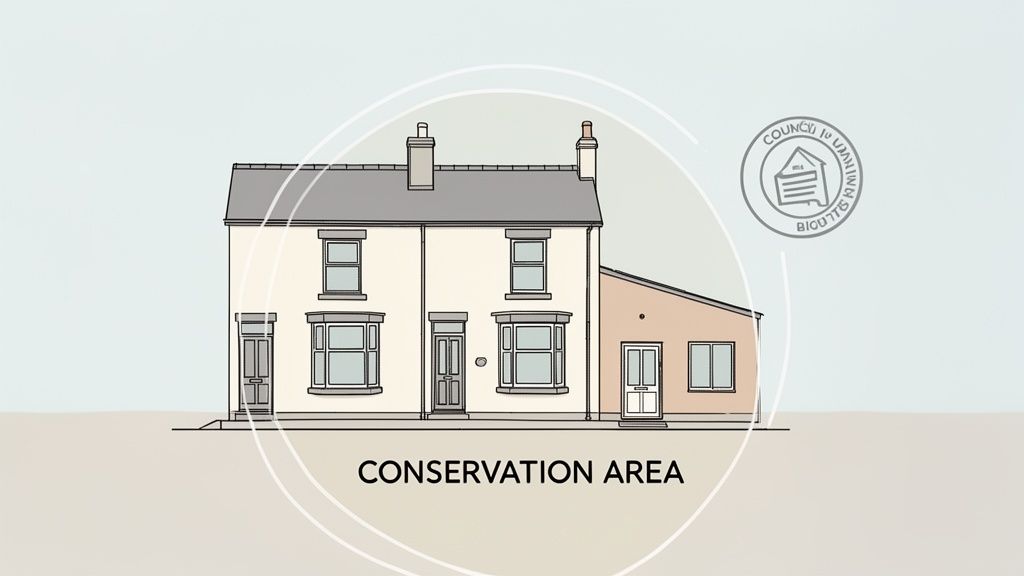
Living in a conservation area means your home is in a place recognised for its special architectural or historic character. Why should you care? Because the council’s job is to preserve that unique character, giving them extra control over the changes you can make.
It's not just about grand listed buildings. It’s about the entire look and feel of the neighbourhood. Think period houses, unique street patterns, mature trees, and even traditional walls. This extra layer of protection means work visible from the street gets special attention.
How It Affects Your Plans
The biggest change for you is the restriction of permitted development rights. These are standard rules that let people do smaller projects, like a minor extension, without a full planning application.
In a conservation area, many of these automatic rights are removed. The council does this to stop many small, unmanaged changes slowly damaging the special character of the area. For you, this means you will almost certainly have to apply for full planning permission for projects that your friends outside the area can do without it.
Standard Rules vs Conservation Area Rules
This table shows how common projects are treated differently. It helps you see the impact on your plans.
Project | Outside a Conservation Area | Inside a Conservation Area |
|---|---|---|
Small Rear Extension | Often permitted development (up to size limits) | Almost always requires full planning permission |
Two Storey Extension | May be permitted development if it meets strict criteria | Requires full planning permission |
Side Extension | Often permitted development | Not permitted development; requires full planning permission |
Loft Conversion with Dormers | Permitted development if not facing a road | Requires planning permission, especially if visible from the street |
Replacing Windows | Usually permitted development (if like for like) | Often requires planning permission, especially if materials or style change |
Demolishing a Wall | Usually permitted development | Requires consent if over 1m high next to a highway or 2m elsewhere |
Assuming you can build without checking first is a costly mistake. If you do work without the right permission, the council can issue an enforcement notice. This would force you to tear it all down at your own expense.
Finding Out if You Live in One
There are about 10,000 conservation areas in England. Even small work like removing a tree with a trunk over 7.5cm thick often requires consent.
The easiest way to check if your home is affected is on your local council's website. Most have an interactive map where you can enter your postcode to see the boundaries. Understanding the specific conservation area planning restrictions for your property is a critical first step.
Why Your Permitted Development Rights Are Restricted
If you live in a conservation area, you cannot assume you can build what your neighbours elsewhere have built. The rules are completely different, and knowing this will help you avoid an enforcement notice ordering you to undo your work.
Your permitted development rights are restricted for a good reason. They allow the council to protect the special architectural character of your neighbourhood. Without this control, lots of small changes could slowly damage the look of the area. It is why you must apply for planning permission for work that is fine elsewhere.
Understanding Article 4 Directions
There is another layer of rules to know about called an Article 4 Direction. This is a planning tool many councils use to add even more control over changes.
An Article 4 Direction is a special planning rule that removes more permitted development rights. It can cover small things like painting your front door, replacing a fence, or swapping windows. Its purpose is to preserve the exact details that make your area unique.
If one affects your property, you will need to apply for planning permission for work that might not otherwise need it. This is a common tripwire for homeowners. I have seen projects stopped simply because someone changed timber windows to uPVC, a task that seems minor but often needs permission under these rules.
To get a clearer picture of what is allowed, you can learn more about how permitted development rights are affected in a conservation area.
How to Check for an Article 4 Direction
Finding out if an Article 4 Direction affects your home is straightforward. Your local council's website is the best place to look. You can usually find the details on their planning portal by searching your address or looking at their maps.
A quick check can save you a lot of trouble. It can reveal restrictions on things like:
Windows and Doors: Often preventing the use of modern materials like uPVC.
Roofing: Controlling the type and colour of tiles you can use.
Porches: Removing the right to add a porch to the front of your house.
Fences and Walls: Dictating the height and materials of boundary walls.
Knowing these specific rules upfront stops you from wasting money on designs that will be rejected. It gives you clarity on what needs permission so you can plan correctly from the start.
Common Design Mistakes That Lead to Refusal
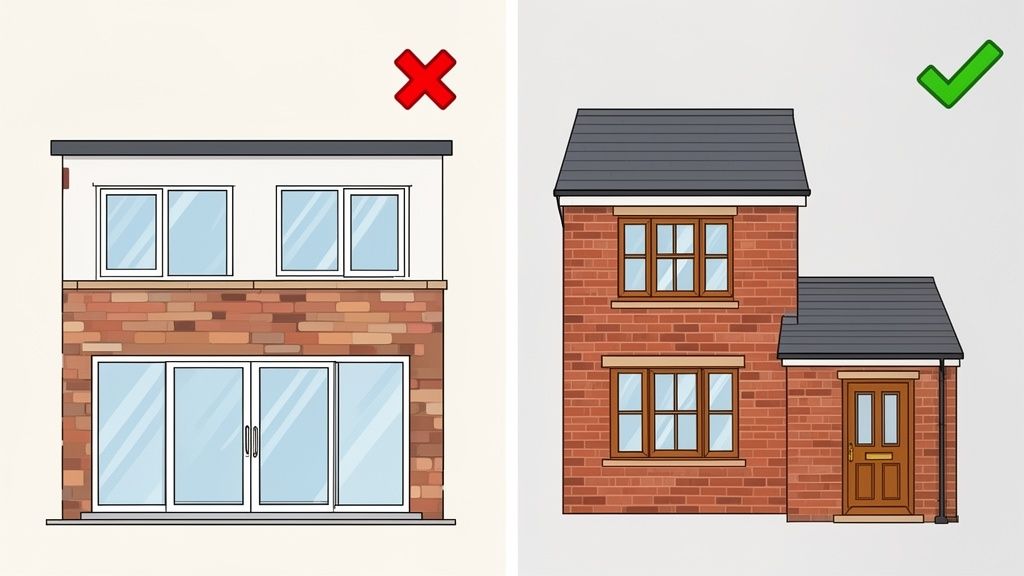
Getting your design wrong is the fastest way to a planning refusal. This can cost you thousands in wasted architect and council fees. For conservation area planning permission, a design that ignores the local character is almost certain to fail.
The key is to think like a conservation officer. Their job is to preserve the unique feel of the area. This means your choices, from window frames to roof tiles, will be closely examined.
Materials That Cause Immediate Problems
One of the most common mistakes is choosing modern materials that clash with a historic setting. Certain choices act as immediate red flags for planners.
For example, using standard uPVC windows is a classic error. If the original windows on your street are traditional timber, your council will almost certainly insist you use timber to match. An application to replace windows with uPVC can be enough to get a refusal.
The same logic applies to other materials. An extension built with bricks that do not match the main house in colour or texture will be seen as a jarring addition. Using modern concrete roof tiles on a property that should have natural slate is another frequent reason for rejection.
A design that looks out of place is said to ‘harm the character of the conservation area’. You will see this phrase in council refusal notices. It means your project fails the most basic test.
Design and Scale Issues to Avoid
The shape and size of your proposal are just as critical as the materials. A modern, box like extension with a flat roof on a Victorian house will almost certainly be rejected. Planners want to see a design that is 'subservient' to the original building, meaning smaller and less visually dominant.
Here are some design choices that often lead to a swift refusal:
Large, uninterrupted glass: Big bifold doors or floor to ceiling glass can look out of place on a period property.
Incorrect roof pitch: The angle of your new roof should generally match the main house. A shallow pitch on a dormer can be a point of contention.
Bulky dormer windows: Dormers need to be in proportion to the roof. Large, boxy dormers that dominate the roofline are rarely accepted.
Visible modern features: Exposed modern gutters, shiny downpipes, or awkwardly placed boiler flues on a main wall can also contribute to a refusal.
These details may seem small, but they are exactly what conservation officers are trained to spot. Getting them right from the start is the best way to improve your chances of approval.
How to Check Your Real Chances of Success Before Spending Thousands
Before you commit thousands to architect fees or pay the £258 for a council application, you need a realistic sense of your project's chances. The best way to avoid a costly refusal is to do your homework to figure out what your council is likely to approve.
The good news is that every planning decision is public record. Your local council’s website has a planning portal where you can research past applications on your street. This is the most valuable tool for understanding the unwritten rules of your neighbourhood.
Researching Local Planning Decisions
Do not just look for approvals. The refusals are where you learn the most. When you find a rejected project similar to yours, open the ‘decision notice’ and find the ‘planning officer’s report’. This document explains in plain English the exact reasons for the refusal.
After reviewing a few of these, you will start to see a clear picture of your council's priorities. Patterns will emerge, giving you a strong sense of what is acceptable and what is not.
Your goal is to answer these questions:
Have similar extensions been approved nearby? Look at their size, style, and materials.
What were the specific reasons for any refusals? Look for phrases like "out of character" or "poor quality materials."
Are there common conditions on approvals? Councils often demand specific brick types or window styles.
This research takes time. But it gives you powerful insights, letting you shape your plans based on what has already worked, not just guesswork.
Using Data to Get a Clearer Answer
National statistics show that planning approval rates in England are around 87%. This figure can be misleading for conservation areas. These properties face much stricter checks, which significantly raises the risk of refusal if a design is not sensitive to its surroundings. You can read more about these government findings on planning statistics.
An evidence based approach is your best defence against wasting money. You use real data from past applications to guide your decisions. This is how you shift the odds in your favour.
SurePlan exists to do this hard work for you. We provide evidence, not guarantees. Our planning refusal risk checker can quickly identify local approval patterns, pinpoint common reasons for refusal, and give you a clear confidence score for your project. Armed with this knowledge, you can move forward with confidence, tweak your design to avoid known problems, or rethink your plans before you invest thousands in a project that was likely to fail.
So, your project needs conservation area planning permission. What happens next?
Understanding the process helps set realistic expectations for your timeline and budget. Be prepared for the journey from submitting your application to getting a decision to take at least 8 to 13 weeks, and often longer.
The process is complicated. You will need to prepare detailed documents that justify your project. Breaking it down into clear stages makes it more manageable.
Key Documents Your Council Will Expect
Your application needs to tell a story about why your project should be approved. Two documents are critical for this.
A Design and Access Statement is your chance to explain the thinking behind your design. It shows the council you have considered the site and its surroundings.
A Heritage Statement is also often required. This document explains how your project respects the historic character of the conservation area. It must prove your proposal will preserve or enhance what the council is trying to protect.
If you miss these, your application might not be accepted. This means instant delays before you have even started.
The Four Main Stages of an Application
Once you have submitted your application, it follows a standard path. This diagram shows the key steps to making a smart decision before you apply.
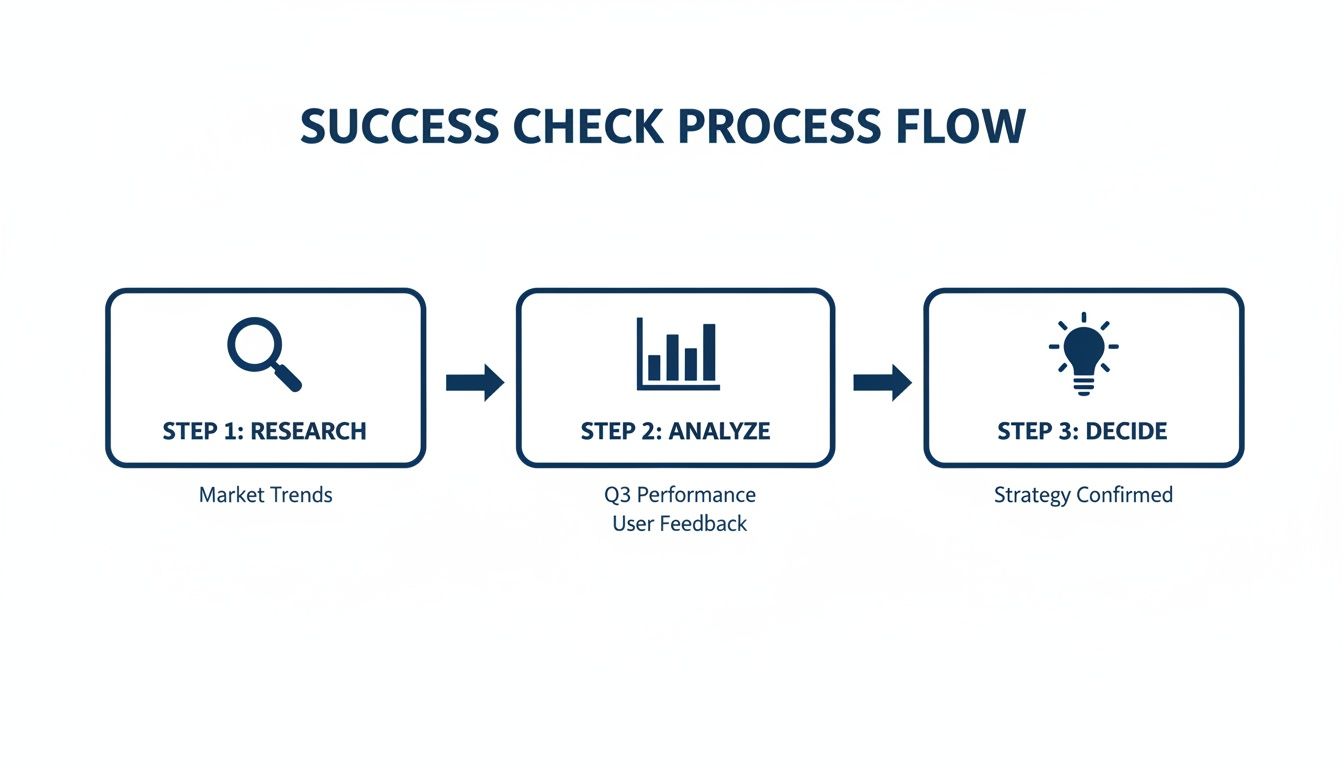
A successful outcome starts with research and analysis before you commit to the formal process. Here are the stages your council will follow once they have your application:
Validation: Council staff check that your application includes all the necessary documents and the correct fee. This takes a week or two.
Consultation: Your application is made public. Neighbours and other groups can comment on your plans for a 21 day period. The council's own conservation officer will also give their opinion.
Site Visit and Assessment: A planning officer will visit your property. They will see how the proposal works in its real world context. They then write a report recommending approval or refusal.
Decision: The council makes a formal decision. This is usually done by senior planning officers. Larger or more difficult applications may go to a public planning committee for a vote.
While local authorities granted 66,400 decisions with an 87% approval rate in one recent quarter, applications in conservation areas face much tougher scrutiny. You can learn more by reviewing the latest official planning application statistics.
So, What Are Your Next Steps?
Navigating conservation area planning permission can feel complex, but breaking it down into clear steps puts you in control. Your project will face more checks than a standard application. Your job is to develop a design that preserves or enhances the local character.
An early, low cost evidence check is often the best money you can spend. It stops you from wasting thousands on professional fees for a project that was likely to fail from the start.
This checklist will guide your next moves. It helps you make smart decisions before committing serious money to your project.
Your Action Checklist
Confirm your status: First, go to your council's website. Use their interactive map to see if your home is in a conservation area. While you are there, check if an Article 4 Direction affects your property.
Research local precedents: Spend time on the council's planning portal. Search for similar projects on your street. Read the officer reports for approvals and refusals to understand what works.
Consider a data led check: A SurePlan report automates that research. It digs into local data to give you a clear confidence score in under 24 hours. It is a fast way to get an objective view before you commit.
Engage an architect (at the right time): Only bring in a professional once you have a solid idea of what is feasible. A good architect with conservation area experience is valuable, but hiring one too early is a waste of money.
Approaching your project with this clarity means you can move forward with confidence. You will know you have done your homework and are in a good position for a successful outcome.
Frequently Asked Questions
It is natural to have questions when dealing with planning in a conservation area. Here are some of the most common ones we hear from homeowners.
Can I Replace My Windows in a Conservation Area?
Usually, yes, but you will almost certainly need planning permission. The key phrase is ‘like for like’. If your home has traditional timber sash windows, the council will likely reject a plan to install modern uPVC frames.
The point is to keep the original style and materials. Before ordering expensive new windows, you must check your council’s specific guidance. An evidence report can also remove the guesswork by showing you what has already been approved on similar houses nearby.
How Much Does Conservation Area Planning Permission Cost?
The application fee itself is currently around £258 in England. But that is only a small part of the total cost. You will also need to budget for detailed architectural drawings and possibly a heritage statement, which can add several thousand pounds.
The biggest financial risk is not the initial fee. It is getting a refusal and having to pay for new drawings and another application fee to try again. This is why a quick, evidence based check upfront is so important. It can stop you from wasting thousands on a plan that was unlikely to succeed.
What Happens If I Do Work Without Permission?
If you do work without the right permission, the council can issue an enforcement notice. This is a serious legal order that forces you to undo everything you have done, completely at your own expense.
An enforcement notice could mean being ordered to tear down a finished extension. It could also mean ripping out brand new windows and replacing them. It is a stressful, expensive, and avoidable situation. In serious cases, unauthorised work can lead to prosecution and a large fine.
Does Living in a Conservation Area Affect My Property Value?
In the long run, being in a well managed conservation area is generally good for property values. The strict planning controls are what stop inappropriate development and preserve the unique character of the area.
Yes, it makes renovating more complicated and costly. But many people see this protection as a major long term benefit. It ensures the neighbourhood keeps its special appeal. This tends to support stronger property values over time compared to areas without that protection.
Don't risk a £258 refusal fee and wasted architect costs. SurePlan gives you the evidence you need to move forward with confidence. Get your data-led Planning Confidence Report in under 24 hours.