
Feb 11, 2026
Living in a conservation area means your home is part of a special neighbourhood. But this status comes with extra planning rules that can stop your project and cost you thousands in wasted fees if you get them wrong. This guide gives you the clarity you need to avoid those costly mistakes.
What Living in a Conservation Area Means for Your Project
Discovering your home is in a conservation area can feel like a major problem for your renovation plans. It pays to understand the rules early. Pushing ahead without checking often leads to expensive mistakes, like paying an architect for a design that was never going to be approved.
The biggest change is that your normal ‘permitted development’ rights are usually removed. These are the rights that let other homeowners build small extensions or convert lofts without needing full planning permission.
Why Your Project Faces Stricter Rules
In a conservation area, you will almost certainly need full planning permission for changes your neighbours outside the boundary can make easily. This is because councils have a legal duty to "preserve or enhance" the unique character of these areas.
This extra control applies to many common home improvement projects.
To give you a clearer idea, here is a quick comparison of how the rules often differ for typical projects.
Common Projects Inside vs Outside a Conservation Area
Project | Typical Rules (Outside Conservation Area) | Common Restrictions (Inside Conservation Area) |
|---|---|---|
Rear Extension | Permitted development often allows small extensions without a full application. | Almost always requires a full planning application. Strict rules on size, design, and materials. |
Window Replacement | Usually permitted, especially if like for like. | Often forbidden to use uPVC. Replacements must match original style and material like timber sash. |
Loft Conversion | Often falls under permitted development, even with dormers. | Dormers, especially street facing ones, are heavily restricted or refused. Rooflights need permission. |
Painting Exterior | Generally allowed without permission. | May require planning consent, especially for colour changes that affect the street's character. |
Boundary Walls/Fences | Allowed up to certain heights without permission. | Demolishing or altering walls often needs specific "conservation area consent". |
As you can see, the bar is set much higher. Councils check every detail. They believe every small change from a window frame to a roof tile contributes to the overall look of the neighbourhood.
The Scale of Conservation Areas
These restrictions are more widespread than you might think. In England alone, there are now over 10,000 conservation areas, covering about 2.2% of the country.
This means that even seemingly minor work, like installing solar panels or changing your front door, often requires full planning permission. Homeowners elsewhere can frequently skip this step. You can explore these designations in more detail through Historic England's research on conservation areas.
A conservation area isn't about protecting one building. It is about safeguarding the character of a whole place. That's why councils control even small external changes that could alter the unique feel of your street.
It is also crucial not to confuse these rules with those for listed buildings. A property can be both listed and in a conservation area. But the two designations are separate and have different regulations. You can get the full picture in our guide to listed buildings vs conservation areas. Our aim is to give you a clear, jargon free understanding of these challenges so you can avoid costly errors right from the start.
The Most Common Planning Restrictions You Will Face
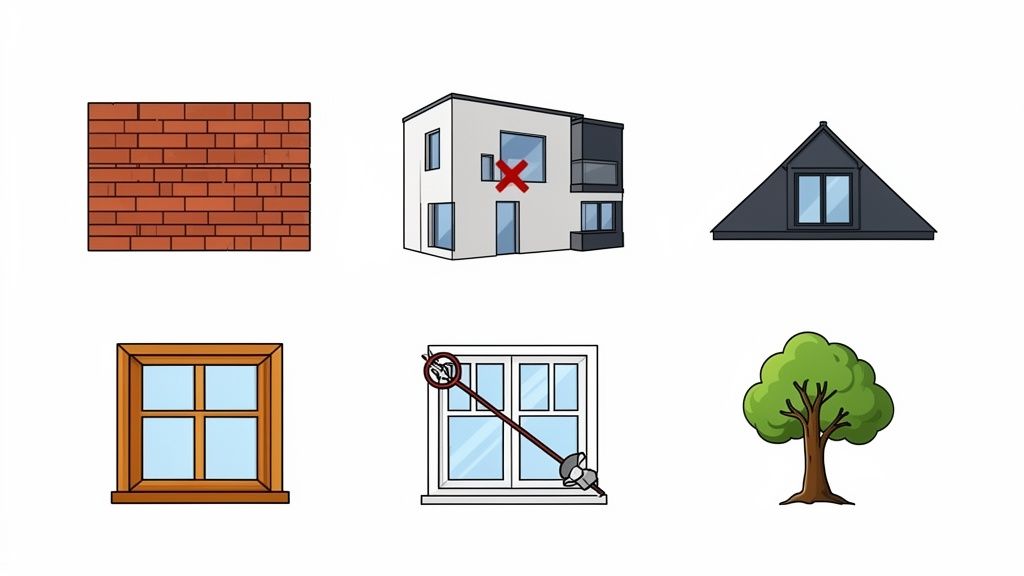
Getting the specific rules wrong is the biggest reason projects in conservation areas fail. This mistake can lead to a £258 refusal fee from your council, not to mention thousands lost on architectural drawings you cannot use.
To avoid this trap, you need to think like the council's conservation officer. Their job is to protect the area's special character. This means they check details that would be ignored almost anywhere else. Your proposal must "preserve or enhance" this character. You will see that phrase repeatedly.
Extensions: Size, Materials, and Style
When it comes to extensions, planning officers look far beyond just the size. The materials and architectural style are just as important. A design that feels out of step with the existing property or the wider street is a classic reason for refusal.
For instance, a modest brick extension using reclaimed bricks that match your Victorian terrace is far more likely to get approved. But a similarly sized extension finished in a bright white render could be rejected for being visually jarring. The aim is for the new part to look like it has always been there or to be a sensitive addition.
Window and Door Replacements
Replacing windows and doors is a classic conservation area pitfall. Many homeowners assume they can install modern, low maintenance uPVC windows, only to have their application refused.
Councils will almost always insist on materials that match the building's original construction. This usually means timber.
Timber Sash Windows: If your home originally had vertical sliding sash windows, the council will likely demand that any replacements are made from timber and follow the same design.
Door Styles: A modern composite door with a contemporary design can be seen as harmful to the character of a period property. Planners will look for a design that is in keeping with the building's age.
Double Glazing: Councils understand the need for better energy efficiency. But they may require specialist slimline double glazing that mimics the delicate look of single panes.
Roof Alterations and Dormers
Changes to your roofline are highly visible. They are subject to very strict conservation area planning restrictions. Adding a dormer window for a loft conversion is particularly tricky, especially if it faces the street.
Planners will often demand that dormers are small, set back from the eaves, and finished in traditional materials like lead or slate. Large, flat roofed 'box dormers' that are common elsewhere are almost always refused. This is because they dominate the original roof and disrupt the historic character.
The core principle is simple but strict. The council's job is to protect the shared appearance of the street. Any change to your home, from a roof tile to a front gate, is judged on how it affects that collective character.
Exterior Finishes: Painting and Cladding
You might think that painting your house is your own business, but it often isn’t in a conservation area. If your home is unpainted brickwork, for example, painting it could require planning permission. This is especially true if it would be the only painted house on a terrace of natural brick homes.
Similarly, adding modern cladding or pebble dash to the exterior is almost always a non starter. These materials are seen as fundamentally altering the original character of the building.
Trees, Walls, and Outbuildings
The protection does not stop at your house. The rules often extend to your entire plot.
Trees: Many trees in conservation areas are automatically protected. You must give your council six weeks' notice before doing any work. Felling a protected tree without permission is a criminal offence.
Boundary Walls: Demolishing or lowering a garden wall that fronts a road often requires a specific type of permission. These walls are considered an integral part of the street's historic fabric.
Sheds and Garages: Even building a garden shed may require a full planning application in these protected zones.
Understanding these specific restrictions before you speak to a designer will help you have a more realistic conversation. It allows you to steer the design towards something that has a genuine chance of being approved. This saves you from a costly and frustrating refusal.
Understanding Article 4 Directions and Why They Matter
Just when you think you understand the rules, another layer of complexity can appear. This is the Article 4 Direction. You need to know this term. It acts like a set of super strict house rules for a specific street or even a small group of homes.
Ignoring an Article 4 Direction is a classic trap that leads to unexpected and costly planning refusals. It can derail a project you thought was perfectly fine, like replacing your front door, and leave you hundreds of pounds out of pocket from wasted application fees.
What Is an Article 4 Direction?
Imagine a conservation area has a standard rulebook. An Article 4 Direction is like an extra chapter added by the council with very specific rules for a small patch. Councils use them when they feel the general rules are not enough to protect a place's unique character.
This extra layer of control is powerful and targeted. It could mean you need full planning permission for jobs your neighbours a few streets away can do freely, even though you are both in the same conservation area. Councils use these directions to stop small, gradual changes that can erode the historic feel of a place. You can dive deeper into how they work in our detailed guide to Article 4 Directions.
The Practical Impact on Your Project
The real impact of an Article 4 Direction is that it removes specific permitted development rights. These are the normal allowances that let homeowners make minor improvements without a full planning application.
Once a direction is in place, the council can insist you get permission for a whole host of works that are usually straightforward.
Replacing Windows and Doors: You might need permission just to swap out a single wooden window, even for a like for like replacement.
Painting Brickwork: Simply changing the colour of your home's exterior could be forbidden without consent.
Adding a Porch: A small porch, normally a permitted development classic, would suddenly require a full application.
Minor Extensions: Even tiny extensions that would sail through elsewhere will need formal approval.
This designation triggers extra controls that go far beyond standard rules. A council can use an Article 4 Direction to demand a planning application for everything from window works to tree removal or painting your brickwork.
An Article 4 Direction essentially tells homeowners, "For this specific street, we are tightening the rules even further." It is the council’s way of ensuring every visible change is checked to protect an area's special character.
How to Check for an Article 4 Direction
Finding out if your property is affected is a critical first step. You must do this before spending a single penny on design work. You cannot afford to make assumptions.
Visit Your Local Council's Website: Start by searching online for your local authority's planning department.
Find the Planning Maps: Look for a section labelled "interactive map" or "planning map". These online tools often have different data layers you can turn on and off.
Search for Your Address: Enter your postcode or street name to zoom in on your property.
Check the Layers: Look for layers you can tick, often labelled "Conservation Areas" and "Article 4 Directions". Ticking these boxes will show you instantly if your home is covered.
This simple check can save you an enormous amount of time, money, and frustration. It gives you the clarity you need to plan a project that has a realistic shot at success right from the very start.
How to Research Local Rules and Past Decisions
Before you spend a single pound on drawings, you need to know exactly what you are dealing with. Diving in based on assumptions can lead to a £258 refusal fee and thousands wasted on design costs. This is not about becoming a planning expert. It is about doing homework to dodge expensive surprises.
This section shows you how to do that initial research. We will show you how to confirm your property's status. Crucially, we will show you how to see what your council has recently approved or refused on streets just like yours. This is the single best way to get a real feel for your chances of success.
The process is simple. Check your home's specific designation. See if any extra rules like an Article 4 Direction apply. Then look at real world examples nearby.
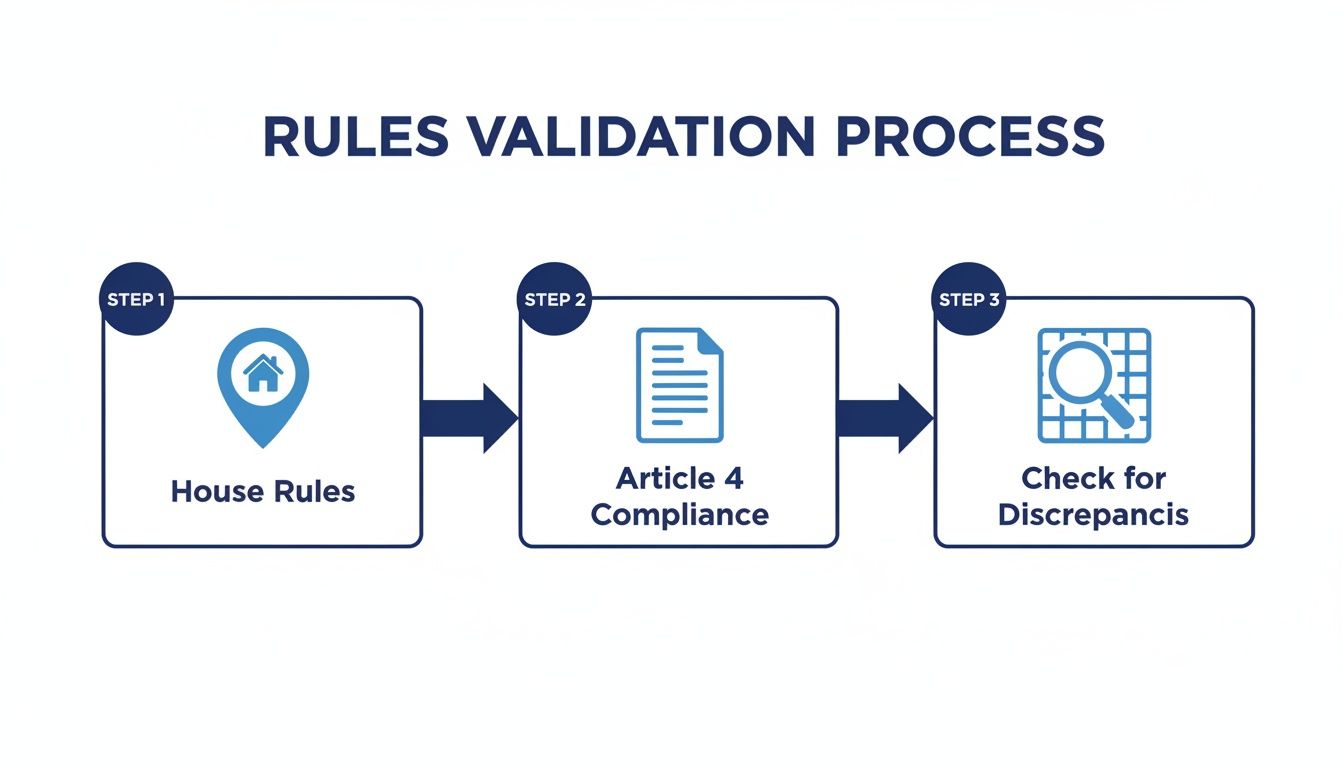
This simple flow shows where to start. Begin with your property, check for extra layers of control, and finish by digging into past planning decisions.
Your 3-Step Pre-Application Checklist
Follow these three steps to gather the essential information before you hire a designer or architect. A little due diligence now can save you a massive amount of time and money later.
Step | Action | Why It's Important |
|---|---|---|
1. Confirm Your Status | Go to your local council's website and find their interactive planning map. Search for your address, then turn on the "Conservation Areas" and "Article 4 Directions" layers. | This gives you a definite yes or no. You'll know instantly if you are in a conservation area and if those extra strict Article 4 rules apply to your home. |
2. Search the Planning Portal | On the same council website, look for the "Planning Application Search" or "Planning Portal". Use the map search to look at your street and the surrounding roads. | This is where you find the real planning applications. It is a public record of what your neighbours have tried to build, and whether the council said yes or no. |
3. Analyse Past Decisions | Look for applications similar to your project like rear extensions or loft conversions. Open the "Decision Notice" and "Officer's Report" for a few recent approvals and refusals. | The Decision Notice is the official outcome. The Officer's Report is the goldmine. It explains why a project was approved or, crucially, why it was refused. |
Taking these steps gives you a solid foundation of evidence, so you are not just guessing what might be possible.
Finding the Real Story in Past Applications
Looking at past decisions is the most powerful research you can do. It takes you from guessing what the council might want to seeing exactly what they have approved and rejected in your neighbourhood.
For example, you might find that three single storey rear extensions on your road were approved in the last two years. That’s a strong positive signal. But you could also discover that a dormer loft conversion on a similar house was refused because it was "too dominant".
This is invaluable knowledge. Understanding why a neighbour's project got rejected gives you a massive advantage. You can learn from their expensive mistake and design your project to avoid the same pitfalls. You can find more detail on this research technique in our guide that explains what past planning decisions reveal about your chances of approval.
Finding a refusal for a project like yours is not a dead end. It is a roadmap. The officer's report tells you exactly what the council objected to. This gives you a clear list of design issues to solve or avoid in your own plans.
This evidence based approach helps you have a much smarter conversation with your architect. Instead of saying, "I would like a loft conversion," you can say, "I would like a loft conversion, but I see the council often refuses large dormers on this street, so we need a discreet design." This sets your project on the path to success from day one.
Navigating the Planning Application Process
Getting your planning application approved is the end goal. But the journey can feel baffling and intimidating. The key to avoiding a costly refusal is to understand what planners are looking for from the very beginning.
The entire process hinges on one core principle. Your project must "preserve or enhance" the special character of the conservation area. That is not just vague guidance. It is the legal test your council will apply to every part of your proposal, from the bricks you choose to the pitch of your new roof.
What Your Application Needs to Show
A successful application tells a convincing story. It has to show the planning officer that you have understood the area's unique qualities and designed a project that respects them. This is less about your drawings and more about the documents that go with them.
The most important of these is usually the Design and Access Statement. Think of it as the "why" behind your plans. It's a written document explaining your design choices. It justifies how your proposed changes are appropriate for a sensitive spot. It is your chance to explain how the scale, materials, and style of your project will fit in.
Key Documents for Your Application
Every council has slightly different checklists. But a full planning application in a conservation area almost always demands more detail than a standard one. You and your designer will likely need to prepare:
Detailed Architectural Plans: These need to show the existing property and the proposed changes in minute detail, including floor plans, elevations, and cross sections.
A Site Plan: This shows your property in relation to its neighbours. It must clearly mark boundaries, access points, and any important features like mature trees.
The Design and Access Statement: As mentioned, this is where you explain the logic behind your design and how it passes the "preserve or enhance" test.
Material Samples or Specifications: You will need to be very specific about what you plan to use. For example, you must name the exact type of brick or brand of slate tile.
The rules in these areas are tough for a good reason. Forget about automatic permitted development for extensions, dormers, or sheds. Demolishing buildings over 115 cubic metres or walls over one metre high also requires specific consent. Research from English Heritage, however, points out that this strict setup often leads to a higher quality of design. You can read more about how buying in a conservation area affects your rights.
Turning a Likely Refusal into an Approval
Many applications fail not because the core idea is wrong, but because the details are off. A small design compromise can often be the difference between a frustrating refusal letter and a welcome approval notice. Success is about balancing your ambitions with the council's duty to protect the area's character.
Here are a few common compromises that can dramatically improve your odds:
Shrink the Dormer: A big, boxy dormer is a classic reason for refusal. Proposing a smaller, pitched roof dormer that’s set back from the eaves is far more likely to be approved.
Use Traditional Materials: Instead of modern render, specify reclaimed bricks that match the main house. For windows, choose timber sash frames over uPVC.
Simplify the Design: An overly complex or modern extension can look out of place. A simpler form that echoes the lines of the original building often works much better.
Lower the Ridge Height: A common requirement is ensuring the roof of your extension sits below the main roofline. This makes it look subordinate to the original house.
By understanding what planners are looking for, you can work with your designer to create a proposal that respects the area's character while still giving you what you need. It is about being proactive, not reactive.
This approach gives you confidence. It shifts your mindset from simply submitting plans and hoping for the best to building a robust, evidence based case for your project. That strategic thinking dramatically increases your chances of getting approval on the first attempt. This saves you the stress and expense of a failed application.
Test Your Project Idea Before Committing Thousands
The biggest fear for any homeowner is sinking thousands of pounds into architectural drawings, only for the council to say no. It is a common and expensive mistake, especially against the tricky rules of a conservation area. But you do not have to just cross your fingers and hope.
There is a smarter, evidence based first step. Before you commit serious money, you can test your idea against what your local council is actually approving right now. This approach gives you clarity before you are financially locked in.
Gain Clarity Before You Commit
An evidence based check shows you what is realistically achievable. It means looking at real, recent planning decisions from your specific council for projects just like yours, on streets just like yours. This is not about getting bogged down in complex policy documents. It is about seeing what has been approved and, more importantly, what has been refused in your neighbourhood.
This is exactly the kind of insight that SurePlan provides.
A SurePlan Planning Confidence Report analyses local planning data to give you a clear picture of your project's chances. It is not a guarantee of success. It is a data driven tool to help you make a smarter decision.
Within 24 hours, you get a clear, easy to read report. It flags immediate red flags, like your conservation area status or if an Article 4 Direction affects your home. That information alone can save you from chasing a project that is a non starter from day one.
How a Data-Driven Report Helps
The report benchmarks your proposal against these local approvals and refusals. This gives you a simple confidence score. It is designed to provide a quick, honest assessment of where you stand before you spend much larger sums on professional fees.
This lets you make an informed choice early on. The report might show that similar extensions are frequently approved, giving you the green light to proceed with confidence. Or, it could reveal a pattern of refusals for loft conversions on your street. This would prompt you to tweak your design or rethink your plans.
Proceed with confidence: Know your idea aligns with recent council decisions.
Adjust your design: Use evidence of what the council dislikes to tweak your plans and avoid common refusal traps.
Avoid a costly mistake: Decide not to proceed with an unworkable idea. This saves you thousands in wasted fees for architects and planning applications.
Ultimately, this is about avoiding the pain of a rejected application. You get a clear, unbiased view of the challenges ahead. This allows you to have far more productive conversations with designers and builders. You can invest your money with your eyes wide open.
Frequently Asked Questions
It is easy to feel tangled up in the rules. Getting straight answers from the start will save you from making expensive assumptions later. Here are the most common questions homeowners have about conservation area planning, answered in plain English.
Do I Always Need Planning Permission in a Conservation Area?
Not for absolutely everything. But you need it for a lot more than you would outside a conservation area. Any internal changes that do not affect how the building looks from the outside are usually fine. The big catch is that your permitted development rights for external work are severely cut back.
This means you will almost certainly need to apply for full planning permission for projects like extensions, loft conversions that include dormers, and replacing windows. Even smaller jobs that you might not think twice about, like painting over unpainted brickwork or putting up a satellite dish, can require formal consent. The only safe bet is to check your local council's specific rules before starting any work.
Can I Replace My Windows with uPVC?
This is probably the most common pitfall. The answer is almost always a firm no. Councils view modern uPVC frames as out of character for period properties and damaging to the historic street scene.
Planners will insist that any new windows match the original material and style. If you live in a Victorian or Edwardian home, that almost certainly means fitting traditional timber sash windows. In some rare cases, very high quality timber alternative or slimline aluminium frames might get a pass. But standard uPVC is a non starter.
What Happens if I Do Work Without Permission?
Doing work without the right permission is a serious breach of planning control. It is a mistake you do not want to make. The local council has the power to issue an enforcement notice. This is a legal order forcing you to undo all the changes entirely at your own expense.
Imagine you installed uPVC windows without consent. The council could legally compel you to rip them all out and replace them with expensive, council approved timber windows. It is a blunder that can easily cost you tens of thousands of pounds. It is never worth the risk.
How Much Do Trees Matter?
A huge amount. Trees are often seen as a critical part of a conservation area's special character. In fact, most trees within a conservation area with a trunk diameter of 75mm or more are automatically protected.
This means you must give your council six weeks' written notice before carrying out any work on them, including pruning. Felling a protected tree without permission is a criminal offence that can lead to very large fines. Always bring in a qualified tree surgeon and speak to the council before you touch any trees on your property.
Trying to navigate these restrictions can feel like guesswork, but it does not have to be. SurePlan offers an evidence-based first step. Our Planning Confidence Report digs into real planning decisions from your local council to show you what is genuinely achievable for your property, helping you sidestep costly mistakes before you pay for architectural drawings.