

Feb 17, 2026
Got planning permission but need to make a change? A Section 73 application lets you make small adjustments without submitting a new, full application. This avoids the cost and delay of going back to square one.
For example, you could use it to change the approved bricks or shift a garden wall. This guide explains how to use this process correctly and avoid a costly refusal.
Why Section 73 Matters for Your Project
Imagine you have permission for an extension, but the bricks you chose are now out of stock. Or maybe you want to use a different type of cladding. A Section 73 application is designed for these real world problems.
It gives you the flexibility to adapt your approved plans. You can avoid the stress and expense of starting the whole planning process over. It is for changing the specific conditions attached to your original permission. You cannot use it to change the fundamental design.
For instance, you can use it to change materials. You cannot use it to add a new storey to your house.
Avoid a £258 Mistake
Getting this wrong is a common and costly error. If you apply for a change that is too big, the council will refuse your application. You will lose the £258 application fee in England and waste weeks waiting for a decision.
A Section 73 is a much cheaper way to make small adjustments. A completely new planning application can cost thousands of pounds in architect fees and reports.
The benefit is simple. You can adjust your project to fit your budget or deal with material shortages without losing your existing permission.
This process lets your project evolve. It accepts that not every detail is final months before work starts. Instead of being stuck with old plans, you have a formal way to make necessary tweaks. This can prevent expensive last minute problems on site.
You can find more details about the entire process in our guide to getting planning permission.
Choosing The Right Way to Change Your Plans
You have planning permission but need to make a change. This is a common situation. Knowing which planning route to take will save you from a costly refusal.
Your changes will fall into one of three categories. Each has its own application process. Choosing the wrong one wastes your money and time.
The key question is how big is the change you want to make? A small tweak is very different from a complete redesign in the eyes of a planner.
The simple decision tree below guides you through the main questions a planner would ask. This will help you get it right the first time.
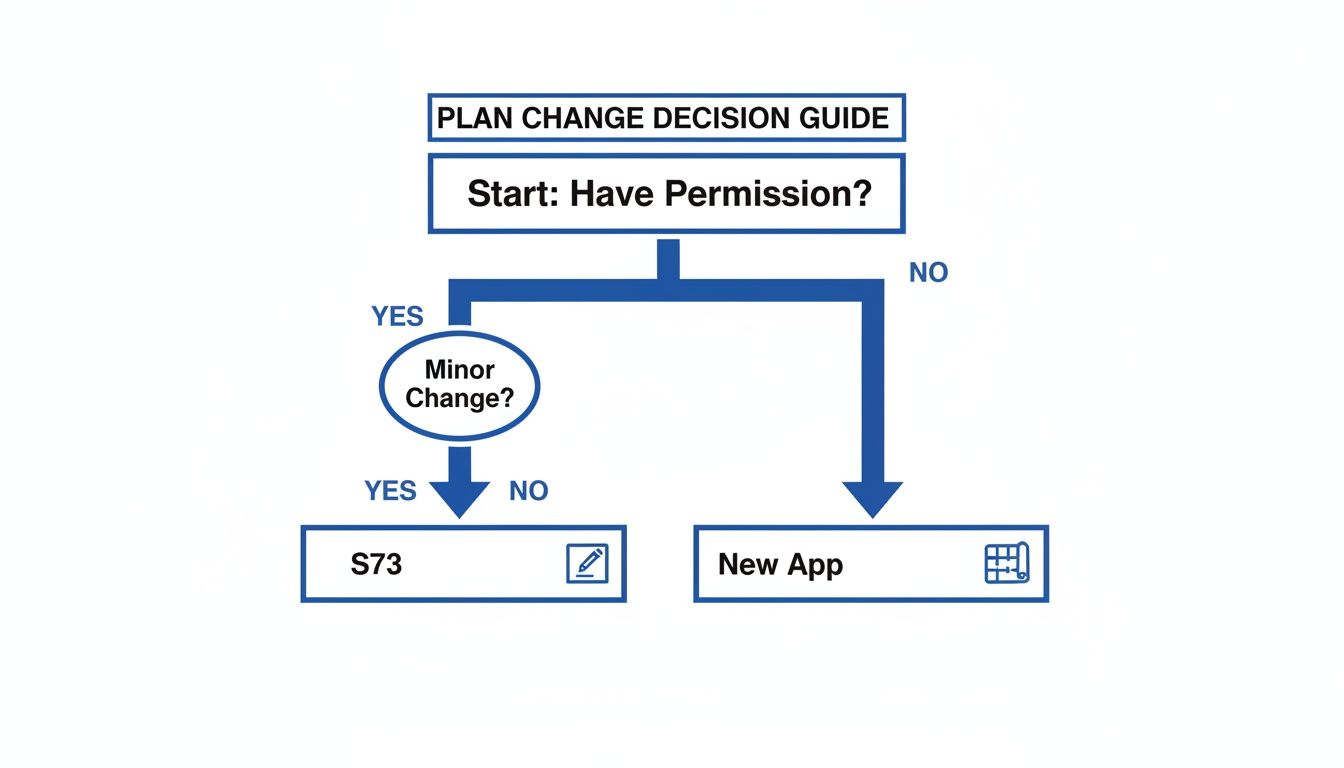
As you can see, if you already have permission and your change is minor, a Section 73 planning application is often the best option.
How to Compare Your Options
Let's look at the three main ways to alter your approved plans. You can use a Non-Material Amendment, a Section 73 application, or a completely new planning application. Each one is for a different size of change.
Getting this right is vital. Moving a window a few centimetres could be a Non-Material Amendment. Changing that window's material from uPVC to timber is a classic Section 73 job. Adding a new window where one was never approved often means a new application.
The table below gives you clear examples to help you see where your own project changes might fit.
Type of Change | Best Option | Typical Example | Why This Option? |
|---|---|---|---|
Very Small Tweak | Non-Material Amendment | Swapping one brand of roof tile for an identical looking one. | The change is too small to affect the building's appearance or your neighbours. It is a faster and cheaper process for tiny changes. |
Minor But Noticeable Change | Section 73 Application | Changing from brick to timber cladding, or slightly moving a non essential window. | The change is noticeable but does not alter the core nature or scale of the permission. It changes a planning condition, like the one listing approved materials. |
Major Alteration | New Planning Application | Adding a bedroom, increasing the roof height, or making the building bigger. | This change is so significant it creates a different project from the one approved. It needs a completely new assessment by the council. |
Understanding these differences is the first step to avoiding a refusal. Your council has strict rules about what counts as minor. A change you think is small might be seen as significant by a planning officer.
Your goal is to match your proposed change to the correct application type. Trying to push a big change through a Section 73 application is a common mistake. It leads to an automatic rejection and the loss of your £258 application fee. Reviewing your plans against these categories gives you clarity before you commit.
Your Step by Step Section 73 Application
Submitting a Section 73 application is a clear process. Knowing the steps helps you prepare properly. You can avoid the simple mistakes that often lead to a refusal and losing your fee.
You are not starting from scratch. You are asking the council to approve a new permission with slightly different conditions.
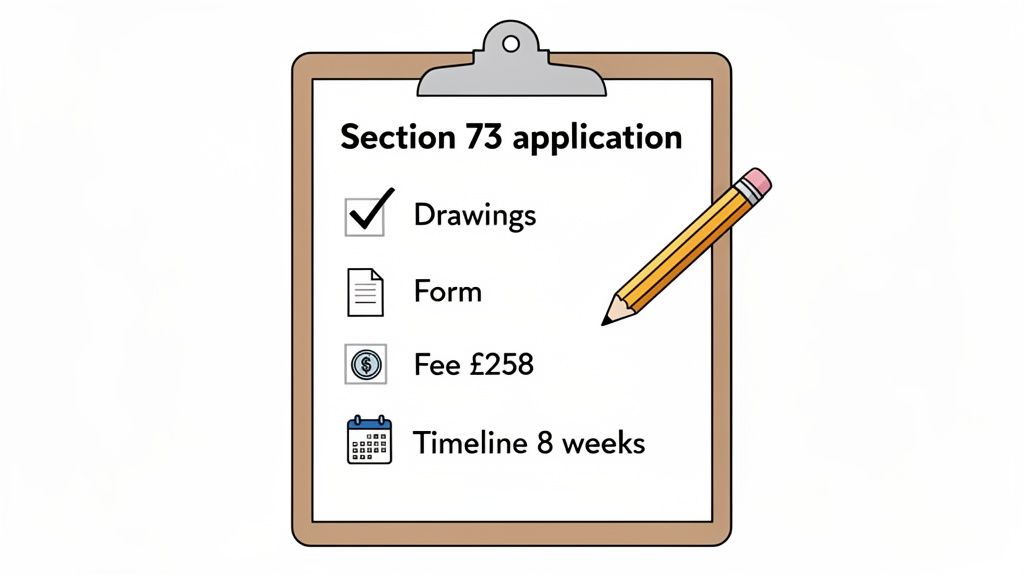
What Documents You Need
Getting your paperwork right is the most important step. Without the correct documents, your application will be invalid. A planning officer will not even look at it.
Here’s what you usually need to provide:
The Correct Form: Use the form for "Removal or variation of a condition". This is a common mistake.
Updated Drawings: Only submit drawings that clearly show the specific change. If you are changing window materials, just provide an updated elevation drawing that highlights the amendment. You do not need a full new set of architectural plans.
A Cover Letter: This is a short letter explaining which condition you want to change and why. Keep it brief and to the point.
Costs and Timelines to Expect
A Section 73 application has set costs and timelines. Knowing these helps you budget and manage your project from the start.
The standard fee for a householder Section 73 application in England is £258. Once your application is accepted, the council has 8 weeks to make a decision. This can sometimes take longer.
This route helps homeowners who need to make tweaks without restarting the entire planning process. This flexibility is very useful in sensitive areas like conservation areas. In these places, even small changes are checked carefully.
Standard permissions have an 86% approval rate. The rate for Listed Building Consents in sensitive areas is higher at 92%. This shows that well justified changes can be successful.
You submit the application through the same Planning Portal you used before. It is always a good idea to get some advice before you commit. You can learn more by reading our article on getting pre-planning application advice. By following these steps, you give your application the best chance of success.
How Homeowners Use Section 73 in Real Life
Section 73 is easier to understand with real examples. Homeowners use it to solve practical problems that appear before or during a build. It lets you make needed changes without stopping the project.
Imagine your approved extension plans listed a specific roof slate. When you try to order it, you find it has been discontinued. A Section 73 application is the perfect tool here. It lets you formally change the condition listing the approved materials. You can then use a similar, available slate.
Common On Site Changes
Many homeowners use Section 73 to make small changes once work has started. These adjustments often only become clear when you can see the half built space.
Practical examples include:
Moving a window slightly: You might realise that moving a non essential window by a metre would get much better morning light, without affecting your neighbours.
Changing outside materials: Perhaps your budget has tightened. You might want to switch from expensive stone to a more affordable but good quality render.
Updating a garden plan: Your approval might have a condition for a specific planting scheme. You could use a Section 73 to submit a simpler garden design.
These are all ‘minor material amendments’. They alter a specific detail but do not change the basic size or nature of the permission you already have. Think of it as refining the finished product.
Why This is a Popular Option
The flexibility of a Section 73 application is why it is so widely used for home projects. In England, minor residential projects like extensions have a 90% approval rate. People renovating for the first time often need to change a condition after getting permission. A Section 73 lets them do this without a full reapplication. You can learn more about these planning trends from Historic England's research.
This process gives you a formal, approved way to adapt your plans. It ensures your project can evolve, whether the reason is your budget, material availability, or a better design idea. It helps you avoid the stress of sticking to a plan that no longer works.
Problems That Put Your Application at Risk
A Section 73 application is a useful tool, but it is not a guaranteed approval. Spotting potential problems before you pay the £258 fee can save you from a predictable refusal.
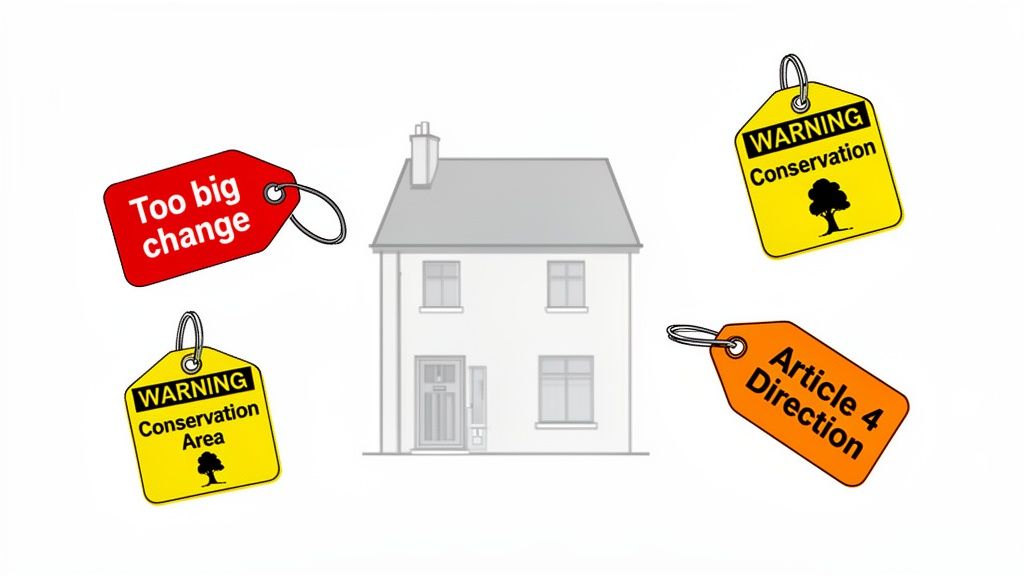
The biggest risk is that your change is too big. If your change fundamentally alters the project, your application will almost certainly be rejected. A planner must agree it is still the same project they originally approved.
Changes That Are Too Big
What counts as "too big" a change? Every case is different, but there are clear lines a Section 73 cannot cross. Trying to use this process for any of the following leads to refusal.
Making it bigger: You cannot add a room, raise the roof, or make an extension larger than was approved.
Changing the description: If your permission was for a "single storey rear extension," your change must still be a single storey rear extension. You cannot make it two storeys.
Major design changes: Swapping brick for timber is often fine. Changing the entire architectural style from traditional to modern is too much.
Ask yourself if the change conflicts with the written description on your original planning permission. If it does, you almost certainly need a new application, not a Section 73.
Special Rules That Increase Risk
Your property’s location can also add major risks. If your home is under special planning controls, even small tweaks face tougher checks. Be very careful if your property is affected by any of these.
Conservation Areas: Councils protect the special character of these areas. A small change, like swapping timber windows for uPVC, would likely be refused because it harms that character.
Article 4 Directions: This removes your normal rights to make small changes without permission. You need full planning permission for minor work like changing a front door. Any Section 73 application here will be checked very carefully.
The reality is that conditions can trip homeowners up, especially in protected areas. Section 73 exists to help with these conditions, but its use is limited. This is why understanding what has been approved locally is so important.
You can find out more about the scope of these applications through this detailed legal analysis. Knowing these risks allows you to adjust your plans or prepare a stronger case before you commit your time and money.
Know Your Chances Before You Apply
Before you pay an architect for new drawings or spend a penny on fees, you need an honest answer. Is this change likely to be approved? Applying for a Section 73 without checking is a gamble with your time and money.
This area of planning law is complicated. The only sensible way forward is with evidence, not hope. You need to know if similar changes have been approved or refused on streets like yours. That local evidence is the biggest factor in your success.
Get Clarity with a Planning Confidence Report
A SurePlan report is your first evidence based step. We research recent planning decisions from your local council for projects just like yours. Our report flags local refusal patterns and specific risks, like your home being in a Conservation Area.
We analyse local data and give you a simple confidence score. This score helps you decide whether to go ahead with your Section 73 application, change your design to improve your chances, or stick with the permission you already have.
It is about making an informed choice. Our analysis gives you the clarity to avoid a predictable and expensive planning mistake. Find out how our reports help you understand and avoid planning refusal risks by using our Planning Refusal Risk Checker. It is the smartest way to check your chances before you commit.
Your Section 73 Questions Answered
Section 73 applications can feel complicated. It is normal to have questions. Here are answers to the most common ones we hear from homeowners.
Can I Use Section 73 to Change My Extension Design?
Only for minor changes. A Section 73 is for changing the conditions of your permission. It is not for a complete redesign.
You could probably use it to change the cladding from timber to slate. But you could not use it to add a new room or change the roof shape. Anything that significantly changes the look or size of what was approved will need a fresh planning application.
How Long Does a Section 73 Application Take?
The official timeframe for a Section 73 decision is 8 weeks. This is the same as a standard householder planning application.
In reality, it can take longer. This depends on how busy your local council is.
This process creates a new planning permission. This new permission replaces your original one. It comes with its own conditions and a fresh three year period to start work.
What Happens If My Section 73 Application Is Refused?
This is a common worry. The good news is that your original planning permission remains valid. You do not lose your existing consent. You can still build the project exactly as it was first approved.
You also have the right to appeal the refusal. But appealing is a long and uncertain process. It is better to understand your chances of success beforehand. A refusal costs you the £258 application fee and weeks of lost time.
Is a Section 73 Application Cheaper Than a New One?
Yes, it is almost always cheaper. The council fee is the same as for a householder application. The real savings come from your design costs.
A full new planning application needs a complete set of architectural drawings. This can cost thousands of pounds. For a Section 73, you only need to provide updated drawings that show the specific change. It is a much smaller and less expensive job for your designer.
Before you apply, get the evidence you need to move forward with confidence. SurePlan provides a report that analyses your project against local planning decisions. This gives you the clarity to avoid costly mistakes. Find out more at https://www.getsureplan.co.uk.