

Feb 9, 2026
Getting pre planning application advice helps you know if your project has a real chance of success. This happens before you spend money on architects or council fees. It is an early check to spot expensive problems and avoid a stressful and costly planning refusal.
Why Pre Planning Advice Is Your Most Important First Step
Thinking about an extension is exciting. It is easy to get carried away with design ideas and start calling architects. But moving too fast is one of the biggest mistakes you can make.
Submitting a planning application that gets refused can cost you thousands. You will have wasted fees and useless drawings. A typical householder application fee is £258. If your application is refused that money is gone for good.
Early advice helps you avoid that loss. It gives you a clear look at your project's chances based on your council's rules. This is not about getting a guarantee. It is about gathering evidence to make a smart decision.
Find Problems Before They Cost You Money
Many properties have hidden rules that can stop a project instantly. You might be in a Conservation Area with strict design rules. Or you might be under an Article 4 Direction which removes your normal development rights. Finding this out after you have paid for plans is a painful shock.
Pre planning advice helps you find these red flags early. You will understand the real limits on your property. This allows you to:
Avoid designing something that will fail by learning what the council will almost certainly reject.
Save money on drawings by first checking if your idea is even possible.
Have clear conversations with architects about what is actually realistic.
"The point of pre planning advice is clarity. You replace guesswork with evidence. This lets you invest in your project with confidence, knowing you have lowered the risk of a costly refusal."
Use Past Decisions to Predict Your Success
Every planning decision your council makes is public information. This data shows what gets approved and what gets refused near you. Looking at this history is a powerful way to understand your chances.
By analysing similar local projects you can see clear patterns. You can see how your council applies its own rules in the real world. This data is very valuable.
Services that provide pre planning advice use this data. They check your proposal against hundreds of past decisions. This process gives you a realistic idea of the likely outcome. It turns your project from a hopeful guess into an evidence based plan.
Comparing Your Three Main Options for Getting Advice
You know you need advice before you commit to your project. But where do you get it? Understanding your options can save you thousands. For homeowners in the UK there are three main ways to get pre planning application advice.
Each option has a different mix of cost speed and detail. The right one for you depends on your budget how fast you need answers and where you are in your journey. Some give you formal feedback from the council. Others provide a quick check to see if your idea is worth pursuing at all.
This infographic shows why getting this early advice is so important.
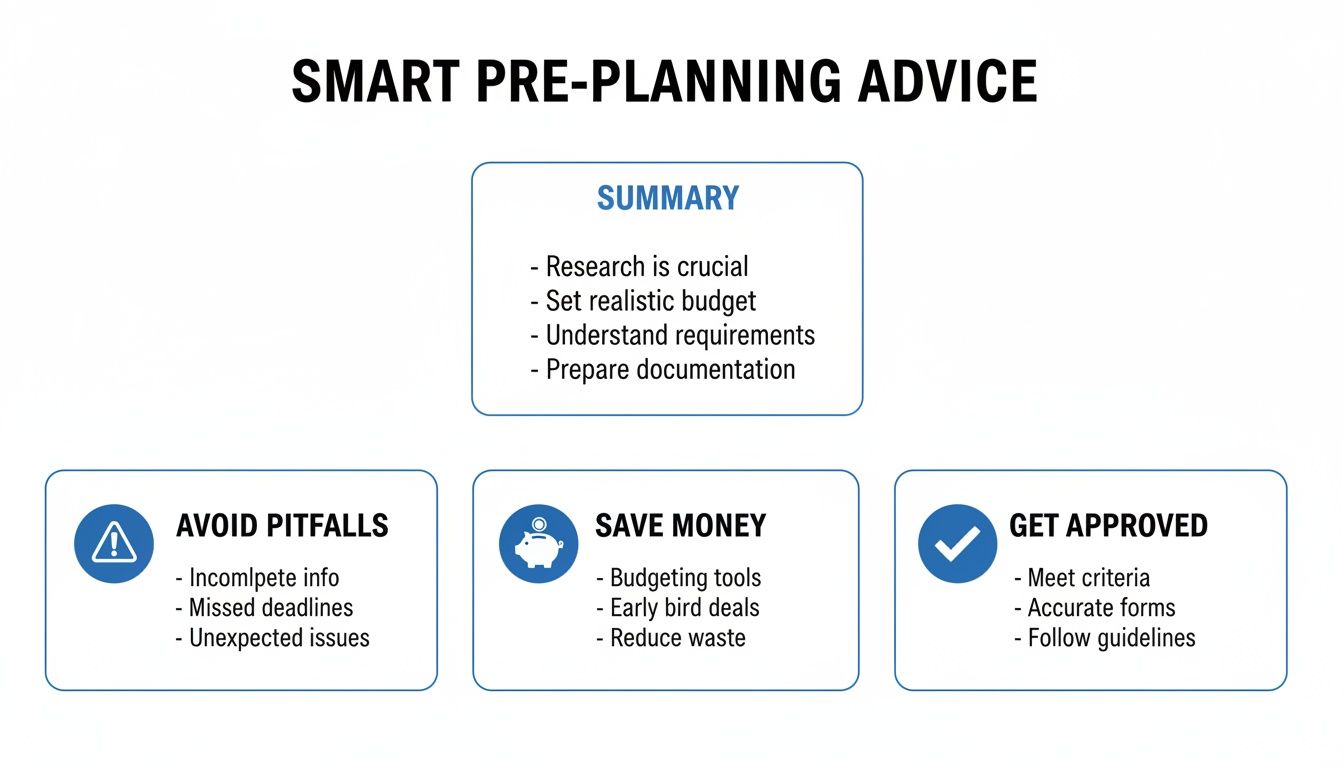
Ultimately every one of these benefits points to the same thing. You give your project a much better chance of success while protecting yourself from avoidable and expensive risks.
Comparing Your Pre Application Advice Options
Here is a quick comparison to help you see how these options stack up.
Advice Option | Typical Cost | Typical Timescale | Best For |
|---|---|---|---|
Local Authority | £100 – £500+ | 4–6 weeks or more | Homeowners with a clear design, ready for a formal opinion from the council. |
Private Consultant | £500 – £3,000+ | Weeks to months | Large, complex, or high stakes projects needing an expert to manage everything. |
Digital Service | Under £50 | Within 24 hours | Homeowners at the very start, needing a quick and affordable viability check. |
As you can see the right choice really depends on what you need. A quick check is very different from needing an expert to guide a complex development through the system.
Option 1 The Council's Formal Pre Application Service
This is the official route. You pay your local council a fee. A planning officer will then review your proposal before you submit a formal application. It is the only way to get a direct opinion from the people who will approve or refuse your project.
But be aware this service is not for rough ideas. Councils expect you to come with a good level of detail including some drawings. It is also the slowest and often most expensive option for getting initial guidance.
Typical Cost: £100 to over £500 for a simple home extension.
Typical Timescale: Expect to wait 20 to 30 working days. That is four to six weeks or even longer for a written response.
Best For: Homeowners who are confident in their design and want a formal assessment before paying the full application fee.
Option 2 Private Planning Consultants
A private planning consultant is an independent expert you can hire. Many used to work for local councils so they know the policies and people involved. They can offer sharp advice and help prepare your application.
This is a premium service. A good consultant provides hands on support but their fees reflect that. It is a big investment and usually best for complicated or high value projects where the stakes are higher. Many homeowners also find it useful to decide if they should speak to an architect or a planner first as their roles are quite different.
Typical Cost: From several hundred to a few thousand pounds, depending on the project's complexity.
Typical Timescale: Varies hugely by consultant, but you are often looking at several weeks or months.
Best For: Large or complex projects where you need a seasoned expert to manage the whole process for you.
Option 3 Digital Assessment Services
A newer option is using a digital service like SurePlan. These services use data from thousands of past planning decisions to give you an evidence based assessment. It is designed to be the very first thing you do before you spend any money on architects.
The whole idea is to give you a quick low cost reality check. You get a clear report that shows how similar projects have been treated by your council. It flags major red flags like conservation areas and clarifies the most likely path forward.
This approach gives you the evidence you need to decide if your project is a non starter or has a good chance. It helps you avoid wasting the £258 refusal fee on a doomed application. SurePlan provides this clarity with a Planning Confidence Report for a small fixed fee usually within 24 hours.
Typical Cost: A low fixed fee, often under £50.
Typical Timescale: Very fast, typically within one working day.
Best For: Homeowners at the beginning of their journey who need a quick, affordable, and data backed way to check if their idea is worth pursuing.
How to Prepare for Your Planning Enquiry
The quality of the advice you get back depends on the information you provide. A vague idea will only get you a vague response. To get clear actionable feedback you need to give the planner or service a solid place to start.
This is not about paying for expensive architectural drawings at this stage. It is simply about gathering a few key details. Spell out what you want to achieve how big it will be and where it will sit on your property.
Think of it like telling a doctor your symptoms. The more specific you are the more accurate the diagnosis will be. A little effort here goes a long way.
Your Essential Information Checklist
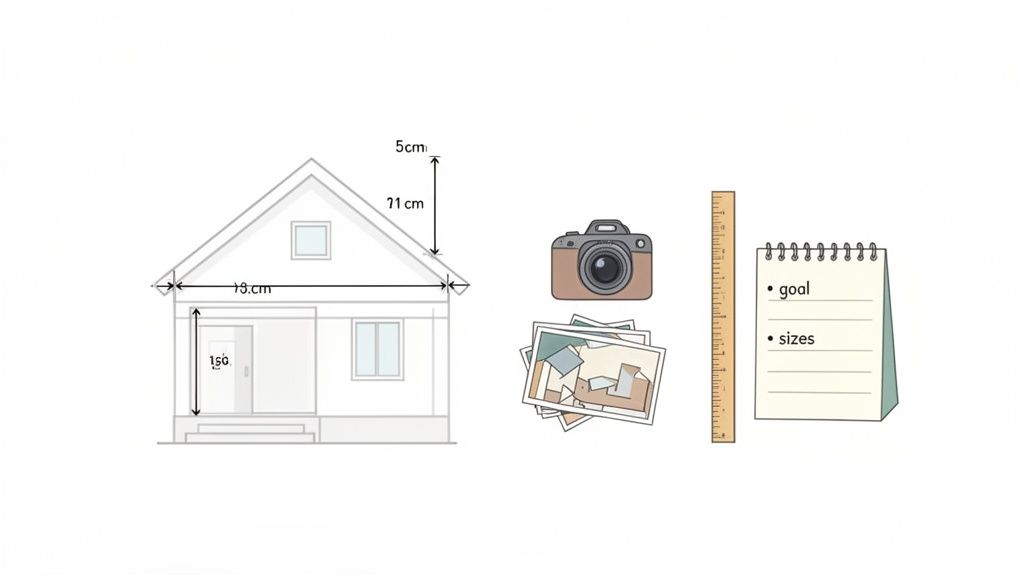
Before you ask for advice pull together a simple information pack. This does not need to be professional just clear. Aim to include the following:
A Clear Project Description: A sentence or two explaining your goal. For instance "I want to build a single storey rear extension for a larger kitchen" or "I want to convert my loft into a bedroom with an ensuite."
Basic Sketches with Dimensions: Hand drawn sketches are fine. The important part is adding measurements. Show the proposed width depth and height. Mark its position relative to your house and your boundaries.
Photographs of Your Property: Take photos from several angles. Get pictures of the front back and sides of your house. It is also useful to take photos looking from your property towards your neighbours and from the street towards your house. This helps an assessor understand the context.
A Simple Location Plan: A screenshot from an online map with your property boundary clearly outlined in red is usually all you need. This confirms the exact location and shows the surrounding properties.
Why This Preparation Matters
Putting this information together forces you to think through the practical details. It shifts your idea from a daydream into a concrete proposal that can be properly assessed. Without these key details any advice you get will be vague.
A well prepared enquiry gets a specific answer. Vague questions get vague replies that leave you no clearer than when you started. Your goal is to get feedback that helps you make a confident decision.
For example a sketch showing an extension is 4 metres deep lets an assessor check it against permitted development rules. Photos showing your house is attached to your neighbour’s helps identify it as a semi detached property which has different rules.
Each piece of information allows for a more detailed assessment. Getting these basics right is a key part of understanding what to do before applying for planning permission. This prep work ensures you get maximum value from your enquiry.
Spotting Red Flags That Can Stop Your Project
Some properties have hidden planning rules that can stop a project completely. Finding out about these early saves you from the headache and wasted money of chasing an idea that was never going to work. Getting pre application advice is your best way to find them.
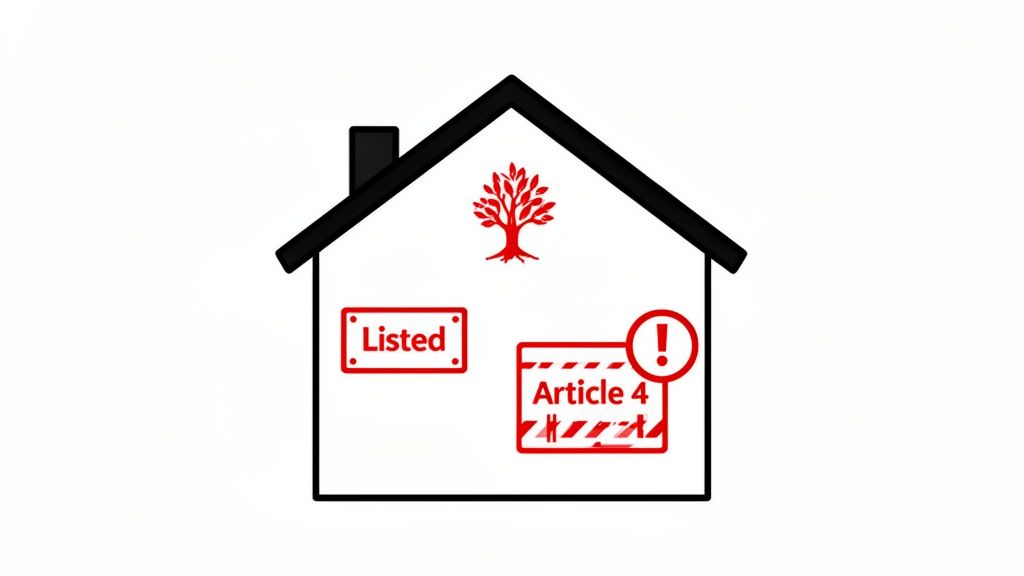
These rules are often called designations. They do not always show up in the standard searches when you buy a house. They exist to protect areas with special character or historical importance. Ignoring them is not an option. Your council will enforce them strictly.
Conservation Areas
If your home is in a Conservation Area it means the council sees it as having special architectural or historic value. This means much stricter rules apply to almost any change you want to make to the outside of your property.
Simple jobs that are normally allowed under Permitted Development will almost certainly need a full planning application. Your design will be checked closely to make sure it fits the area's character.
Listed Buildings
A Listed Building is a structure of special architectural or historic importance. Owning one is like being a caretaker. Making any changes inside or out is a very complex process. You will need a separate Listed Building Consent as well as any standard planning permission.
This adds another layer of cost time and checks to your project. Even small alterations like painting a front door can require consent. Doing work without consent on a listed building is a criminal offence. You must understand these rules before you start.
Data shows how seriously these applications are treated. In 2023 to 2024 around 25,600 decisions were made for alterations in England. Approval rates are high at 92%. But getting that yes can be slow. London councils only met their decision deadline 67% of the time.
Article 4 Directions
An Article 4 Direction is a rule councils use to remove specific Permitted Development rights in an area. This is the one that catches most homeowners out because it is so specific. A council might use one to stop people from converting houses into flats or paving over front gardens.
For example your neighbour might have built a loft conversion under Permitted Development last year. But if the council has since applied an Article 4 Direction to your area you would need full planning permission for the same project. It is a local rule that can completely change what is possible.
"These three red flags are the most common reasons why simple projects get refused. Identifying them at the very start is the single most important check you can do."
Finding out if your property is affected is a key reason for getting early pre planning advice. A quick low cost check can tell you which rules apply. This knowledge stops you wasting time and money on plans that have zero chance of success. You can read our guide to the 12 planning red flags homeowners often miss to learn more.
What to Do with The Advice You Receive
Getting a report back is a major step. But the advice itself is only useful if you know how to act on it. This is not about getting a simple yes or no. It is about understanding the evidence so you can decide what to do next without guessing.
The feedback will usually point you in one of three directions. Your job is to read the advice and see which path makes the most sense for you. This is the moment you take control.
Scenario 1: The Advice Is Positive
This is the best case. Positive feedback means your idea generally fits with local planning policies. The report should explain why it is likely to be acceptable giving you solid ground to stand on.
If the advice is positive your next steps are usually clear:
Proceed with confidence: You now have evidence that your core idea is workable. This is often the right time to hire an architect for detailed drawings.
Share the report: Give the advice to your architect. It provides a clear brief and shows what the council is looking for.
Prepare your application: Move forward with submitting a formal planning application or a Certificate of Lawfulness depending on the advice.
Positive pre planning advice does not make approval certain but it significantly lowers your risk. It confirms you are on the right track before you commit to the £258 application fee and design costs.
Scenario 2: The Advice Suggests Changes
This is very common and very valuable. The feedback might be positive overall but flag specific issues. Maybe the extension is too deep or uses the wrong materials. This is constructive criticism designed to guide you toward an approvable project.
"Negative feedback is not a dead end. It is a roadmap showing you what to fix. Acting on this advice is how you turn a likely refusal into a possible approval, saving you from a costly failed application."
Your next steps involve revision:
Review the feedback with your designer: Go through the specific points with your architect or builder. Can the design be changed to address the concerns without losing your goals?
Decide on your trade offs: You may need to choose between a smaller approved extension or sticking with your original idea and facing a higher risk of refusal. This is a practical decision.
Resubmit for further advice (optional): If you make big changes you might want another opinion to check if the new design has solved the issues.
Scenario 3: The Advice Is Negative
Receiving a clear "no" can be disappointing. But it has likely just saved you a huge amount of time stress and money. Negative feedback usually means your project clashes with major planning policies.
In this situation your options are to go back to the start:
Rethink the project's scope: Is there a completely different way to achieve your goal? Perhaps a loft conversion is more possible than a large rear extension.
Do not proceed: Sometimes the smartest financial decision is to accept the project is not viable. You can stop before you waste any more money.
Whatever the outcome acting on pre planning advice helps you make informed decisions. It ensures your next investment is a smart one.
Your Next Steps to A Successful Home Project
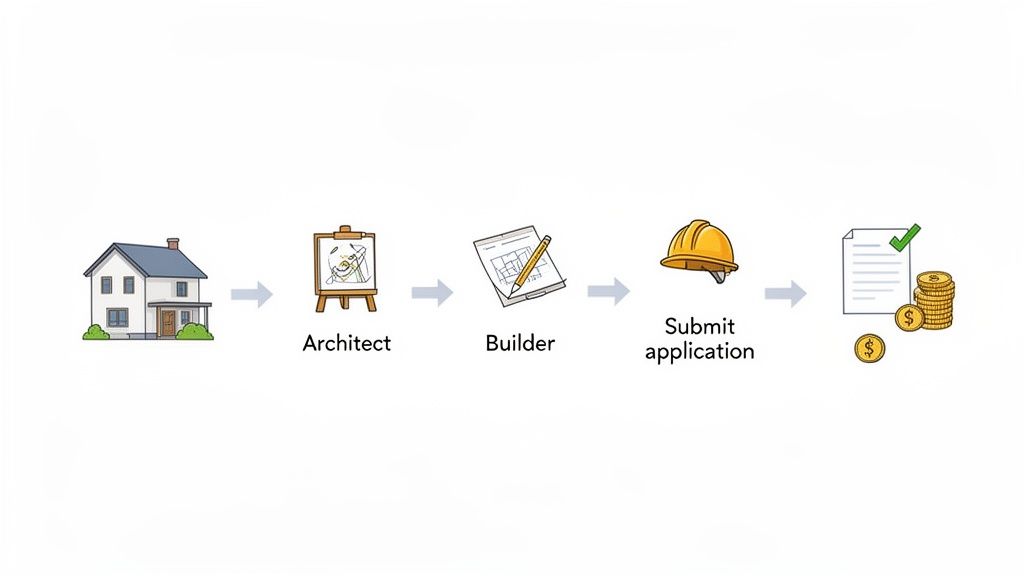
With solid pre application advice in hand you are now in control of your project. You can move forward with confidence knowing you have replaced expensive guesswork with hard evidence. You have also avoided the most common problems.
Think of this early guidance as your best defence against risk. It is what stops you from spending thousands on drawings for a non starter. It prevents you from losing your £258 application fee on a guaranteed refusal. You now have a clear roadmap.
Your Clear Path Forward
The purpose of pre application advice is to give you clarity before you make big financial commitments. Now you have the information to make smart evidence based decisions. Your next move will likely be one of three things.
Hire an Architect with Confidence: If the advice was positive you can meet an architect with a clear brief. Show them the report as proof that your core idea is workable. This saves everyone time and money.
Talk to Builders with a Realistic Plan: You can start having proper conversations with builders based on a project that has a real chance of success. This ensures any quotes are for a buildable project not a fantasy.
Revise or Reconsider Without Wasting Money: If the feedback flagged major issues you found this out at the best possible time. Now you can tweak your design or rethink your approach without having already spent thousands on a failed application.
"A small investment in an evidence based report gives you the power to decide your next move. It is the difference between gambling on your project's success and making a calculated decision to protect your time and money."
Turning Plans into Reality
The planning system can feel complicated but it does not have to be stressful. By getting pre application advice you have taken the most effective step to ensure a smoother journey.
A data driven report like the one SurePlan provides gives you the confidence to know whether to push ahead make changes or stop. You are no longer just hoping for the best. You are equipped with real knowledge from your council's past decisions. This helps you turn your plans into reality without hitting expensive unexpected roadblocks. This proactive approach sets your project up for success from the start.
Frequently Asked Questions
Got questions about pre planning advice? Most homeowners do. Here are some straightforward answers to the common ones we hear.
Is Pre Planning Application Advice a Guarantee of Approval?
No it is not. Think of it as expert guidance not a legally binding decision. The advice is based on the planning policies in place right now and the information you provided.
Things can change. A planning officer's initial positive feedback can be overruled later. Local planning policies can also change.
So what is the point? Positive advice is a strong signal that you are on the right track. Its real value is in helping you understand the likely outcome and reducing your risk not getting a promise of approval.
Do I Need an Architect Before Getting Advice?
No you do not. In fact it is better if you do not have full architectural drawings yet. For most pre application services simple sketches showing the project's location size and rough dimensions are all you need.
The idea behind early advice is to see if your core concept has a chance. This happens before you spend thousands on professional plans. These services are designed for the very beginning of your journey.
How Much Does Pre Planning Application Advice Cost?
The cost depends on which route you take and the difference is huge.
Formal advice from your local council can cost anywhere from £100 to over £500 for a typical home extension.
Hiring a private planning consultant is a much bigger investment. This can easily cost from several hundred to a few thousand pounds depending on your project.
Digital assessment services offer a much lower cost way to get started. They provide an evidence based report for a small fixed fee. This gives you a clear idea of your chances before you commit to higher costs.
"A small upfront investment for pre planning application advice can save you from a failed planning application. A typical refusal costs homeowners at least £258 in non refundable council fees, not to mention wasted design costs."
What if the Advice I Get Is Negative?
Negative advice is not a dead end. It is actually very valuable. That feedback has likely just saved you from a stressful and expensive failed application. It means your current plan is unlikely to be approved.
Do not give up. See it as a clear signpost for what to do next. You have two main options:
Change the design: Tweak your plans to address the problems they raised like reducing the size or changing the materials.
Rethink the project: You might explore a completely different way to get what you want that is more likely to be approved.
Getting this news early puts you back in control. You can change course without having wasted thousands on non refundable application fees and detailed drawings.
Ready to find out if your project is a non-starter or a sure thing? SurePlan gives you an evidence-based Planning Confidence Report for just £49, delivered in 24 hours. Get clarity before you commit at https://www.getsureplan.co.uk.