

Feb 2, 2026
A planning refusal from the council feels like a major setback. It can stop your extension or renovation project in its tracks. But a refusal is not the end of the road. It is a problem you can solve.
Knowing how to respond can save you from a costly mistake. Rushing into a decision could waste thousands of pounds and months of your time. This guide will show you how to challenge the council's decision with a planning permission appeal and give your project the best chance of success.
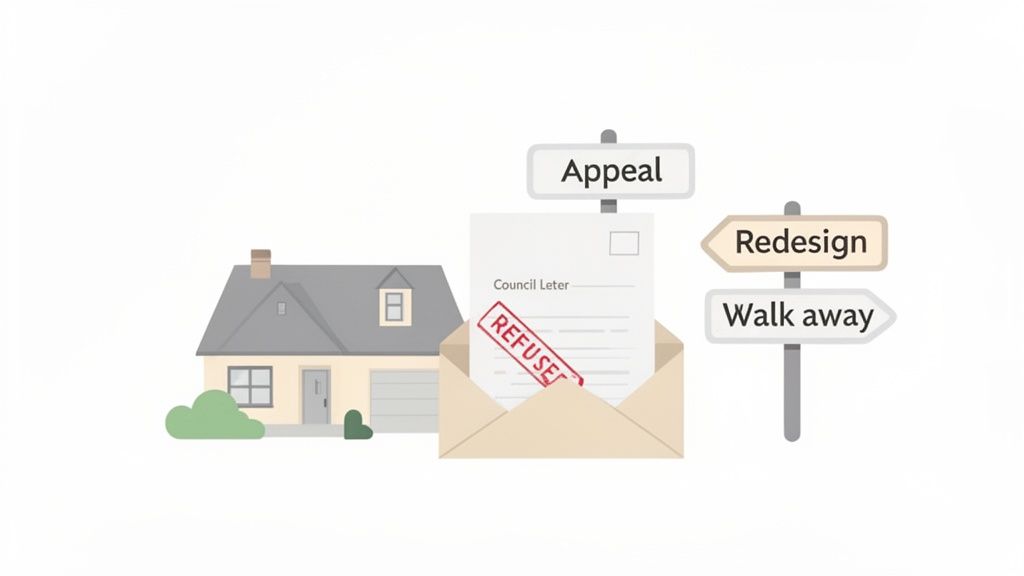
A planning permission appeal asks an independent inspector to review your case. They can overturn the council's decision if it was wrong. But you must act quickly. For most home projects, you only have 12 weeks from the decision date to appeal. If you miss this deadline, you lose your chance.
An appeal argues that the council made a mistake. It is based on their own planning policies and the evidence you already submitted. It is not a new application.
Your Options After a Planning Refusal
You have three main choices after a refusal. Choosing the right one is critical.
Option | Best For | Key Consideration |
|---|---|---|
Amend and Resubmit | Refusals for small design issues like a window size or roof angle. | This is often the fastest and cheapest option if the council's objections are minor. |
Launch a Planning Appeal | When the council seems to have misread their own rules or ignored your evidence. | A longer process. You need a strong case if you believe the refusal was incorrect. |
Re-evaluate Your Project | When the refusal shows major problems with the site or local planning rules. | It can be smarter to rethink your project than to fight a battle you cannot win. |
Our guide on what happens after a planning permission refusal explains these options in more detail.
You are not alone. The Planning Inspectorate handled 18,778 planning appeals in the UK in the year to June 2025. This shows how often people challenge council decisions.
However, winning is not guaranteed. Official figures show only about one in three of these common appeals succeed. Your decision to appeal must be based on a solid, evidence based case.
A refusal letter is a technical document, not a personal opinion. The key is to understand the real reasons for refusal and choose the smartest way forward.
Do You Have Strong Grounds For An Appeal?
A successful planning appeal depends on facts, not frustration. You cannot win by arguing the decision was unfair. You must prove the council's decision was incorrect based on planning law and their own policies.
You need to show the planning officer made a clear mistake. The appeal must use evidence to challenge the specific reasons for refusal. An inspector from the Planning Inspectorate only cares if the council followed the rules. They are not interested in your personal circumstances.
This is an important point. It means you must examine the council's process, not just the outcome. Was their decision logical? Did they apply their policies correctly? If you can show they did not, you may have strong grounds for an appeal.
Identifying Errors In The Council's Decision
The best appeals find specific mistakes the council made. Look at the refusal notice to see if your case fits one of these patterns.
Misinterpreting Planning Policy: Councils have a Local Plan and other documents with their rules. If they refused your project using a policy incorrectly, this is a strong basis for an appeal.
Ignoring Important Evidence: Perhaps you paid for a daylight study or a tree survey which the planning officer then ignored. If they overlooked key evidence that supports your case, you can argue the decision was not properly made.
Inconsistent Decisions: This is a very strong argument. If the council recently approved similar extensions on your street but refused yours, you can argue their decision is inconsistent. You must provide the addresses and planning reference numbers for these other projects as evidence.
You are not asking the inspector for a favour. You are showing them with evidence that the original decision was flawed and should be overturned.
Building A Case Based On Facts
Emotional arguments will not help you. A strong planning appeal is a logical document. It takes apart each of the council's reasons for refusal one by one.
For example, say the council refused your plans because of "overlooking" a neighbour. Your appeal must counter this directly. You could provide drawings showing the exact distances and photographs from specific viewpoints. You could also refer to the council's own design guides to show your plan is acceptable. Learn more about how councils assess the impact on neighbours in our detailed guide.
Another common reason is a design being "out of character". You can challenge this by creating a document with photos of different house styles in your area. This visual evidence can prove the street is already varied and your design will not harm its character. Data, precedents, and policy are your best tools.
Choosing The Right Appeal Route For Your Project
Picking the right appeal route is a critical decision. Your choice affects how long it takes, how much it costs, and your chance of success. The wrong choice could mean months of delay and wasted money, even if you have a strong case.
There are three routes. Over 90% of all homeowner appeals use Written Representations. This is the simplest, cheapest, and fastest option. But for more complex cases, other routes may be better.
Written Representations: The Default Choice
This is the right choice for most homeowners. The whole appeal happens through digital documents. You submit your detailed statement, the council submits theirs, and an independent Planning Inspector reviews everything.
This route is ideal when your arguments are clear and backed up by documents like plans, photos, and policies. You do not need to attend any hearings. It is the most direct and cost effective process for extensions, loft conversions, and other home projects.
Informal Hearings: A Direct Discussion
An informal hearing is a structured meeting around a table. It is led by an inspector and brings you and the council officer together to discuss the disagreements. It is less formal than a court case but allows for a direct conversation.
This can be useful if the issues are complex or subjective. A live discussion can clarify technical details that are hard to explain on paper. For example, a dispute over how a design policy should be interpreted. Be aware this route takes longer. You will probably need a planning consultant to argue your case.
Public Inquiries: The Rarest Route
A public inquiry is a formal process that is like a court case. It is used for the most complex planning battles, usually for major developments. Barristers question witnesses who give evidence under oath.
This route is almost never needed for a home extension. It is very expensive and can take over a year. It is too much for most homeowner disputes.
This infographic shows common reasons to appeal, which are usually handled through written evidence.
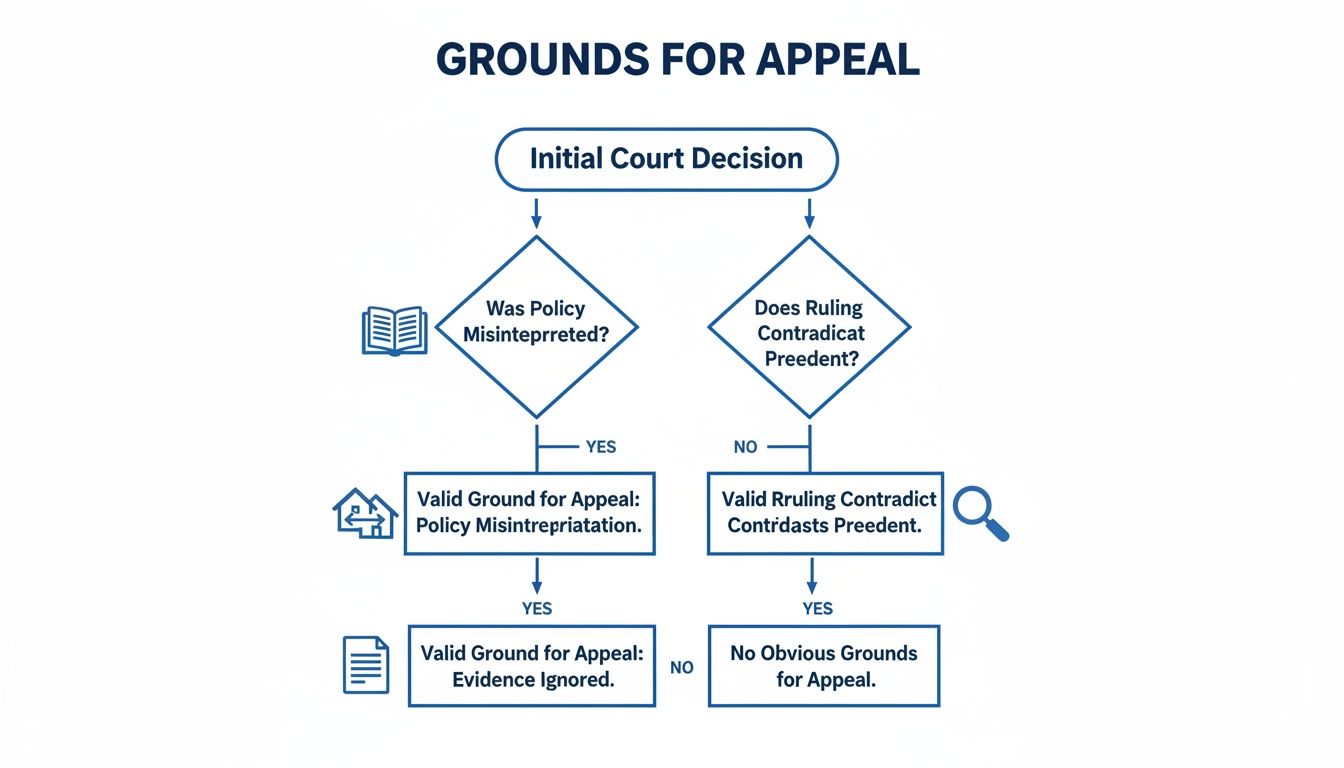
Successful appeals are built on factual arguments about policy errors or overlooked evidence. This is exactly the kind of material suited to the Written Representations route.
Choosing the appeal route is a strategic decision. For most homeowners, the speed and low cost of Written Representations make it the obvious choice.
It is important to be realistic about success rates. Government data shows Written Representations make up 94% of cases but have a 29% success rate. Hearings are successful 40% of the time. You can learn more from the official planning appeal statistics.
Comparing the Three Planning Appeal Routes
This table compares the appeal procedures to help you decide.
Appeal Type | Typical Timescale | Average Success Rate | Best Suited For |
|---|---|---|---|
Written Representations | 18–22 weeks | ~29% | Home projects like extensions where arguments are clear and evidence based. |
Informal Hearing | 24–30 weeks | ~40% | Complex issues where a direct discussion with the Inspector would help. |
Public Inquiry | 48 weeks+ | ~50%+ | Major, contentious developments. Very rare for homeowners. |
The choice depends on your case. For most homeowners, the written route is the most logical choice because of its speed, simplicity, and low cost.
How To Prepare And Submit A Winning Appeal
Submitting a planning appeal is a formal process. A strong submission is built on evidence and a clear planning argument. It is not an emotional letter. You must give the Planning Inspector a logical case that makes overturning the council's decision the only reasonable option.
Your success depends on how well you take apart the council’s reasons for refusal. You must address every point they made. If you ignore one, the inspector has an easy reason to dismiss your entire appeal.
Your preparation must be careful. You need to gather the right documents and structure your argument so it is solid. A messy or incomplete submission will be rejected.
Crafting Your Statement Of Case
Your statement of case is the most important document you will write. It is your main argument. It must be clear, concise, and focused only on planning issues. Do not use it to complain about the council, the planning officer, or your neighbours.
Structure it as a direct reply. Use headings that match the council’s refusal reasons. Under each heading, explain why the council's conclusion is wrong. Use planning policies and hard evidence to back up every claim.
For example, if they mentioned a loss of light to a neighbour, your statement should include:
Policy References from the council's own Local Plan that your project follows.
Factual Evidence like sun path diagrams or a professional daylight study showing the impact is small.
Relevant Precedents from nearby homes where similar extensions were approved. Include their planning application numbers.
Your statement of case must be professional and objective. Its purpose is to show a technical error in the council's judgment, not to show your frustration.
Gathering The Essential Documents
Your appeal needs more than just your statement. You must also provide all the original documents from your application. The inspector needs to see the exact same information the council used.
This creates a complete package for the inspector. You will submit everything through the government's official online portal. There is no fee to submit an appeal, but the deadlines are very strict.
Here is a checklist of what you will need:
Your completed appeal form.
A full copy of your original planning application.
All plans and drawings submitted with that application.
The council's official decision notice.
Your detailed statement of case.
A common mistake is trying to change the design during the appeal. This is not allowed. The inspector can only rule on the exact plans the council refused. If you want to change the design, you must submit a new planning application. You can find more guidance on our planning approvals and refusals page.
By preparing these documents carefully and building a case on facts, you will greatly increase your chances of a successful planning permission appeal.
What Happens After You Submit Your Appeal
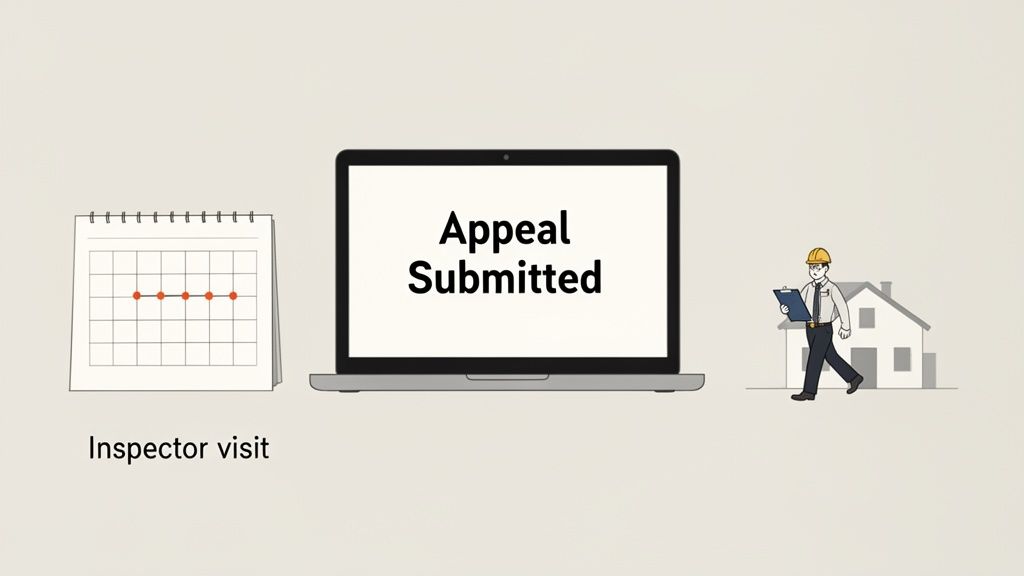
After you submit your appeal, the waiting begins. Knowing what happens next can help you manage your expectations.
Your case goes to the Planning Inspectorate. This is an independent government body, separate from your local council. First, a case officer checks you have sent all the required documents. If anything is missing, they will contact you, but this will cause delays.
The Inspector's Assessment
Once your appeal is validated, it is given to a Planning Inspector. This is a qualified professional who will look at your case with fresh eyes. Their job is to make a new decision based only on the evidence from you and the council.
The inspector will study your statement of case, the council's response, and all the original plans. For most homeowner appeals, they will also visit the site.
The inspector acts as an independent judge. Their visit is only for them to see the site and understand the context. They will not discuss the case with you or your neighbours during the visit.
The site visit helps the inspector see the property and its surroundings. It gives them a real feel for the street, the distance to other houses, and the character of the area. They will usually view the site from public land but may need to access your property.
Timelines And The Final Decision
Waiting for the outcome is often the hardest part. How long you wait depends on your appeal route. Even the quickest option, written representations, takes time.
Recent official data shows that by late 2025, just over a third of appeals by written representation were decided within 20 weeks. This is a significant delay to factor into your project plans. You can review the official report on planning appeal timelines for the full details.
Eventually, you will receive a formal decision letter. This letter explains the inspector's detailed reasoning and their final decision.
Appeal Allowed: This is a win. The council's refusal is overturned. The letter itself acts as your planning permission, though it may include conditions you must follow.
Appeal Dismissed: This means the inspector agrees with the council. The refusal stands. The letter will explain exactly why your appeal failed.
This letter brings the process to an end. A win means you can proceed with your project. A loss provides valuable feedback. The inspector's reasoning gives you a clear guide on what to change if you decide to submit a new application.
Common Questions About Planning Appeals
Here are answers to some common questions about planning appeals.
How Much Does A Planning Permission Appeal Cost?
It is free to submit an appeal to the Planning Inspectorate. However, there are other costs.
The real costs are professional fees and delays. Hiring a planning consultant to prepare your case can cost from £500 to over £2,000, depending on the project's complexity.
The biggest hidden cost is time. An appeal typically takes around six months. This delay can disrupt your builder’s schedule and expose you to rising material costs. It is a major financial risk to consider.
Can I Change My Plans During The Appeal?
No, you cannot. This is a common and critical mistake.
A planning appeal reviews the exact same plans the council refused. You cannot submit new drawings or change the design. The inspector's job is only to decide if the council's original decision was correct.
If you have a better idea for the design, you must withdraw the appeal. You then need to submit a brand new planning application with your revised plans.
An appeal reviews a past decision. It is not a chance to redesign your project. To make changes, you must start a new application.
What Are My Options If I Lose The Appeal?
If the inspector dismisses your appeal, that is usually the final word on that design. It means an independent expert agrees with the council.
Your best option is to go back to the drawing board. Work with your designer to create a new plan that fixes the issues raised by both the council and the inspector. You can then submit this as a fresh application.
It is possible to challenge the inspector's decision in the High Court. This is not a realistic option for most homeowners. It is extremely expensive and can only be done on specific legal grounds, not just because you disagree with the outcome.
Does A Neighbour's Approved Extension Help My Case?
It can, but only if the projects are very similar. Pointing to a similar approval on your street can be a strong argument against an inconsistent decision.
To use this argument, you must provide the full address and planning reference number of the other property. It is also a good idea to include photos comparing your site with theirs.
However, the inspector will see through a weak comparison. If your neighbour’s house is not in a conservation area but yours is, the example is not relevant. The projects must be truly similar for the comparison to matter.
Before you commit to the time and expense of an appeal or a full redesign, SurePlan can give you the clarity you need. Our Planning Confidence Report digs into recent council decisions in your immediate area, showing you what gets approved and what gets refused. For just £49, you get an evidence-based view of your chances, helping you make a smarter, more confident next move. Learn more about how SurePlan works.