
Feb 23, 2026
Thinking about an extension? It’s a great way to get more space. But first, you need to know the true cost of planning permission. If you only budget for the council's application fee, you risk a painful financial surprise. That fee is just a small part of the total cost.
The bigger expense comes from professional drawings and surveys. These are essential for your application. They can easily cost thousands. This guide explains every potential cost so you can create a realistic budget from the start and avoid wasting money on a failed application.
The True Cost of Planning Permission for Your Extension
Unexpected costs can turn your dream extension into a nightmare. Many homeowners budget for the council's fee and are shocked by the other essential expenses. If your application fails after paying these costs, that money is gone for good. You are left with nothing to show for it.
This guide gives you a clear look at every potential cost. We will explain why each fee is necessary and what you should expect to pay. A solid budget is the best way to protect your money and keep your project on track.
Understanding the Main Cost Components
Getting planning permission involves paying for several services. You will pay for professional drawings, council charges, and sometimes specialist reports. Each plays a crucial role. Forgetting to budget for even one can lead to delays or a flat out refusal, costing you thousands.
This diagram shows the three core areas you must budget for.
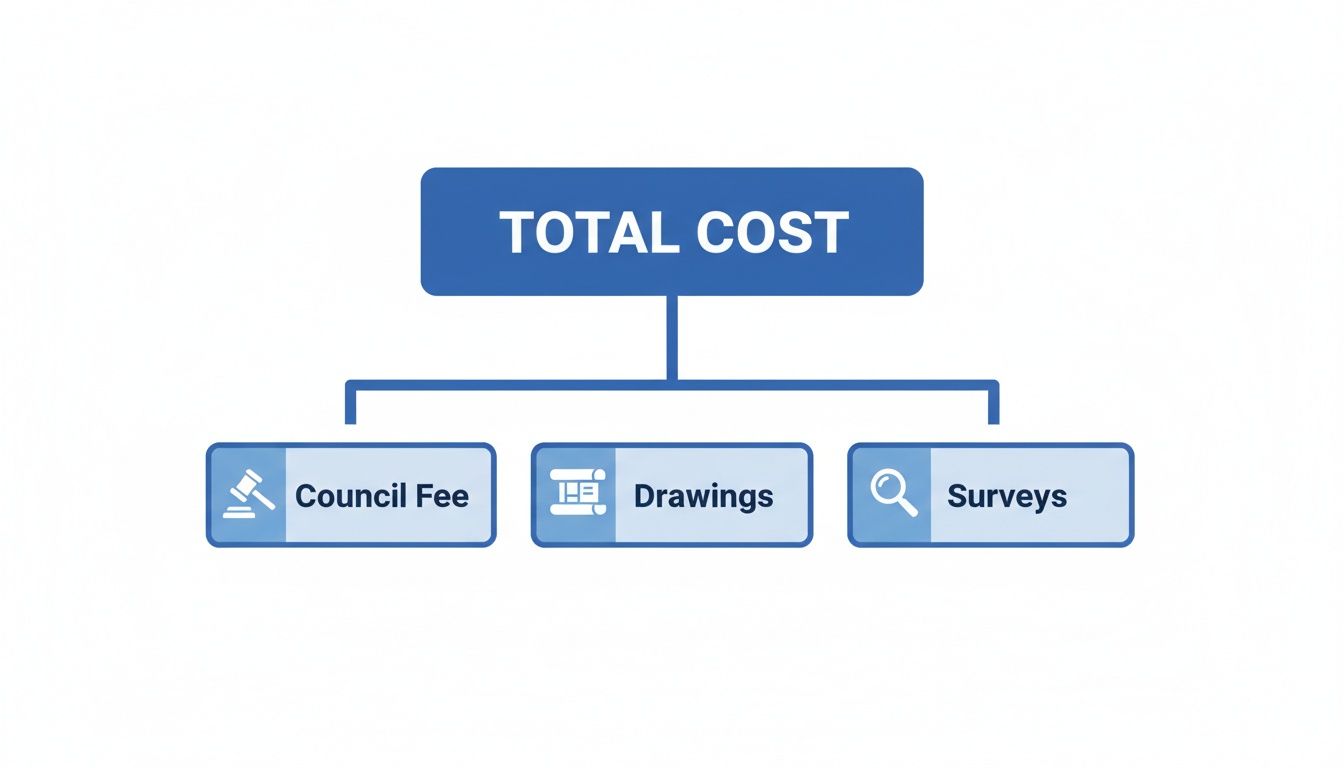
As you can see, the council fee is just one piece of the puzzle. The real investment happens before your application even reaches the council.
Here is a quick summary of the typical costs you might face.
Quick Overview of Potential Planning Permission Costs
This table shows the typical costs for an extension application. Prices are estimates. They can vary by location and how complex your project is.
Cost Item | Typical Price Range | Why You Need It |
|---|---|---|
Council Application Fee | £258 | Your council charges this non refundable fee to assess your application. |
Architectural Drawings | £1,500 – £4,000+ | The council requires professional, scaled plans to assess your proposal. |
Specialist Surveys | £400 – £2,500+ | You might need these if your property has issues like nearby trees or flood risk. |
Planning Consultant | £1,500 – £5,000+ | Optional but useful for complex projects to improve your chance of approval. |
These numbers show that professional services make up most of the cost. You pay these fees long before you pay the council.
Why Initial Costs Add Up So Quickly
You pay fees before submission to create the detailed evidence your council needs. Without professional drawings and the correct documents, your application will be rejected immediately. A planning officer will not even look at it properly.
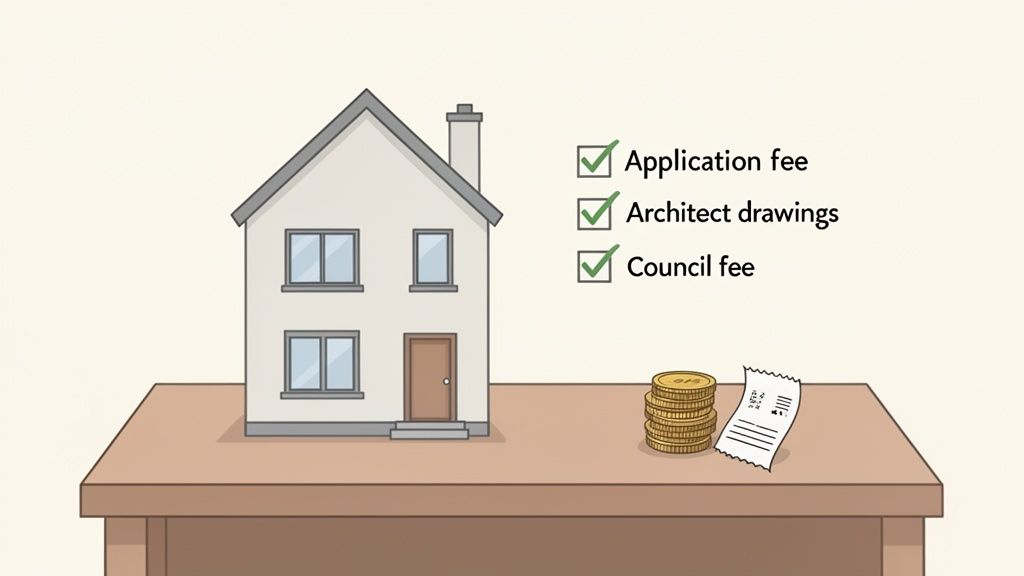
These upfront investments are essential. They typically include:
Architectural Drawings: You need a full set of plans. These must show the existing and proposed layouts of your home. They include floorplans and elevations drawn to scale. They must meet the council's strict technical standards.
Council Application Fee: This is the standard, non refundable charge for the council to assess your plans. In England, this is currently £258 for a home extension.
Specialist Surveys: Your property might require extra reports. Common ones include tree surveys, flood risk assessments, or ecological surveys for protected species like bats.
Before you commit thousands to these steps, understand the total build cost. Use a reliable extension cost calculator to estimate the build price. This will help you create a complete financial plan from day one.
Understanding the Core Application Costs
Two costs are unavoidable when you apply for planning permission. You must budget for the council's fee and the professional drawings they require. Without these, your project cannot start.
First is the householder application fee. You pay this directly to your local council. It is a standard, non refundable charge for them to review your proposal. In England, this currently costs £258 for a single home extension. Remember you are paying for their time, not a guaranteed yes.
Why Professional Drawings Aren't Optional
On top of the council fee, you must pay for professional drawings. Your council will not accept rough sketches or basic plans you draw yourself. They need a specific set of detailed, scaled drawings to understand what you want to build.
These plans must clearly show:
Existing elevations and floor plans to document your property as it is now.
Proposed elevations and floor plans to show what the finished extension will look like.
A site location plan to show your property in relation to the street and neighbours.
A block plan that details your property boundary and where the new extension will sit.
Without this full set, your application will be marked as invalid. It will not proceed. This part of the process typically costs between £1,500 and £4,000. The exact cost depends on your project's complexity and the professional you hire.
The Financial Risk of Getting It Wrong
A planning refusal is a very expensive mistake. It can leave you thousands of pounds out of pocket with nothing to show for it. The £258 council fee is just the start. Add the cost of drawings, and a failed application means you have wasted £3,000 or more on a project that is going nowhere.
You can learn more about these initial expenses in our guide to UK planning permission costs.
While UK planning approval rates for home extensions are high, a refusal can cost you over £3,000 in non refundable fees. Learn more about recent planning application approval rates.
This is why it is so important to check your chances of success before you spend this money. It helps you avoid becoming one of the unlucky homeowners whose application gets rejected.
The Hidden Costs That Catch Homeowners Out
Thinking your planning cost is just the council fee and drawings is a common mistake. It can be a very expensive one. Many homeowners get a nasty shock when their council demands extra reports. These can add thousands of pounds to the bill.
These are not optional extras. If your property has specific issues, the council will put your application on hold until you provide the reports they need. Knowing these potential costs upfront is the only way to create a budget that works.
Common Surveys Your Council Might Demand
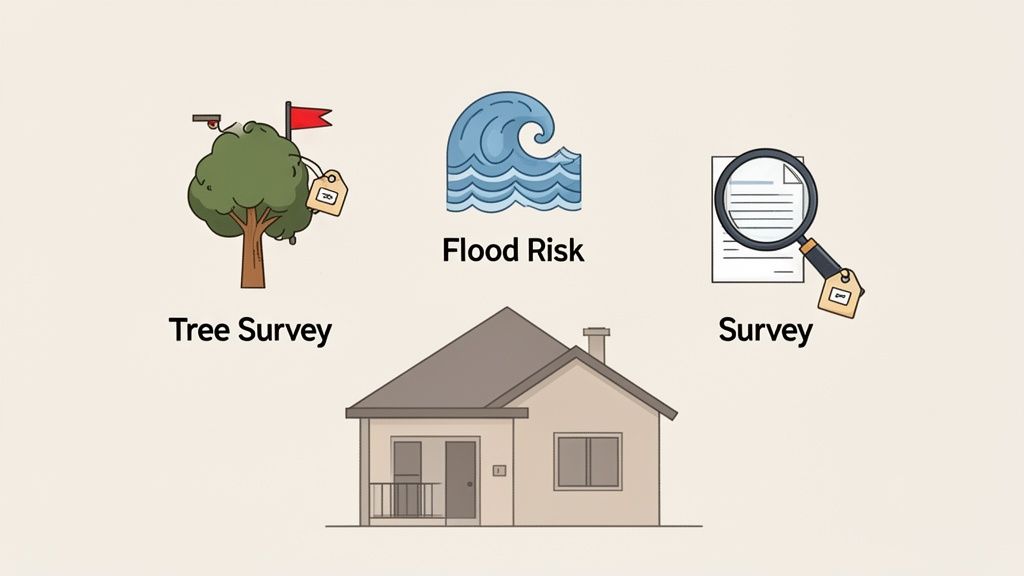
Your council must consider the wider impact of your extension. This includes local wildlife, drainage, and trees. If your project raises any potential issues, they will require a professional report before they consider approval.
Here are some of the most common reports that surprise homeowners:
Tree Survey (Arboricultural Report): You will likely need this if you have large trees on your property or near your boundary. An expert must assess the impact your build will have on the trees. Expect this to cost between £400 and £1,000.
Flood Risk Assessment (FRA): An FRA is usually mandatory if your home is in a flood zone. This report shows how your extension will manage drainage and not increase flood risk. This can cost from £500 to over £2,500.
Ecological or Bat Survey: Councils take protected species like bats very seriously. If your work could disturb their habitats, you'll need a specialist survey. These surveys are time sensitive and can cost from £450 to £1,500+.
Why These Costs Derail Budgets
The problem is not just the cost of these reports. It is the surprise expense and the delays it causes. Your architect may not have flagged these risks. This leaves you to find extra money mid application. Your project could stall for weeks or even months.
Your property’s location directly influences your total extension planning permission cost. A home near a river or with mature trees will almost certainly have a higher upfront cost than one on a simple plot.
Finding out about these potential costs early is critical. It allows you to investigate the risks and get quotes for any reports before you spend thousands on drawings. This proactive step helps you build a realistic budget from day one.
What Happens When Your Application Is Refused
A planning refusal is more than just bad news. It is a major financial blow that stops your project. You are left thousands of pounds out of pocket with nothing to show for it. All the money you spent on drawings and council fees is gone.
This is where your extension planning permission cost can spiral. You face two expensive and uncertain options. You can appeal the decision, which is a long and difficult process with a low chance of success. Or you can go back to the start and redesign.
The Financial Impact of a Refusal
Let’s be direct about the numbers. A refusal means your initial investment is a sunk cost. You then have to decide how much more you are willing to risk to save the project.
Your choices, and their likely costs, include:
Pay for revised drawings: Your designer must create new plans to address the council's reasons for refusal. This can cost from £500 to £2,000+, depending on the changes.
Pay the application fee again: Submitting a new design means paying the full council fee again. In England, that is another £258.
Pay for an appeal: If you choose to appeal, you will likely need a planning consultant to prepare your case. This can cost £1,000 or more. Success rates for householder appeals are often below 30%.
A refusal is not just a setback. It is a financial trap. A reasonable project budget suddenly has an extra £2,000 to £4,000 added. There is no guarantee your second attempt will succeed.
Why Avoiding Refusal Is Crucial
The risk of refusal is real. The Planning Portal recently reported that the national refusal rate is 19%. This trend makes every application a higher risk decision for homeowners. You can find out more by reading the latest Planning Portal Application Index Report.
The most effective way to control your extension planning permission cost is to avoid a refusal. Understanding your likelihood of success before committing thousands gives you clarity. It protects your budget from expensive and avoidable mistakes.
How to Avoid Planning Permission Altogether
What if you could avoid the whole planning process? Imagine saving yourself months of waiting and a lot of money. For many smaller projects, this is possible.
You might be able to build an extension under Permitted Development rights. This means you can skip the full, eight week planning application process.
This route can save you thousands. But be careful. The rules are extremely strict and complex. One mistake could lead to the council ordering you to tear down your new extension at your own cost.
Understanding Permitted Development
Permitted Development is like a pre approved permission from the government. It allows certain home improvements to go ahead without a full application. But your project must meet a very specific set of rules.
These rules cover every detail, such as:
Size: A single storey rear extension on a detached house cannot extend more than four metres.
Height: The extension cannot be taller than the highest part of your existing roof.
Location: You cannot build on more than half the land around your original house.
Materials: The materials you use must look similar to your existing house.
This is just a small sample. The full list is long and unforgiving. To see which path your project might take, read our guide on choosing between the Permitted Development and planning routes.
Get Certainty with a Lawful Development Certificate
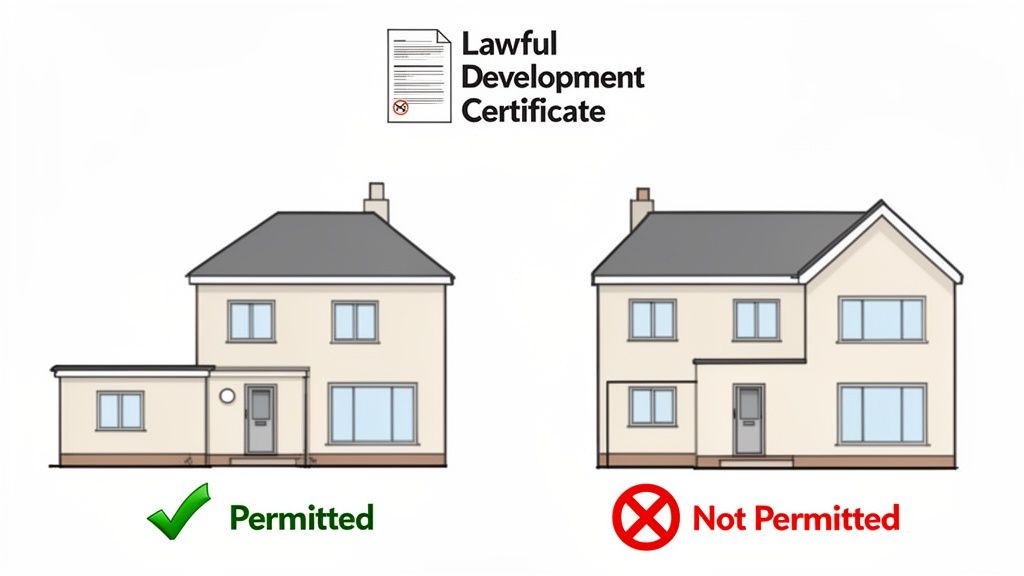
Even if you are sure your project meets the rules, how can you be certain? You do not want a neighbour complaining and the council investigating after the work is done. This is where a Lawful Development Certificate (LDC) is so valuable.
An LDC is not planning permission. It is official proof from your council that your proposed extension is lawful. It confirms you do not need planning permission. The application fee is cheaper than a full application. It costs £129 in England, which is half the price. The process is also usually faster.
An LDC gives you peace of mind and legal security. It proves your extension was built correctly. This is crucial evidence you will need when you sell your property. Without it, you could face serious problems with the sale.
Reduce Your Risk and Protect Your Budget
What is the biggest waste of money on an extension project? Paying thousands for drawings and fees only for the council to say no. When that happens, your money is gone. You are left with expensive drawings for an extension you cannot build.
There is a smarter way to manage your planning costs. Check your chances of success before you commit serious money. Why spend £2,000 or more on an application without first knowing if the council is likely to approve it?
Get Evidence Before You Spend
An early feasibility check helps you avoid this expensive mistake. For a small upfront cost, you get evidence based guidance on whether your ideas match what your local council approves. This is not guesswork. It is based on real planning data from your area.
This kind of review flags the critical issues that could cause a refusal later, including:
Local Policy Conflicts: Does your design clash with council rules on size or appearance?
Property Constraints: Is your home in a conservation area or affected by special rules?
Neighbourhood Precedent: What has been approved or refused on your street recently?
Taking this first step gives you clarity. You can then move forward with confidence. You can also tweak your designs to improve your odds, or walk away from a plan that was never going to work. This can save you a small fortune.
What an Early Check Looks Like
Instead of crossing your fingers, you get a clear breakdown of the specific planning risks your project faces. This lets you have a much more informed conversation with your architect from day one.
Here is an example from a Sureplan report showing how it highlights local precedents and policy issues.
The report clearly shows which route is most likely for the project. It scores the confidence level based on recent local decisions. It provides a simple, direct answer to your most important question at the start of your journey.
The goal is to move forward with your eyes open. Knowing your project's strengths and weaknesses based on hard evidence is the best way to protect your budget and prevent the financial pain of a planning refusal.
Frequently Asked Questions
Here are answers to some of the most common questions about the cost of planning permission for an extension.
How Long Does Planning Permission Take and Does That Affect Cost?
Councils are supposed to decide on a standard householder application within eight weeks. In reality, delays are very common.
Waiting longer does not directly increase council fees. But it can still cost you money. A delayed decision can push back your build start date. This might affect quotes from your builder.
The biggest financial risk is when the council asks for more information or design changes. This almost always means paying your designer for extra work. It can put your application on hold for weeks, adding stress and uncertainty to your budget.
A complete and well prepared application from the start is your best defence against these costly delays.
Do I Have to Pay the Application Fee Again If I Reapply?
Yes, in most cases, you will. If your application is refused and you submit a new design, you must pay the full £258 application fee again. That is on top of paying your designer to create the revised drawings.
Some councils might offer a "free go" if you reapply within 12 months of a refusal. But this usually only applies if the changes are very minor. It is not a guaranteed solution. It never covers your redesign costs.
Is It Cheaper for a Loft Conversion Than an Extension?
The council's application fee is usually the same. Both projects are typically a "householder application." The real cost difference is whether your project needs full planning permission at all.
Many loft conversions are designed to fit within Permitted Development rules. This route lets you bypass the main planning process and its costs. Figuring out which path your project can take is a critical early step.
Can My Architect Guarantee Planning Permission?
No, and be very wary of any professional who says they can. A good designer will use their experience to create plans that are likely to comply with local policies. This greatly improves your chances of success.
However, the local planning authority always makes the final decision. No architect controls the outcome. The most reliable approach is to base your design on hard evidence from recent, similar planning decisions in your area.
This data driven method gives you a clear idea of what is achievable before you commit thousands to expensive drawings.
Before you spend thousands on architectural drawings and council fees, find out if your project is likely to be approved. SurePlan provides an evidence-based Planning Confidence Report that analyses your local council's recent decisions, giving you the clarity you need to protect your budget and plan with confidence. Get your report at https://www.getsureplan.co.uk.