

Feb 2, 2026
Knowing the true cost of planning permission helps you avoid sinking thousands into a project destined for refusal. While the council's application fee is just £258 in England, the total cost to get your plans approved is often between £3,000 and £8,000.
Breaking Down the Total Cost of Planning Permission
Many homeowners focus only on the council fee. This is a mistake. In reality, the money you spend on architects, consultants, and essential surveys makes up most of the budget. Understanding these costs upfront gives you clarity and stops you from wasting money on a non starter. A bad budget can derail your project before it even begins.
The Three Main Cost Categories
To budget correctly, you need to plan for three different types of costs. Skipping any of them can lead to expensive problems.
Council Application Fees: The fixed price you pay your local council to review your plans.
Professional Fees: What you pay experts like architects and planning consultants to prepare your application.
Hidden and Indirect Costs: Expenses you might not expect, like structural surveys or legal agreements with neighbours.
This chart shows how these costs typically add up.
As you can see, professional fees are the largest part of the budget. This shows that getting the right advice from day one is a smart financial move. You can find out more about the whole process in our complete guide to planning permission.
Your total planning permission costs are not one single bill. They are a series of payments that reduce your risk and increase your chance of getting a 'yes' from the council first time.
Getting this budget right gives you confidence. You can move forward without worrying that you missed something important. This guide gives you the real world numbers you need to plan your project properly and avoid financial stress.
Understanding Your Core Planning Application Fees
The first cost you will face is the official fee paid to your local council. Knowing this fixed cost is a good start for your budget, but the amount depends on what you are building and where you live. Getting this wrong means you could pay twice.
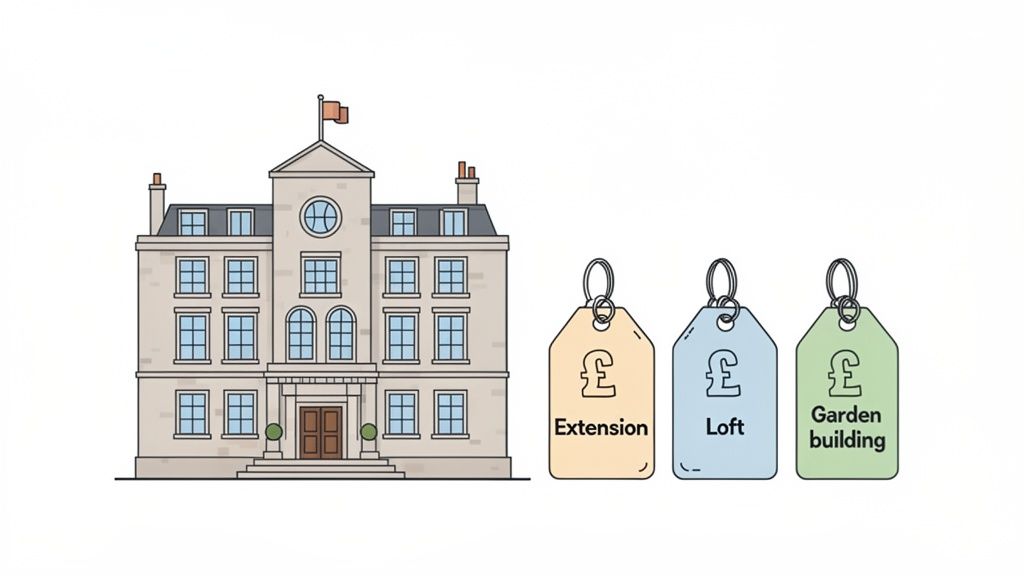
This fee does not guarantee approval. It just covers the council's time to check your proposal against planning rules. The fee is non refundable, even if your application is refused.
Standard Fees for Home Projects in England
Most homeowners in England submit a Householder Application. This is for projects like extensions, loft conversions, and garden rooms. The fee for this is currently £258.
The cost changes for different projects. For example, building a single new house costs £578. It is vital to submit under the correct category. Filing the wrong application is an avoidable mistake that will cost you money and time.
The planning application fee is an upfront cost. Paying the correct amount for the right application is the very first step. A mistake here causes delays and may mean you have to pay the fee again.
What About the Rest of the UK?
Planning is managed separately in Scotland, Wales, and Northern Ireland. They each set their own fees. The numbers are slightly different.
Wales: A standard householder application is £264.
Scotland: The fee for altering or extending a single house is £300.
Northern Ireland: The cost for a residential extension is £323.
These figures show why you must always check the specific fees on your local council's website. Do not rely on general advice.
The Cost of Getting It Wrong
A refused application is more than just a disappointment. It is a direct financial loss. Many councils offer a "free go" to resubmit within 12 months, but this is not the full story.
Your architect will need to be paid for the extra work to redesign the plans. This extra professional time often costs far more than the original £258 application fee. A refusal can easily turn into a mistake that costs thousands.
A second submission is also not guaranteed to succeed. This is why getting solid, evidence based advice before you submit is so important. It helps you avoid the financial penalty and months of delay that come with a refusal.
Can You Ever Avoid This Fee?
Yes, in some cases. The most common way is by using your Permitted Development rights. These are government rules that allow certain home extensions without needing a full planning application.
If your project falls under these rules, you will not pay the full application fee. However, you should apply for a Lawful Development Certificate (LDC). This proves your project is compliant. An LDC costs about half the price of a full application, currently £129 in England.
This certificate gives you peace of mind. It is also the legal proof you will need when you sell your home. It confirms your project was built lawfully.
Budgeting for Essential Professional Expertise
The council's fee is just the start. To give your project the best chance, you need to hire professionals. Their fees make up the biggest slice of your planning costs. Skimping here is what leads to a costly refusal.
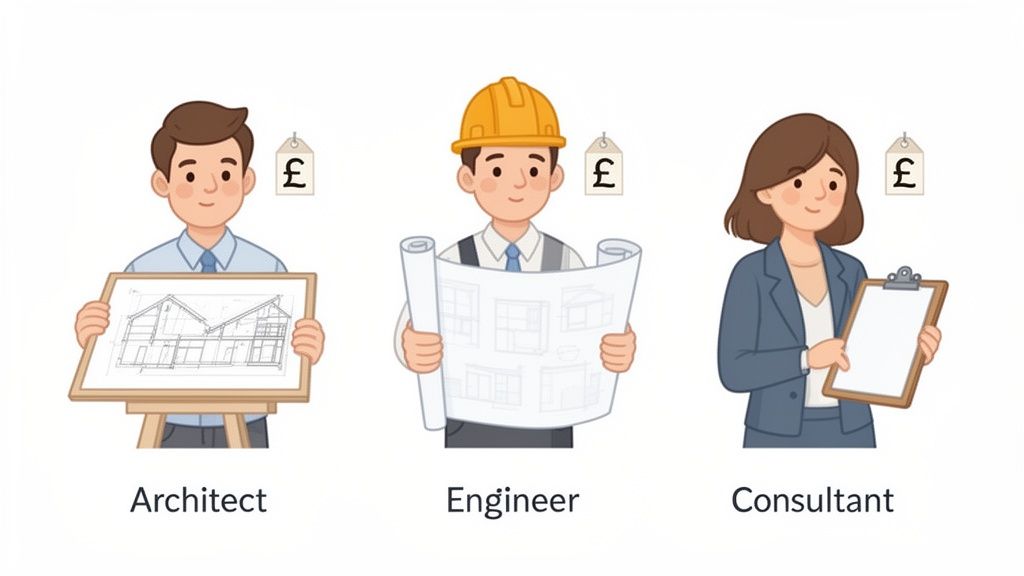
Hiring the right team turns your idea into a professional application that a planning officer can approve. Trying to cut corners here is a false economy. Poorly designed plans are a top reason for rejection. This forces you to pay for redesigns and submit all over again.
Architect or Architectural Designer Fees
An architect is usually the first professional you hire. They create the detailed drawings the council needs to see. Their fees vary based on project complexity, reputation, and your location.
They usually charge in one of two ways.
Percentage Based Fee: The architect charges a percentage of the total build cost, usually between 5% and 12%. This is common for larger projects.
Fixed Fee: For a standard extension, many architects offer a fixed price for the planning stage. This gives you cost certainty and is typically £2,000 to £5,000 for the planning drawings.
It is vital to get a written quote that states exactly what is included. Does the fee cover submitting the application or just the drawings? A clear contract prevents surprise bills later.
The Role of a Planning Consultant
Do you need an architect and a planning consultant? It is a fair question. An architect designs what you want to build. A planning consultant figures out how to get it approved. They are experts in local and national planning policies.
Hiring a consultant is a strategic move if your project involves:
A property in a Conservation Area or Green Belt.
A listed building with strict rules.
A previous refusal that needs a new approach.
A design that pushes the boundaries of local policy.
A planning consultant might charge between £1,000 and £3,000 to prepare and manage your application. Their knowledge can be the difference between approval and an expensive refusal. For more help, see our guide on whether to speak to an architect or planner first.
Hiring a planning consultant for a complex project is like hiring a specialist lawyer for a tricky legal case. Their knowledge of the system can save you time and money.
Essential Survey and Engineering Costs
Before your architect can finish the drawings, you will likely need specialist surveys. These reports provide the evidence the council needs to assess your project. If you do not provide the right ones, your application will be rejected before it is even reviewed.
Here are a few common surveys and what you can expect to pay.
Topographical Survey: This maps the levels of your land. It is essential for any extension and costs £400 to £800.
Tree Survey: If you have large trees near your property, this is often mandatory. Costs start from £350.
Structural Engineer: You might need their advice early for complex designs. A structural report can cost from £500 to £1,500.
Ecological Survey: This is required if your project could affect protected species like bats. A basic survey starts at about £400.
These services are not optional extras. They are the foundation of a successful planning application. Official statistics show that well prepared applications have a high chance of success. Some project types get approved over 90% of the time.
Uncovering the Hidden Costs of Your Project
Getting planning permission can feel like the final step. For many homeowners, it is actually the start of unexpected bills. Understanding these potential costs from day one protects your budget from five figure surprises that can stall your project.
These are fees that appear after you have permission. They are separate from your application and professional costs.
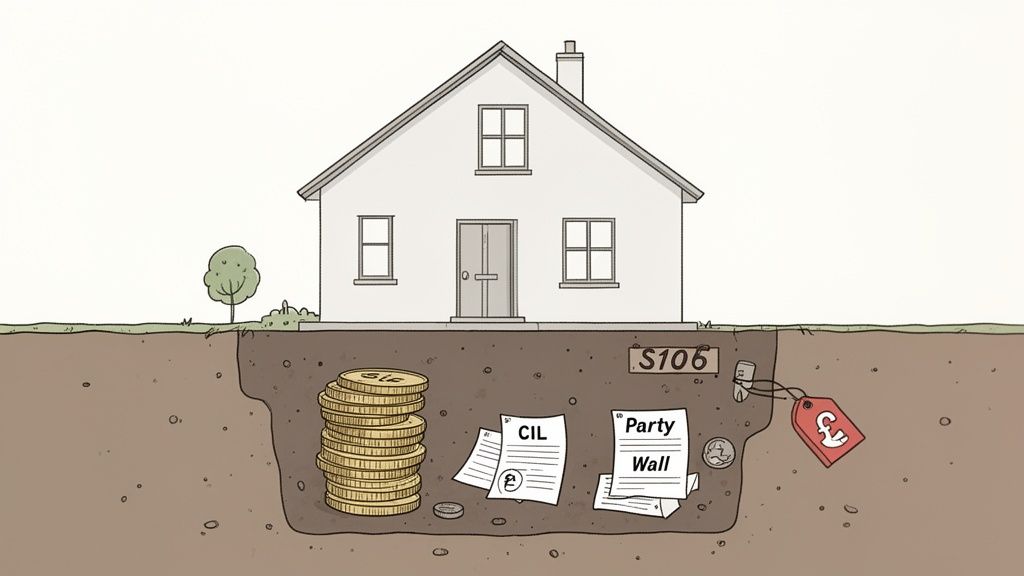
Many of these charges only become clear after your plans are approved. By then, you are already committed. Knowing about them now helps you budget properly and decide if your project is truly affordable before you spend thousands.
Let's compare the costs you see coming with the ones that often catch people out.
Comparing Upfront Fees and Hidden Costs
Upfront and Obvious Costs | Hidden and Post-Approval Costs |
|---|---|
Council Application Fee (£258+) | Community Infrastructure Levy (CIL) (£1,000s to £10,000s) |
Architect Fees (£2,000 to £5,000+) | Party Wall Surveyor Fees (£1,000 to £3,000+) |
Planning Consultant Fees (£1,000 to £3,000+ if needed) | Building Regulations Fees (£500 to £1,200+) |
Specialist Surveys (£400 to £1,500+ if needed) | Section 106 (S106) Agreement Fees (£1,500+ legal costs) |
The initial fees are often just the start. The costs that follow can be much larger.
The Community Infrastructure Levy or CIL
The Community Infrastructure Levy (CIL) is a charge councils can apply to new developments. It helps fund local infrastructure like schools and parks. This is a complicated area and often catches homeowners by surprise.
CIL is calculated on the size of the new floor space you create. For a large extension, this can easily run into thousands of pounds.
Some home extensions can be exempt from CIL. But you must apply for this exemption before you start work. If you miss the deadline, you could have to pay the full amount. This is a very costly mistake to make.
Section 106 Agreements Explained
Section 106 (S106) agreements are less common for simple extensions but are another potential cost. These are legal agreements between you and the council. They make a development acceptable that would otherwise be refused.
This might happen if your project has a big impact on something local, like ecology or a public right of way.
The costs can include financial contributions or paying the council’s legal fees for drafting the agreement. This can be £1,500 or more. If a planning officer mentions S106, get specialist advice immediately to understand the costs.
Hidden costs like CIL or Party Wall fees are not optional. They are legal obligations that can add thousands to your total spend if you are not prepared.
Party Wall Agreements With Neighbours
If your work is on or near a shared wall with a neighbour, you must follow the rules of the Party Wall etc. Act 1996. This law is separate from planning permission. It protects you and your neighbours from disputes during construction.
You must formally tell your neighbours about your plans. If they agree in writing, there may be no cost. If they disagree or do not respond, you must appoint a Party Wall Surveyor.
Your Surveyor: You will need to pay for your own surveyor, which typically costs £1,000 to £1,500.
Neighbour's Surveyor: If your neighbour appoints their own surveyor, you must also pay their reasonable fees. This can double your costs instantly.
Failing to serve a Party Wall notice can lead to a court order to stop work. This adds significant legal costs and delays to your project.
Building Regulations Approval Costs
Planning permission and Building Regulations are two separate approvals. They are not the same thing. Planning deals with the appearance and use of a building. Building Regulations cover the technical side of construction, like structural safety and energy efficiency.
You cannot legally build without Building Regulations approval. The process involves submitting technical drawings and having your work inspected. The fees for this service typically cost between £500 and £1,200. This is a mandatory cost for almost every project.
How Project Timelines Affect Your Total Spend
Time is money when you are building. A delay in the planning process is not just an inconvenience. It can start a costly chain reaction that adds thousands to your final bill.
Understanding this helps you create a realistic schedule and budget. It is a mistake to assume everything will run perfectly. Delays are common. Preparing for them is a smart financial move.
The Official Eight Week Target
In theory, your local council should make a decision on your application within eight weeks. This is the official target for most home projects.
In reality, that target is often missed. Council planning departments are frequently understaffed. This means your eight week wait can easily stretch to twelve weeks or more. This leaves your project in limbo.
How Delays Directly Cost You Money
A delayed planning decision has immediate financial consequences.
Losing Your Builder: Good builders are booked months ahead. If your approval is delayed, you could lose your slot. A replacement might be more expensive or unavailable for months.
Rising Material Costs: The price of building materials can increase quickly. A delay of a few months could mean your original quotes are no longer valid.
Expensive Redesigns: If your circumstances change during a long delay, you might need to make expensive changes to your plans after they are approved.
A planning delay creates uncertainty. It can force you to get new quotes for labour and materials in a more expensive market, increasing the total cost of your build.
Regional Differences in Council Performance
Whether your application is delayed depends heavily on where you live. The official target for most home projects is an eight week decision. How well councils meet this target varies across the UK.
Nationally, 86% of planning decisions are made on time. But this figure hides regional problems. Councils in the South East hit their targets 84% of the time. London boroughs lag behind at just 67%. This means a homeowner in London is more likely to face a long wait.
Understanding your local council’s performance is vital. It lets you build a more realistic schedule and financial plan. You can use tools like our planning timeline estimator to get a clearer idea of what to expect in your area. This helps you avoid the costly problems a single planning delay can cause.
Your Planning Cost Questions Answered
When budgeting for a home improvement project, you do not need a list of confusing fees. You probably have questions about what happens if things go wrong.
Here are straight answers to the most common money questions homeowners ask. Getting this right can help you avoid some expensive mistakes.
Can I Get a Refund If My Application Is Refused?
No. Council planning fees are non refundable, whether you get a yes or a no. You are paying for the council's time to assess your plans, not for a guaranteed approval.
Once you submit your application, that £258 fee in England is gone. This is why it is so important to get your application right the first time. A refusal means you have lost that fee and will have to spend more to try again.
Many councils offer a "free go" to resubmit within 12 months. But it is not a truly free second chance. You will still have to pay your architect to amend the drawings. This can easily cost another £500 to £1,500. A refused application is a financial mistake you want to avoid.
Is It Cheaper to Use Permitted Development Rights?
Yes. If your project fits within your Permitted Development (PD) rights, it is a much cheaper route. These are government rights that allow certain home improvements without needing formal planning permission.
This saves you money in two ways.
First, you avoid the main application fee. You will not pay the £258 planning fee.
Second, your professional fees are often lower. You will still need proper drawings for your builder. But they might not need to be as detailed as those for a full planning application.
Even if using Permitted Development rights, it is wise to apply for a Lawful Development Certificate (LDC). It costs about half the price of a full application, currently £129 in England. It gives you official proof that your build was legal. Without it, you could face problems when you try to sell your home.
How Much Does a Planning Appeal Cost?
If your application is refused, you can appeal the decision. Submitting an appeal to the Planning Inspectorate is free. There is no official government fee.
However, the real cost of an appeal is not free. The process is complicated and needs a strong, evidence based case to succeed. You will almost certainly need to hire a specialist planning consultant.
Professional fees for a planning appeal often start at £2,000 and can climb to £5,000 or more. It is also a slow process, often taking six to nine months to get a decision. Given the high costs and long delays, it is often better to work with the council to revise and resubmit your application instead.
Do I Pay My Architect All at Once?
No. You should never pay your architect's entire fee upfront. Professional fees are almost always broken down into stages. Payments are tied to specific project milestones. This is better for your cash flow and reduces your financial risk.
A typical payment schedule might look like this:
Initial Deposit: A small payment to start the initial survey and design work.
Planning Submission: A larger payment is due when the drawings are finished and the application is ready.
Building Regulations: Another payment is made when they produce the detailed technical drawings.
During Construction: If your architect oversees the build, further payments are scheduled at key construction stages.
Always insist on a clear, written contract that outlines the payment schedule before any work begins. This protects both you and the architect and makes sure there are no financial surprises.
Uncertainty about planning rules is the biggest source of unexpected costs. SurePlan gives you clarity before you commit. Our evidence based report shows you what your council has approved and refused nearby, helping you avoid costly mistakes for just £49. Get your Planning Confidence Report.