
Kensington and Chelsea Planning Permission
If you're planning an extension or home improvement project in Kensington and Chelsea, you're dealing with one of London's most protected boroughs. What works in other parts of the city often doesn't fly here.
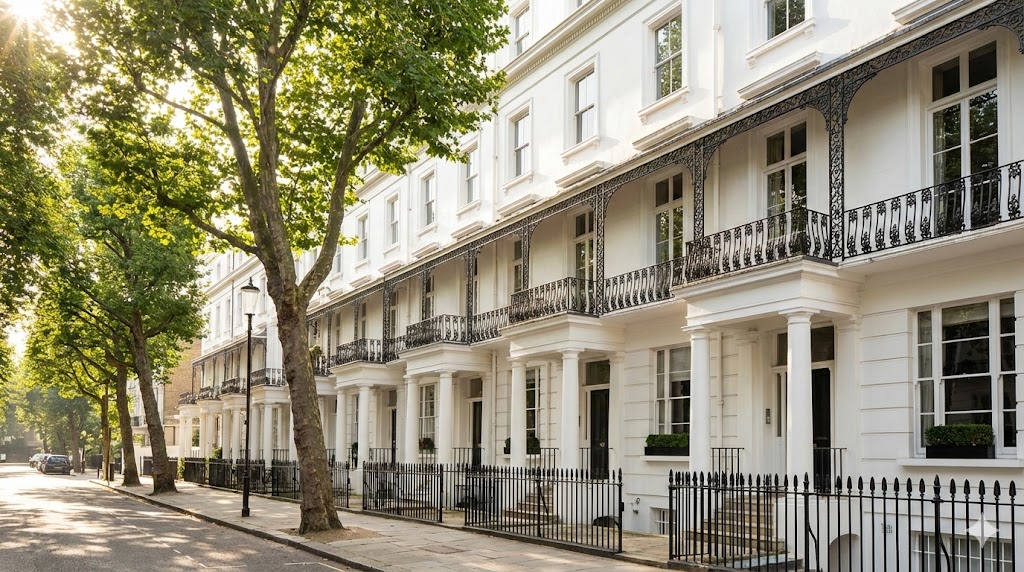
The Royal Borough of Kensington and Chelsea has a distinctive housing stock dominated by period properties, elegant stucco terraces, and mansion blocks. Many homeowners assume that national permitted development rules will cover their project, only to discover that local policies add significant layers of restriction. Planning decisions in this borough are shaped by a strong emphasis on heritage preservation and neighbourhood character, which means getting approval requires careful preparation.
Understanding how the council approaches applications in your specific street can make the difference between a smooth approval and a costly refusal.
Local Planning Context
Kensington and Chelsea contains some of the highest concentrations of conservation areas in the country. Large parts of the borough fall within designated zones where permitted development rights are restricted or removed entirely. Areas like Notting Hill, Chelsea, South Kensington, and Holland Park have extensive protections that affect what homeowners can build without explicit planning consent.
The council has also introduced specific basement restrictions following concerns about extensive excavation projects disrupting neighbourhoods. If you're considering any subterranean work, you'll find the rules here are stricter than almost anywhere else in London. Even above-ground extensions face scrutiny that wouldn't apply in outer boroughs.
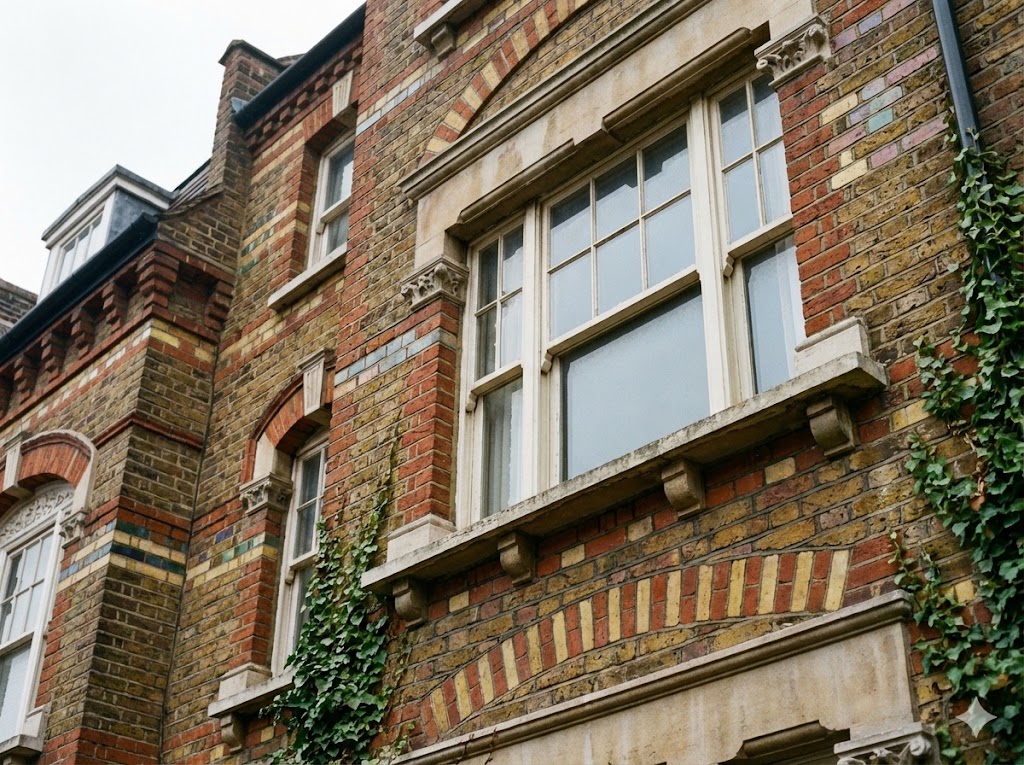
Article 4 directions are common across the borough, particularly affecting window replacements, exterior alterations, and changes to front gardens. What might seem like a minor improvement could require formal permission in Kensington and Chelsea when it wouldn't elsewhere.
Design standards are particularly stringent. The council expects proposals to demonstrate a clear understanding of the local architectural character, using materials and details that complement period properties rather than contrast with them.
What Types of Extensions Usually Get Approved
Despite the strict environment, extensions do get approved in Kensington and Chelsea when they're well designed and sensitively positioned.
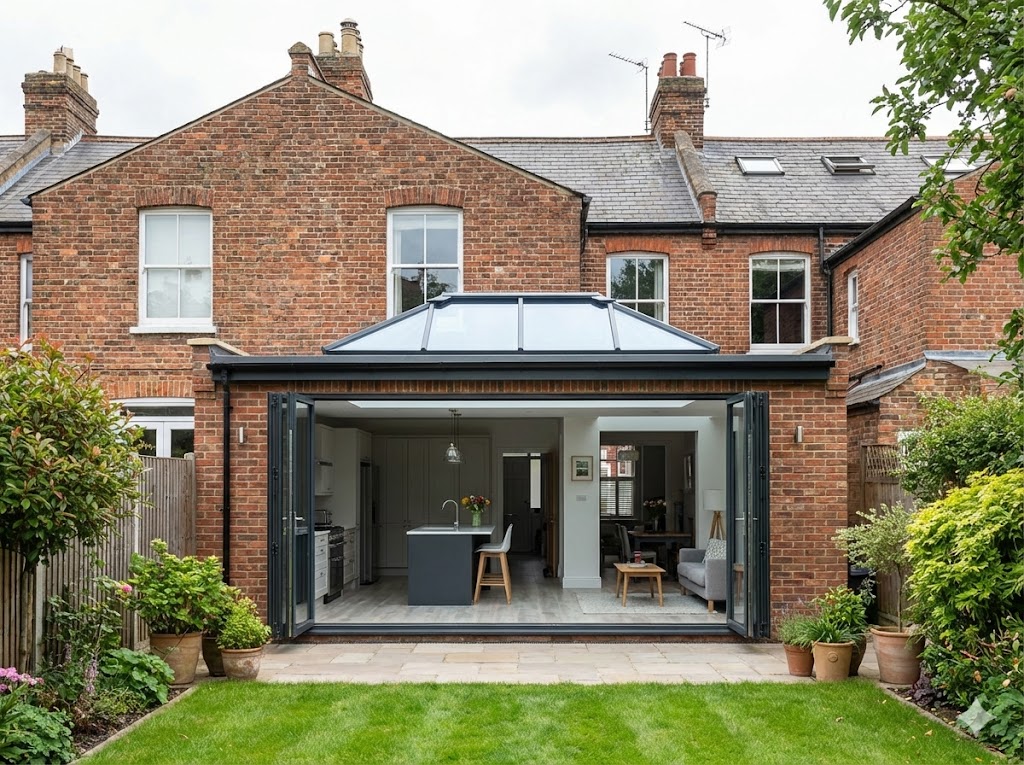
Single-storey rear extensions tend to be the most straightforward, provided they remain modest in scale and don't harm neighbouring amenity. The council looks favourably on designs that sit subordinate to the main building and don't dominate gardens or create overlooking issues.
Side return extensions on terraced properties can work well when they infill narrow passages without disrupting the streetscape. These are common in Victorian and Edwardian terraces across the borough, though the design must avoid industrial or overtly modern finishes that clash with period character.
Loft conversions are regularly approved, though many properties require planning permission rather than permitted development. Rear dormers are generally more acceptable than front-facing alterations, and the council prefers designs that maintain the roofline profile from the street.
Basement extensions face the most scrutiny. While still possible, the council now requires detailed construction management plans and imposes conditions limiting the depth and extent of excavation. Single-storey basements are more likely to succeed than multi-level schemes.
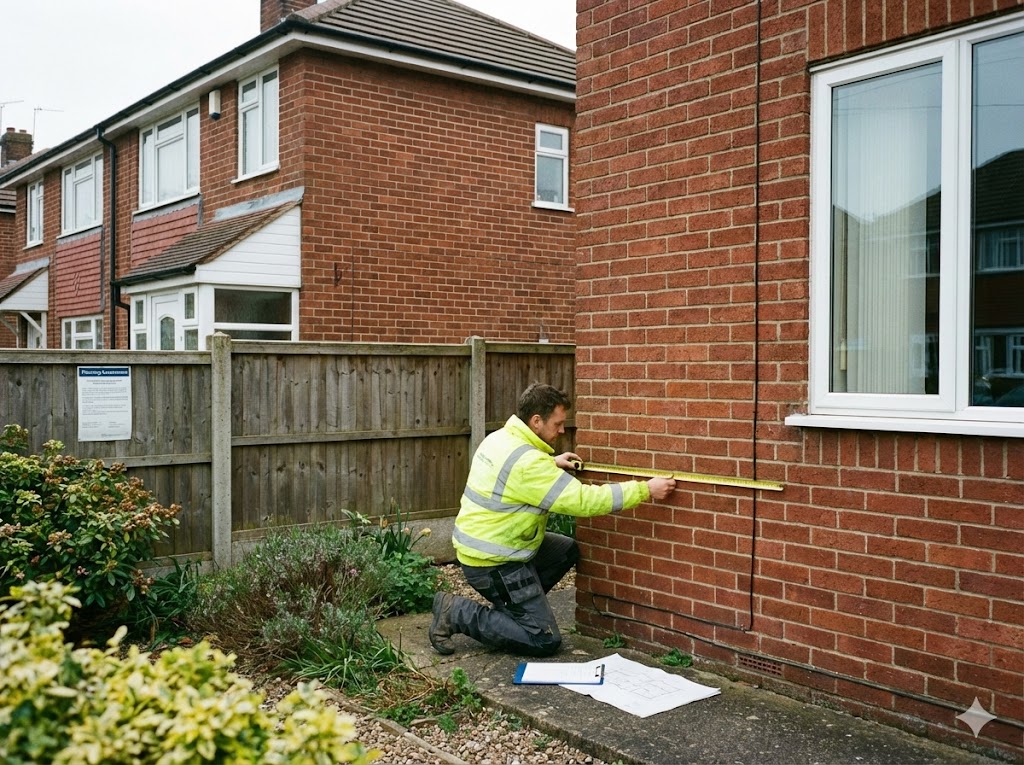
Permitted Development in Kensington and Chelsea
Permitted development rights allow certain works without formal planning permission, but these rights are heavily curtailed in Kensington and Chelsea.
Most flats and maisonettes have no permitted development rights for extensions. If you live in a converted property or purpose-built flat, assume you need planning permission for any external alteration.
Conservation area restrictions remove many rights that would otherwise apply. Rear extensions, roof alterations, and outbuildings may all require consent in protected zones that cover much of the borough.
Article 4 directions go further, removing rights for changes to windows, doors, boundary treatments, and front gardens in specified areas. Homeowners are often caught out when they assume minor works don't need permission.
Even where permitted development technically applies, the scale limits are tight. A small rear extension might fall within PD rules elsewhere but exceed what's allowed here due to local restrictions.
The safest approach is to check with the council or obtain a Certificate of Lawful Development before assuming any work is permitted.
Council Process and What Homeowners Usually Miss
The Kensington and Chelsea planning team handles a high volume of applications and maintains rigorous standards. Understanding the process helps you navigate it successfully.
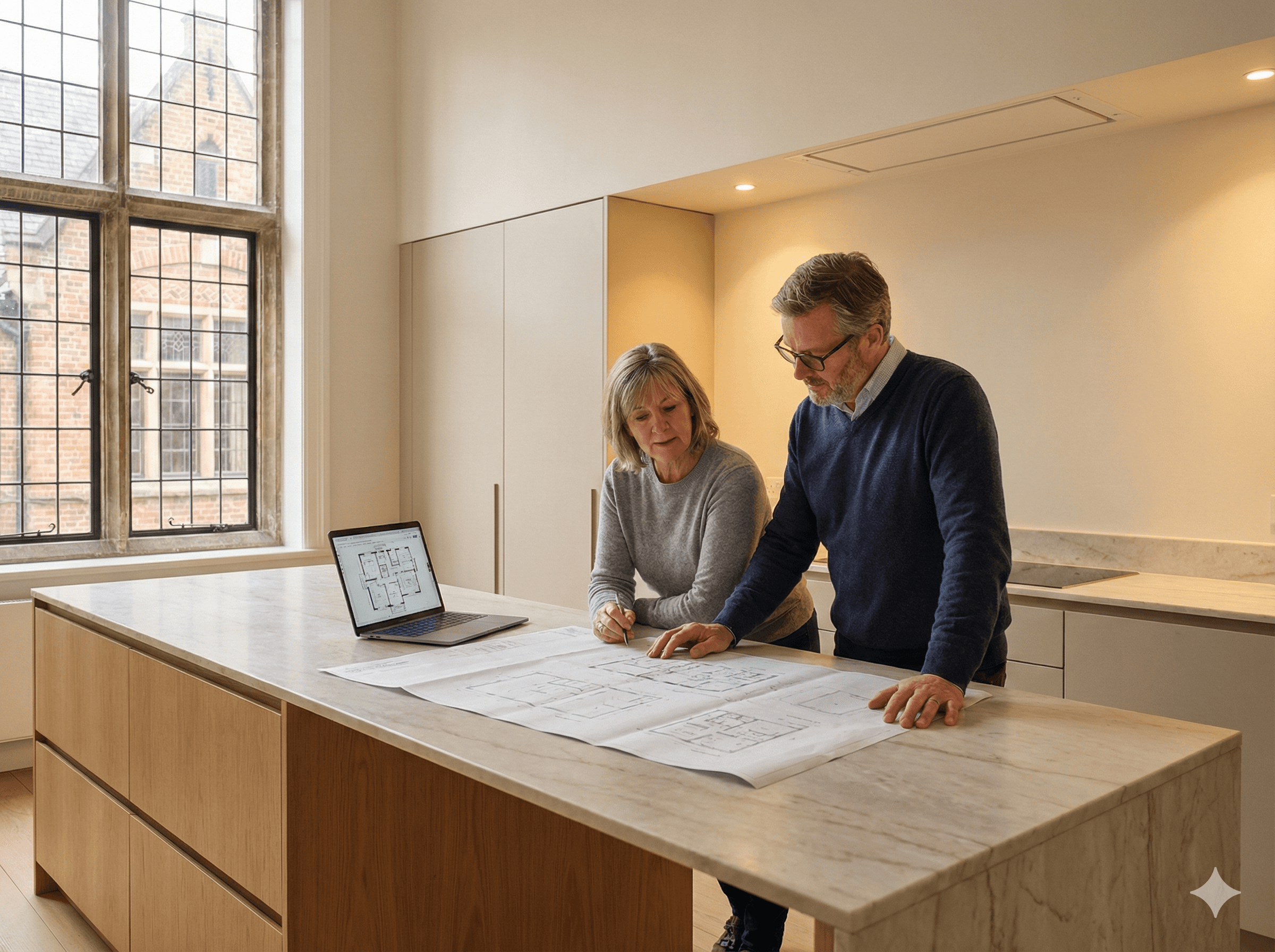
Pre-application advice is available and often worthwhile in this borough. Given the complexity of local policies, getting informal feedback before committing to detailed drawings can save money and time. The council's planners can flag likely issues with your proposal before you invest in a full application.
Typical determination times run around eight weeks for householder applications, though complex schemes or those requiring additional consultations may take longer. Don't assume a quick turnaround.
Many homeowners only discover policy conflicts after paying for architectural drawings. A rear extension that seemed reasonable might fall foul of conservation area guidance, or a loft conversion could conflict with streetscape policies. Identifying these issues early is far cheaper than redesigning mid-application.
Neighbour consultations are standard practice, and objections carry weight in this borough. The council takes amenity concerns seriously, particularly regarding light, privacy, and outlook. Engaging with neighbours before submitting can smooth the process considerably.


Common Reasons for Refusal in Kensington and Chelsea
Understanding why applications fail locally helps you avoid the same pitfalls. Several patterns appear repeatedly in Kensington and Chelsea refusals.
Harm to conservation area character is the most common issue. Extensions that introduce materials, proportions, or design features out of keeping with the surrounding architecture face refusal. The council expects applicants to demonstrate how their proposal respects and enhances the conservation area.
Overbearing impact on neighbours causes many refusals, particularly in tightly packed streets. Extensions that create a sense of enclosure, block light to habitable rooms, or overlook private gardens are resisted. The 45-degree rule from neighbouring windows is frequently applied.
Excessive scale relative to the host building leads to rejection when extensions dominate rather than complement the original property. The council wants additions to read as subordinate elements, not major new structures.
Basement concerns have become a distinct refusal category. Applications that propose deep excavation, lengthy construction periods, or schemes affecting structural stability or drainage face significant hurdles.
Poor design quality underlies many refusals. Generic or off-the-shelf proposals that could fit anywhere don't demonstrate the sensitivity this borough demands. The council expects applications to show genuine engagement with local character.
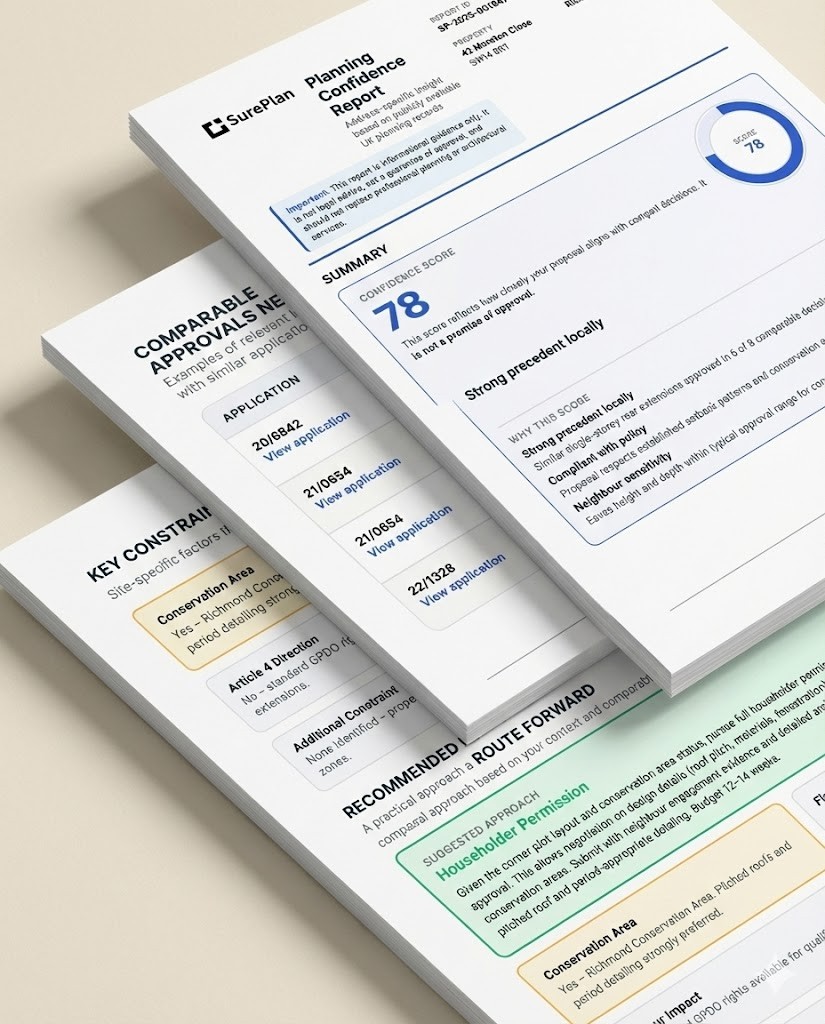
Report preview
See what your report looks like
Before spending on architects or formal applications, many homeowners in Kensington and Chelsea choose to understand their real chances first.
A Planning Confidence Report analyses your specific property against local planning patterns. You'll see what's been approved and refused nearby, understand the key sensitivities affecting your address, and get practical guidance on what's realistic for your project.
For a borough where the stakes are high and the rules complex, this upfront clarity helps you invest wisely and avoid costly surprises. Get your Planning Confidence Report for Kensington and Chelsea and know where you stand before you commit.

10+
years
Historic planning decisions analysed
300+
Local planning authorities covered
1,000s
Comparable applications reviewed per report
24 hrs
Typical report delivery time straight to your inbox