

Feb 10, 2026
An Article 4 Direction can stop your home improvements before they start. It removes your automatic right to do simple jobs like changing windows or building a porch. This means you must get full planning permission first.
Ignoring this can lead to a costly enforcement notice forcing you to undo all the work.
What an Article 4 Direction Means for Your Home
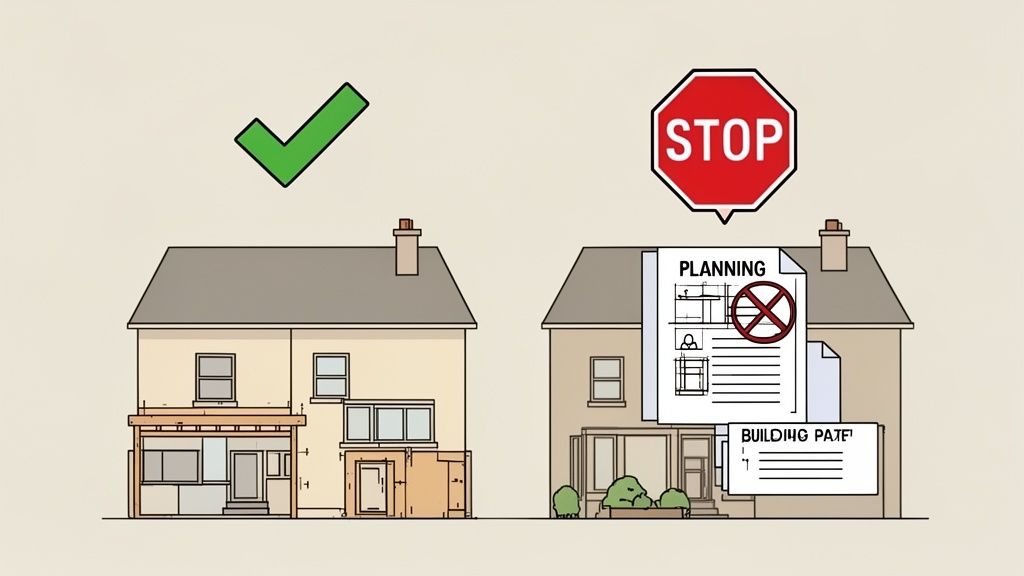
Imagine spending £2,000 on architect drawings for a new porch. Then you discover your project needs planning permission it will never get. This is the reality of an Article 4 Direction. It is a legal tool councils use to control development and protect an area's character.
This is not a total ban on building work. It just means you lose the automatic green light for certain home improvements. You must formally ask the council for permission before you start.
Why This Changes Your Project
The real difference is the level of scrutiny your plans will face. Without an Article 4, small projects that meet national rules can go ahead. With an Article 4 in place, your project is no longer judged against a simple checklist.
Instead, the council will assess it against detailed local planning policies. The process changes from a simple exercise to a subjective assessment. Planning officers have the final say on details like:
Materials: The type of brick, roof tile, or window frame you can use.
Design: The shape, size, and overall look of your extension.
Impact: How your project affects the look of the surrounding area.
This extra control can impact your project's timeline, budget, and chances of approval.
The Impact on Planning Approval Rates
Submitting a planning application in an Article 4 area is often more challenging. Across England, 86% of standard planning applications were granted. Properties under an Article 4 Direction face stricter judgement.
Data suggests homeowners in these areas can see approval rates drop significantly. You can explore research from Historic England for more details on planning statistics.
An Article 4 Direction does not stop you from improving your home. It just changes the rules. You must persuade the council to approve your project. You cannot rely on automatic rights.
This means preparing a formal application. This costs around £258 to submit in England. It involves an official decision period of at least eight weeks.
Understanding this from day one is the most important step you can take. It allows you to plan properly and budget for the application fee. You can design a project that has a realistic chance of getting the green light. This helps you avoid a stressful and expensive planning refusal.
Why Councils Use Article 4 Directions
Why would a local council take away your building rights? It is not about making life difficult for homeowners. An Article 4 Direction is a specific tool. Councils use it when standard planning rules are not enough to protect an area's unique character.
Permitted development rights apply across the country. They cannot account for the special architectural details of a particular street. An Article 4 gives the council a way to pause those automatic rights.
This allows them to look closely at proposals that could slowly erode what makes a neighbourhood special.
Protecting an Area's Unique Character
The most common reason for an Article 4 is to preserve the look and feel of a place. This is especially true in areas with a strong architectural identity.
Councils use these directions to control small changes. Over time, these changes would alter a street's appearance. These alterations could include:
Windows and Doors: Preventing modern uPVC windows from replacing original timber sash windows.
Roofing Materials: Ensuring new extensions use slate tiles that match the original roof.
Boundaries: Stopping homeowners from replacing traditional stone walls with modern timber fences.
Porches and Extensions: Controlling the design of new additions to ensure they suit the existing house.
The core idea is simple. One modern porch might not seem like a big issue. But twenty of them could destroy the historic harmony of a street. The Direction gives the council power to manage these cumulative changes.
For homeowners, understanding this motivation is critical. It tells you what planning officers will judge your application against. If your project respects the local character, your chances of approval are much higher. You can learn more about getting planning permission in conservation areas, where these rules are very common.
Managing Housing Stock and Use
Another major reason for an Article 4 Direction is to control the type of housing in an area. This is common in towns with large student populations or high demand for rentals.
Councils often use them to restrict the conversion of family homes into small Houses in Multiple Occupation or HMOs. Without a Direction, converting a house into an HMO for up to six people is often a permitted development right.
By introducing an Article 4, a council forces these conversions to go through a full planning application. This gives them control over the number of HMOs in a neighbourhood. They can refuse applications if they believe too many family homes are being lost.
This type of direction is a strategic tool for managing the local housing market, not just aesthetics. Understanding this helps you see the bigger picture behind what can feel like a personal restriction.
Common Home Projects Affected by Article 4
An Article 4 Direction is not a blanket ban. It targets specific projects you could otherwise do under permitted development. Understanding what is affected is key to avoiding wasted time and money.
These restrictions are not random. They are chosen by the council to address a specific local concern. This could be preserving historical details or managing the local housing mix. This means your neighbour one street over might build a porch without issue. Your identical plan could require a full planning application because of your postcode.
Let's look at some popular home renovation projects and how an Article 4 Direction can change the rules.
Single Storey Extensions
Normally, you can build a modest single storey rear extension under permitted development. It must meet certain size and height limits. An Article 4 Direction can remove this right completely.
This forces you to apply for planning permission. The council can then control details they would otherwise have no say in. They will check every aspect of your design, focusing on:
External Materials: You may be required to use specific bricks that perfectly match the existing house.
Roof Design: The pitch of the roof and the type of tiles used could be dictated to suit the main property.
Windows and Doors: Plans for modern bifold doors might be refused in favour of traditional French doors.
These requirements can add thousands of pounds to your build cost and months to your timeline.
Loft and Garage Conversions
Loft and garage conversions are a good way to add living space. Permitted development rights are often generous for these projects.
An Article 4 Direction can change that. It might remove your right to install dormer windows on the front of your property. It could also restrict the size of a dormer on the rear. The goal is to prevent changes that disrupt a uniform roofline. For garage conversions, a direction might require permission to assess the impact on local parking.
A common restriction prevents homeowners from replacing a garage door with a standard window and brickwork. The council might insist on a design that retains the look of a garage door. This can compromise how you use the internal space.
Replacing Windows and Doors
This is one of the most common restrictions, especially in conservation areas. You would normally be free to replace old windows with modern uPVC ones. An Article 4 Direction can remove this right.
This protects the authentic character of older properties. You will almost certainly need planning permission for new windows. Planners will insist on specific materials and styles, such as:
Timber Frames: You could be required to install historically accurate timber sash windows. These cost significantly more than uPVC.
Glazing Bars: You may have to replicate original patterns, like Georgian glazing bars. This adds complexity and cost.
Door Styles: A modern composite front door could be refused. Planners might demand a traditional timber door that matches the house.
Choosing the wrong windows could lead to an enforcement notice. This would force you to replace them at your own cost. That mistake could easily run to over £10,000.
Minor Alterations That Suddenly Need Permission
The smallest projects often catch homeowners out. An Article 4 can remove permitted development rights for a surprising number of minor jobs.
For example, you might suddenly need planning permission to:
Build a porch.
Paint the exterior of your house a different colour.
Install a satellite dish on the front of your property.
Put up a fence or wall in your front garden.
These seem trivial. But the council uses the Article 4 to control them. Collectively, they can have a huge impact on how a street looks. Understanding these specific restrictions before you start any work is the only way to avoid a potential planning breach.
How to Check if Your Property Has an Article 4 Direction
This is the most important check to make before you spend any money. Failing to spot an Article 4 Direction is a costly mistake. Finding out if you are affected is simple and free. You can get an answer in less than ten minutes.
Ignoring this step is a huge gamble. If you start a project assuming you have permitted development rights, you could face a council enforcement notice. This would legally require you to undo all the work at your own expense.
The Easiest Way to Check Your Council Website
Every local planning authority must make information about Article 4 Directions public. The fastest way to find it is on your local council’s website using their online maps.
These tools are often called interactive maps or policy maps. They show all planning constraints for properties in the area. This includes conservation areas, listed buildings, and Article 4 Directions.
To find the right page, follow these steps:
Go to your local council's website.
Look for the "Planning" section.
Search for terms like "planning map" or "policy map".
Once you find the map, you can search for your property by postcode or address. This will show you exactly which policies apply to your home.
What to Look For on a Planning Map
Council planning maps can look complicated. They contain many layers of information. They use colour coding and shaded areas to show various restrictions.
The map below shows a typical example from Bristol City Council.
The map will have a key or legend that explains what each colour means. You will need to find the layer for "Article 4 Direction". Then see if your property falls within one of the highlighted zones.
Do not just look at your property's outline. Check the entire surrounding area. An Article 4 Direction might cover a whole street or an entire town centre. Make sure you understand the boundary of the area.
If you find your property is inside a shaded area, some of your permitted development rights have been removed. The next step is to find the specific document for that Direction. This will detail exactly which types of work now require a full planning application.
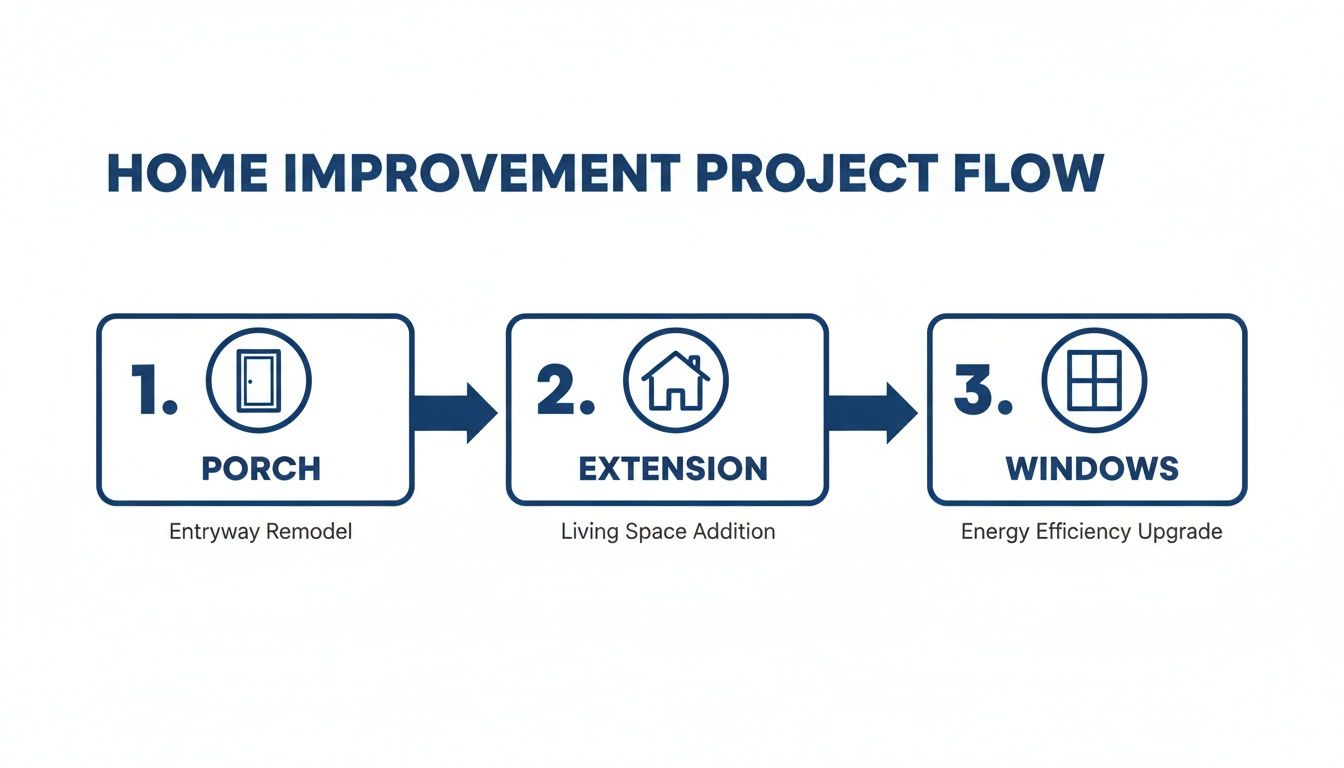
The flowchart below shows common project types that councils often seek to control. This illustrates that even small changes can be impacted. Checking the map is a crucial first step.
What If You Cannot Find the Information
Do not guess if you are struggling to find the information. The risk of getting it wrong is too high. Your next step should be to contact the council's planning department directly.
You can find their contact details on the planning section of the website. A quick phone call or email asking for confirmation is a normal request. They are there to provide this information.
Alternatively, you can use a planning permission checker to investigate the constraints on your property. This can help you understand the specific planning history and local policies that will affect your project before you commit to costs. Getting this clarity early is the smartest move you can make.
You're in an Article 4 Area. What Next?
Discovering your home is in an Article 4 area can be frustrating. It is easy to assume your project is impossible. That is rarely the reality. It just means the path forward has changed.
Do not panic. Your project is not over. You just need a different strategy.
Shift Your Mindset Immediately
First, you must abandon the idea of using permitted development rights. Those automatic approvals no longer apply to your project. Trying to find loopholes will only lead to a refusal.
From now on, your project depends on one thing: a full planning application. This is a formal, detailed proposal you submit to the council. It is a process of persuasion, not entitlement.
You are no longer telling the council what you are doing. You are asking for their permission. You must build a strong case for why they should grant it.
This shift is about more than just extra paperwork. It changes how you should approach your design, budget, and timeline.
Prepare for the Planning Application Process
Submitting a planning application follows a standard procedure. Knowing what to expect helps you plan properly.
Application Fee: You will need to budget for the submission fee. In England, the cost for a typical householder application is currently £258.
Decision Timeline: Councils have a target of 8 weeks to decide on minor applications. This can sometimes take longer if the case is complex.
Required Documents: You will need to provide detailed drawings, a site location plan, and a design and access statement.
This process is far more involved than simply notifying the council. You are building a formal case that will be judged against strict local policies. You can read about the next steps for getting planning permission and what the journey entails.
Focus on What the Council Cares About
Success in an Article 4 area comes from understanding why the direction was created. The council is trying to protect something specific, usually the architectural character of the area. Your application needs to show you respect their goals.
Focus on what they need to see. This means paying close attention to the details that matter most to planning officers.
Key areas for a successful application include:
Matching Materials: Your proposal should specify materials that suit the existing property. This might mean using reclaimed bricks or timber window frames.
Appropriate Design: The scale, shape, and style of your project must be sympathetic to the original building. A modern box on a Victorian terrace is a recipe for refusal.
Respecting the Street Scene: The council will consider how your project looks from the street. This is why front dormers, porches, and boundary walls are often restricted.
Your goal is to present a project that enhances the area, not one that detracts from it. If you can align your plans with the council’s conservation goals, you significantly increase your chances of approval. The process is more complicated, but it is entirely possible to get your project approved with the right approach.
The High Cost of Getting It Wrong
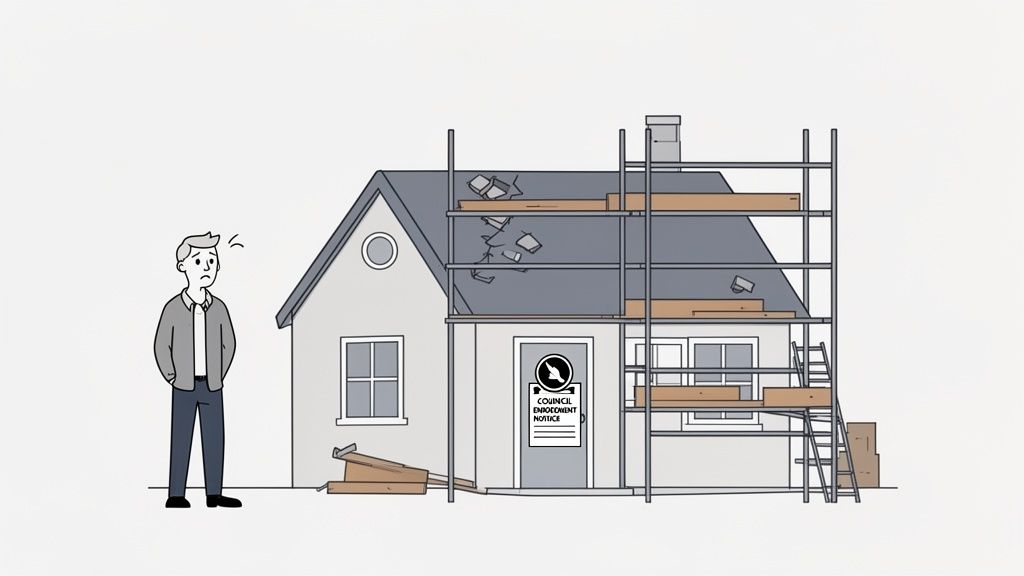
Ignoring an Article 4 Direction is one of the most expensive mistakes a homeowner can make. The consequences are not just a slap on the wrist. They include formal legal notices, huge financial losses, and problems when you try to sell your home.
This is about preventing a five figure disaster with a simple ten minute check before you start work. Pushing ahead with a project that breaches an Article 4 is a gamble where you could lose every penny invested.
The Council Enforcement Notice
If the council discovers unauthorised work, they can issue an enforcement notice. This is a serious legal document that obliges you to fix the problem.
This usually means one of two things. You will either be ordered to tear down the unauthorised structure or change it to an acceptable standard. You will be given a strict deadline to comply, typically between 28 and 90 days.
Crucially, you have to cover all the costs yourself.
A Real World Example of a Costly Mistake
Imagine spending £25,000 on a new loft conversion. You assumed it was permitted development. You missed an Article 4 Direction that restricted dormer windows.
A neighbour complains and a council officer visits. Soon an enforcement notice arrives. It demands you remove the entire dormer. You now face another bill of over £8,000 for scaffolding, demolition, and making the roof weathertight again.
You are now £33,000 out of pocket with nothing to show for it. This is the financial reality of getting it wrong. You pay for the work, then you pay again to tear it all down.
Ignoring an enforcement notice is a criminal offence. It can lead to prosecution and a potentially unlimited fine.
Selling Your Property Becomes a Nightmare
The problem will surface the moment you try to sell your house, even if you avoid an enforcement notice. Your buyer's solicitor will carry out searches. These will uncover the Article 4 Direction and the lack of planning permission.
This creates serious problems:
Mortgage Lenders: Most lenders will refuse to offer a mortgage on a property with unauthorised work. That can kill your sale.
Devaluation: Your property's value will be slashed to reflect the risk and cost the new owner will inherit.
Indemnity Insurance: An indemnity policy does not make the work legal. It only offers financial protection. Many buyers will not accept it as a solution.
The simplest way to avoid this is to check for an Article 4 Direction from day one. This small step protects you from a mistake that could cost you tens of thousands of pounds. It also protects the sale of your biggest asset.
Your Article 4 Questions Answered
It is natural to have questions when you first hear about an Article 4 Direction. The topic sounds complicated, but the core ideas are straightforward. Let’s tackle some of the most common queries.
Can I Appeal an Article 4 Direction?
The short answer is no. You cannot appeal the existence of the Direction itself. It is like a piece of local legislation that applies to a whole area, not just one property.
However, you absolutely can appeal if your specific planning application is refused. If you submit a proposal and the council turns it down, you can take that decision to the Planning Inspectorate. This is an independent body. They will review your case to see if the council made a fair decision.
Does an Article 4 Direction Expire?
No, they do not have a shelf life. Once a council puts an Article 4 in force, it is permanent. They would have to go through a specific legal process to withdraw it. This almost never happens.
It is safest to assume that any Direction affecting your property is there to stay. It is not something you can wait out.
How Is This Different from a Conservation Area?
It is easy to get these two mixed up. A Conservation Area status is a broad protection. It automatically removes some permitted development rights to preserve an area's special character.
An Article 4 Direction is an extra, more targeted layer of control. Councils often use it within Conservation Areas to remove even more specific rights. For example, in a Conservation Area, you might still be able to change your windows under permitted development. But if there is also an Article 4 targeting windows, you would need to submit a full planning application.
Think of it like this: a Conservation Area sets the basic rules. An Article 4 adds stricter, more detailed by-laws.
Is My Project Impossible if I Have an Article 4?
Not at all. This is the biggest misconception. An Article 4 Direction is not a ban on development. It is a change in the process.
It just means you cannot use the permitted development shortcut for whatever work it covers. Instead, you have to submit a full planning application. This gives the council control over your project's details. Your success depends on putting forward a well designed scheme. It must respect why the Article 4 was introduced in the first place, like using the right materials and maintaining the local character.
Planning rules are a minefield. Local variations make them even trickier. Before you spend thousands on architect fees, get a clear picture of what your council is likely to approve. A SurePlan Planning Confidence Report gives you evidence based insight into your project's chances. It highlights potential red flags like Article 4 Directions so you can move forward with certainty.