
Oct 29, 2025
Many homeowners want to add more space to their properties but worry about the cost and hassle of planning permission. The good news is that permitted development rights allow you to extend your home without formal planning approval in many cases. These rules have specific limits based on the type of extension you want to build.
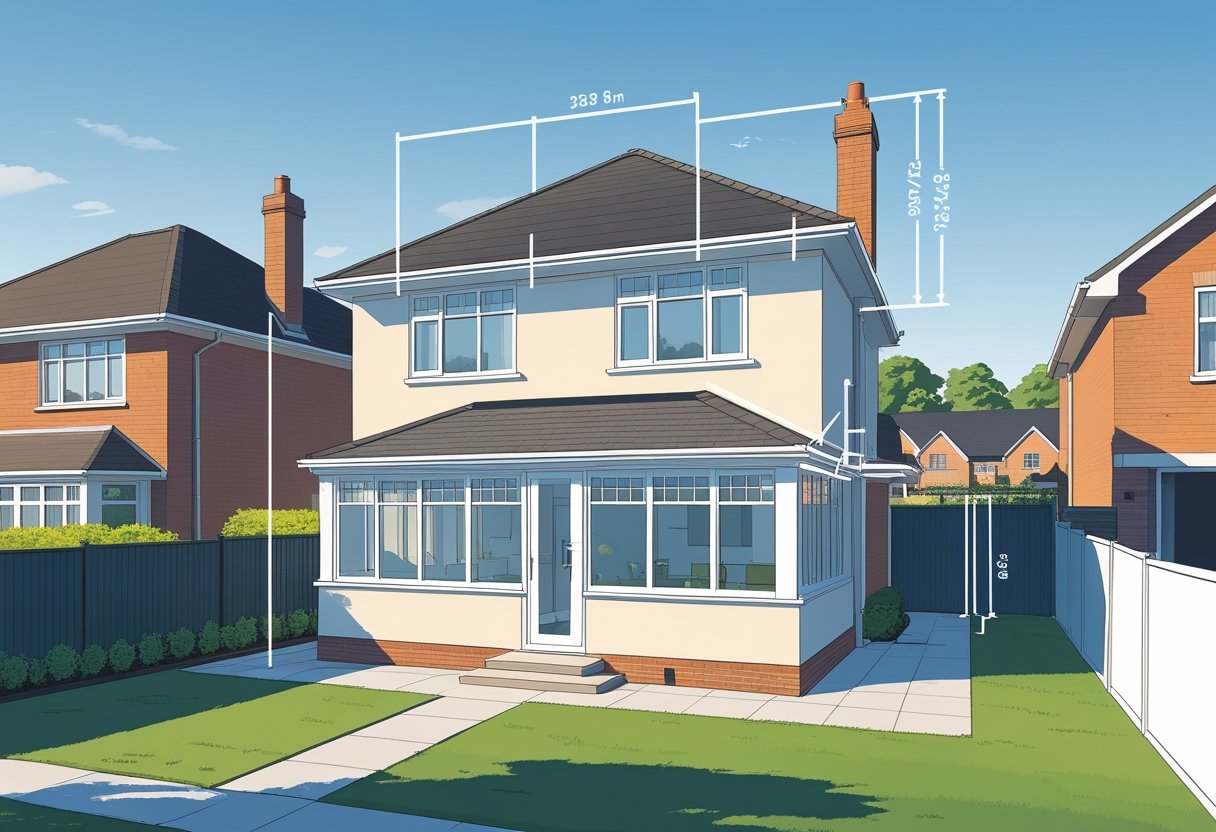
For single-storey rear extensions, you can extend up to 3 metres for attached houses (terraced or semi-detached) and up to 4 metres for detached houses without planning permission, whilst side extensions and wraparound projects have their own set of requirements around width, height and proximity to boundaries. The rules vary depending on whether your property sits on designated land, such as conservation areas or national parks, where stricter limits apply.
Understanding these limits helps you plan your extension properly from the start. This guide breaks down the exact measurements and conditions for rear, side and wraparound extensions so you know what you can build under permitted development rights. Our extension and outbuilding rules FAQs answer the size and boundary questions homeowners ask most.
Key Takeaways
Single-storey rear extensions can extend 3-4 metres, depending on your house type, without planning permission
Side and wraparound extensions must meet specific height and boundary restrictions to qualify as permitted development
Properties in conservation areas, national parks and listed buildings face additional restrictions that limit permitted development rights
Understanding Permitted Development Rights
Permitted development rights give you legal authority to make certain improvements to your home without submitting a full planning application. These rights operate under specific size limits and conditions that vary depending on your property type and location.
What Is Permitted Development?
Permitted development is a national grant of planning permission that allows you to carry out specific building works without needing approval from your local planning authority. These rights are set out in the Town and Country Planning (General Permitted Development) (England) Order 2015.
The regulations cover various types of home improvements. Extensions, loft conversions, porches, and outbuildings can all qualify as permitted development if they meet the specified criteria.
Class A deals with enlargements, improvements, and alterations to your house. This includes rear extensions, side extensions, and general alterations like new windows or doors. Class B covers roof alterations that enlarge the house, such as dormer windows. Class E addresses outbuildings and structures within your property boundary.
Your permitted development rights come with built-in limits. These include restrictions on height, depth, and the total area you can build on within your property boundary.
Permitted Development vs Planning Permission
Permitted development rights differ from planning permission in both process and scope. With permitted development, you avoid the formal planning application process entirely if your project meets all the specified conditions.
A full planning application requires detailed drawings, fees, and a waiting period of up to eight weeks. Your local planning authority reviews the proposal and considers factors like design, impact on neighbours, and local planning policies. Householder planning permission follows this same process for residential properties.
Permitted development works automatically under national rules. You simply need to check that your proposal complies with the size limits and conditions. Some larger rear extensions require prior approval, which is a lighter-touch process than full planning permission.
The key difference is certainty. Permitted development gives you clear parameters to work within. Planning permission involves discretion and potential refusal.
Which Properties Qualify for Permitted Development?
Not all properties can use permitted development rights. Your property must be a house, not a flat or maisonette. Buildings converted from commercial use under permitted development rights (Classes M, N, P, PA, and Q) also cannot use these rights for extensions.
Article 2(3) land removes or restricts permitted development rights. This includes:
National Parks
The Broads
Areas of Outstanding Natural Beauty
Conservation areas
World Heritage Sites
Listed buildings cannot use permitted development rights for any works that affect the building's character. Your local planning authority may have issued an Article 4 Direction that removes permitted development rights in specific areas. This often applies to conservation areas or estates with particular architectural character.
Check the Planning Portal or contact your local planning authority to confirm whether your property qualifies. Previous planning permissions may have removed your permitted development rights through planning conditions attached to the approval.
Single-Storey Rear Extension Limits
Under permitted development rights, you can extend your single-storey rear extension by three to eight metres, depending on your property type. The maximum height cannot exceed four metres, and your extension must comply with garden coverage and boundary distance rules.
Maximum Depth for Detached Houses
You can extend a detached house up to four metres beyond the rear wall without needing prior approval. If you want to extend between four and eight metres, you need to apply for prior approval from your local planning authority.
The eight-metre limit represents the maximum depth allowed under permitted development rights. Your neighbours have the right to comment during the prior approval process if your extension falls between four and eight metres.
The measurement starts from the rear wall of the original house, not from any existing extensions. You need to count all extensions built after 1948 or the original construction date.
Depth Limits for Semi-Detached and Terraced Houses
Semi-detached and terraced houses have a three-metre limit without prior approval. You can extend up to six metres with prior approval from your local planning authority.
The reduced limits for attached properties reflect the potential impact on neighbouring homes. Your extension cannot extend beyond the rear wall of the original house by more than six metres total.
Prior approval allows your neighbours to raise concerns about the size and impact of your extension. The local planning authority will assess whether the extension affects the reasonable enjoyment of neighbouring properties.
Height and Eaves Restrictions
Your single-storey rear extension cannot exceed four metres in maximum height. The eaves height must not exceed three metres if the extension sits within two metres of a boundary.
These height limits prevent overshadowing and protect your neighbours' privacy and light. The four-metre maximum applies to the highest point of your extension roof.
Key height requirements:
Maximum overall height: 4 metres
Eaves height near boundaries (within 2 metres): 3 metres maximum
Cannot be higher than the existing roof of your home
The 50% Garden Coverage Rule
You can only cover half of the land around your original house with extensions and outbuildings. This 50% garden coverage rule applies to the total area, including all previous extensions.
The calculation uses the area of land around the original house as it was first built or as it stood in 1948. You must include conservatories, garages, sheds, and any other structures when calculating coverage.
Exceeding the 50% limit means you need full planning permission. This rule protects garden space and prevents overdevelopment of residential properties.
Side Extension Requirements and Restrictions
Side extensions follow stricter rules than rear extensions because they affect street scenes and neighbour privacy. The width you can build and the proximity to boundaries determine whether you need planning permission.
Width and Height Limits
A side extension can only extend within the boundary of your property and must not increase the width of the original house by more than half of its original width. The maximum height at the eaves cannot exceed the height of the existing house's eaves.
For single-storey side extensions, the maximum height is 4 metres. Two-storey side extensions face more restrictions and often require planning permission, particularly for semi-detached and terraced houses.
The extension must not exceed the height of the highest part of the existing roof. If your side extension includes a raised platform over 0.3 metres high, it cannot be within 2 metres of any boundary.
Boundary and Highway Considerations
Your side extension cannot extend beyond the front wall of the original house if it faces a highway. This rule prevents extensions from encroaching on street views and maintains the building line.
Single-storey extensions must be set back at least 2 metres from any boundary if they exceed 2.5 metres in height. No part of the extension can project forward of the principal elevation that fronts the highway.
Materials used should be similar in appearance to the existing house. The extension must not cover more than 50% of the total area of land around the original house.
Side Return Extension Rules
A side return extension fills the narrow gap between your house and the side boundary. These extensions typically fall under rear extension rules rather than side extension rules because they extend to the rear of the property.
You can extend 3 metres for terraced or semi-detached houses and 4 metres for detached houses under permitted development. The extension must be single storey with a maximum height of 4 metres and eaves height no higher than 3 metres.
Side return extensions work well for terraced houses with narrow side passages. They create additional ground floor space without requiring planning permission if they meet rear extension criteria and don't extend beyond the building line at the front.
Wraparound Extensions: What Is Allowed?
Wraparound extensions combine side and rear extensions into an L-shaped addition to your property. Most wraparound projects require planning permission because they exceed standard permitted development limits when considered as a single structure.
Permitted Development for Wraparound Extensions
You cannot typically build a wraparound extension under permitted development rights. The main issue is that planning regulations assess the side and rear components separately, and the corner section where they meet doesn't share a wall with your original house.
Each part of your wraparound must meet individual size restrictions. The rear portion cannot extend more than 3 metres for terraced or semi-detached homes, or 4 metres for detached properties. The side extension must not exceed half your original garden space.
Key restrictions include:
Maximum height of 4 metres
Side extension width limitations
The combined footprint often exceeds 50% of garden space
The corner junction creates a detached structure, technically
Recent 2024/25 rule changes may allow some single-storey wraparound extensions if each component meets separate permitted development criteria. However, this remains subject to strict interpretation by your local planning authority.
Planning Permission for Wraparounds
You will almost certainly need full planning permission for wraparound house extensions. The size and scope of these projects mean they don't fit within standard permitted development allowances.
Your local council will review your application based on several factors. They'll consider the extension's impact on neighbouring properties, overall design quality, and whether it fits the character of your area.
The planning process requires:
Detailed architectural drawings
Site plans showing the extension layout
Elevation drawings from all angles
Materials specifications
Working with an architect or architectural designer helps navigate the planning process. They can identify potential issues early and create drawings that meet council requirements. Success rates for wraparound planning applications are generally high, particularly for side return projects in urban areas.
Extending Under the Larger Home Extension Scheme
The Larger Home Extension Scheme allows you to build bigger single-storey rear extensions than standard permitted development rights permit, but you must go through prior approval and notify your neighbours first. Under this scheme, detached houses can extend up to 8 metres from the rear wall, whilst other house types can extend up to 6 metres.
Prior Approval and Neighbour Consultation
You need to submit a prior approval application to your local planning authority before starting work under the Larger Home Extension Scheme. This application is different from full planning permission but still requires formal approval.
The prior approval process focuses on whether your extension would harm your neighbours' enjoyment of their homes. Your local planning authority will assess factors like loss of light, overlooking, and overbearing impact. The application costs less than full planning permission and typically takes less time to process.
You must notify all adjoining neighbours about your plans as part of the prior approval application. Your neighbours have 21 days to respond with any concerns or objections.
Larger Extension Limits for Detached and Non-Detached Houses
Detached houses can extend up to 8 metres beyond the rear wall of the original house under the Larger Home Extension Scheme. Semi-detached, terraced, and other non-detached houses are limited to 6 metres beyond the rear wall.
These extensions must be single-storey only and cannot exceed 4 metres in height. The standard permitted development rules still apply to other aspects of your extension, including that only half your land can be covered by extensions and outbuildings combined.
You can only use this scheme if your house is not in a conservation area or other protected designation. Flats and maisonettes cannot use the Larger Home Extension Scheme at all.
Neighbour Consultation Scheme Process
Your local planning authority will write to your adjoining neighbours once they receive your prior approval application. Neighbours can object within 21 days by sending their concerns directly to the planning authority.
If no neighbours object, or if objections are withdrawn, your prior approval will be granted automatically. If any neighbour objects and maintains their objection, the planning authority must assess whether the impact on your neighbours' amenity is acceptable.
The authority has 42 days from receiving your application to make a decision (or longer if they request more information). If they do not decide within this time frame, your prior approval is automatically granted.
Two-Storey Extensions and Height Restrictions
Two-storey extensions can extend up to 3 metres beyond your home's rear wall and must stay at least 7 metres from the boundary opposite your rear wall. Your extension cannot be taller than your existing house, and the eaves height is limited to 3 metres when within 2 metres of any boundary.
Limits for Double-Storey Rear Extensions
Your two-storey rear extension can project a maximum of 3 metres beyond the rear-most wall of your original house under permitted development. The extension must remain at least 7 metres away from the boundary line opposite your rear wall.
These measurements are taken from specific points on your property. The 3-metre depth is measured from your house's original rear wall, not from any existing single-storey extensions. The 7-metre boundary distance is calculated from the opposite boundary line to ensure adequate space between properties.
If you want to extend further than 3 metres or build closer than 7 metres to the boundary, you'll need to submit a full planning application to your local authority. These restrictions ensure your extension doesn't overwhelm neighbouring properties or your garden space.
Height, Roof Pitch, and Eaves Placement
Your double-storey extension cannot exceed the height of your existing house at either the eaves or ridge. If your extension sits within 2 metres of any boundary, the maximum eaves height drops to 3 metres regardless of your house's overall height.
The roof pitch of your extension should match your existing house as closely as possible when it rises above one storey. This requirement helps maintain visual consistency with your home's architecture.
Any extension taller than 4 metres requires full planning permission. You cannot build higher than your house's existing maximum height, even if you stay under 4 metres. Your local planning authority measures these heights from ground level to the highest point of your roof.
Boundary and Privacy Requirements
Upper floor windows need special consideration under permitted development rules. Windows in side-facing walls or roof slopes must have obscure glazing and non-opening sections if the opening parts sit less than 1.7 metres above the floor level.
Windows with opening elements positioned 1.7 metres or higher from the floor don't require obscure glazing. This height restriction protects your neighbours' privacy whilst allowing natural light into your extension.
You cannot include balconies or verandas under permitted development rights. These features require planning permission because they create direct views into neighbouring gardens. If you're extending a terraced or semi-detached property, you'll also need to serve party wall notices on affected neighbours before starting construction work.
Restrictions on Designated Land and Protected Properties
If your property sits within designated land like a conservation area or national park, your permitted development rights become more limited. Article 4 directions and listed building status can remove these rights entirely, requiring full planning permission for work that would normally be allowed.
Conservation Areas, AONB, and National Parks
Conservation areas protect neighbourhoods with special architectural or historic character. In these zones, you lose certain permitted development rights automatically.
Side extensions always require planning permission in conservation areas, regardless of size. You cannot add cladding to the exterior of your home without approval. Any alteration to the roof, including dormer windows, needs planning permission if it faces a highway.
Areas of Outstanding Natural Beauty (AONB) and national parks have similar restrictions. These designations, often called Article 2(3) land, limit what you can build without permission.
You can typically still build single-storey rear extensions up to 3 metres (terraced or semi-detached) or 4 metres (detached) in these areas. Two-storey rear extensions usually need full planning permission.
Article 4 Directions and Listed Buildings
Article 4 directions remove specific permitted development rights in certain locations. Your local council creates these to protect areas from unsuitable changes.
These directions vary by location. Some remove rights for all extensions, whilst others only restrict certain types of work like loft conversions or window replacements.
Listed buildings require listed building consent for any work that affects their character, both inside and outside. This applies alongside planning permission requirements.
You need consent even for minor changes like replacing windows or adding internal partition walls. The listing protects the building's historic interest, not just its appearance.
When Full Planning Permission Is Required
Full planning permission becomes necessary when your project exceeds permitted development limits or your rights have been removed.
You must submit a formal application to your local planning authority. This process takes at least eight weeks and costs between £206 and £462 depending on the work.
Planning permission is required for:
Any extension in a conservation area that projects beyond the rear wall and faces a highway
Side extensions in conservation areas, AONB, or national parks
Extensions that exceed height, depth, or coverage limits
Any work on a listed building affecting its character
Projects where article 4 directions have removed your rights
Check with your local planning authority before starting work. They can confirm whether your property has article 4 directions or other restrictions in place.
Additional Requirements for Permitted Extensions
Beyond size limits, permitted development comes with specific requirements about materials, positioning and other works. You'll also need to understand how a lawful development certificate can protect your rights.
Matching Materials and External Appearance
Your extension must use materials that match the existing house in appearance. This means the external walls, roof tiles and windows should look similar to what's already there.
You cannot add features that significantly change the house's appearance under permitted development. Balconies, verandas and raised platforms higher than 0.3 metres are not allowed.
Restrictions on cladding and additions:
No cladding materials on principal or side elevations for properties in Article 2(3) land
Side extensions cannot include dormer windows
Chimneys, flues and soil pipes fall under separate permitted development rules
The colours and textures should blend with your property. If your house has red brick walls, you'll need to use similar red brick rather than completely different materials.
Position Relative to Principal Elevation
No part of your extension can extend forward of the principal elevation. This is typically the front of your house that faces the main road or sets your postcode.
The same rule applies to side elevations that face a highway. Any extension that projects forward of these elevations requires planning permission.
For corner plots, you'll need to identify which elevation counts as the principal one. This is usually the elevation with the main entrance and key architectural features like bay windows or a porch.
Highway-facing restrictions:
Extensions must stay behind the principal elevation line
Side elevations facing roads have the same restrictions
Only one principal elevation exists per property
Other Works: Porches, Outbuildings & Basements
Porches have separate permitted development rights. You can build a porch up to 3 square metres in floor area and 3 metres in height, provided it's at least 2 metres from any boundary with a highway.
Outbuildings like sheds, garages and garden rooms count towards the 50% curtilage rule. All buildings on your property (except the original house) cannot cover more than half of the total garden area.
Basements and underground extensions have their own complex rules. Building regulations apply to all these works, even when planning permission isn't needed.
Key points for other structures:
Outbuildings cannot be used as separate living accommodation
Swimming pools and tanks are considered buildings
Hard surfaces and driveways have drainage requirements
Certificate of Lawful Development
A certificate of lawful development (also called a lawful development certificate) provides legal confirmation that your work doesn't need planning permission. You apply to your local planning authority before starting work.
This certificate protects you if the council later questions whether your extension was lawful. It costs less than planning permission and typically gets decided within 8 weeks.
You'll need to submit detailed drawings and measurements. The council will assess whether your plans meet all permitted development rules and conditions.
Getting this certificate isn't mandatory, but it's recommended for larger projects or if you're unsure about the rules. It also helps when selling your property, as buyers and solicitors can see the work was legally approved.
Benefits of obtaining a certificate:
Legal proof your extension is permitted development
Protection against future enforcement action
Easier property sales with clear documentation
Peace of mind before spending money on building work
Frequently Asked Questions
Understanding the specific rules for different types of extensions helps you plan your project properly. The regulations vary based on your property type, extension dimensions, and location.
What are the maximum dimensions for a single-storey rear extension without requiring planning permission?
You can extend up to 3 metres for a terraced or semi-detached house. Detached houses have a larger allowance of 4 metres. These measurements apply to the distance the extension projects from the original rear wall of your house.
The extension must not exceed 4 metres in height. If your extension has a pitched roof within 2 metres of a boundary, the maximum height drops to 3 metres. The eaves cannot be higher than those on your existing house.
Ground coverage matters too. The total area covered by buildings, excluding the original house, cannot exceed 50% of your curtilage. This includes any existing outbuildings or previous extensions.
Can I build a side extension on my property without planning consent, and if so, what are the limitations?
Side extensions are allowed under permitted development rights with specific restrictions. The extension must not exceed 4 metres in height. It cannot be more than half the width of the original house.
You need to build your side extension at least 7 metres from the boundary opposite the extension. Single-storey side extensions must not extend beyond the front wall of your house. The materials should match or complement your existing property.
Terraced houses face additional restrictions. You cannot extend beyond the building line of your terrace on the side that faces a highway.
Is there a specific height restriction for a rear extension under permitted development rights?
Your rear extension cannot be higher than the highest part of your existing roof. This rule applies to all types of rear extensions, whether single or two-storey.
The eaves of your extension must not exceed the height of your existing eaves. If you have a flat roof, the maximum height is 4 metres for single-storey extensions. Different limits apply if your extension sits within 2 metres of a boundary.
Ground level matters for these measurements. Height is measured from the surface of the ground immediately adjacent to your building, not from any added surfaces like decking.
How does the requirement for planning permission change for a two-storey extension compared to a single-storey one?
Two-storey extensions face stricter limits than single-storey ones. They must not extend beyond the rear wall by more than 3 metres. This applies to all house types, unlike single-storey extensions which differ for detached properties.
The total width of a two-storey rear extension cannot exceed half the width of the original house. No part of the extension can be within 7 metres of the rear boundary. These restrictions help protect your neighbours' amenity and light.
Side extensions for two-storey additions require planning permission in most cases. The permitted development rights are much more limited for multi-storey side extensions.
What factors determine whether a wraparound extension requires planning permission?
Wraparound extensions combine side and rear extensions into one project. Each part must meet the permitted development rules for its specific type. The rear portion follows rear extension limits whilst the side portion follows side extension rules.
The 50% curtilage rule becomes crucial for wraparound designs. You need to calculate the total ground coverage of all buildings except the original house. Your wraparound extension plus any outbuildings cannot exceed this threshold.
Height restrictions apply to both sections independently. The rear part cannot exceed 4 metres for single storey, and the side part cannot exceed 4 metres overall. Materials must match or complement your existing property.
Are there any differences in planning permission requirements for extending a terraced, semi-detached, or detached home?
Detached houses enjoy the most generous permitted development rights. You can extend 4 metres to the rear for single-storey extensions. Terraced and semi-detached houses are limited to 3 metres.
Terraced houses face additional restrictions on side extensions. You cannot extend beyond the building line on any side that faces a highway. This prevents extensions from protruding beyond neighbouring properties in the terrace.
All property types must follow the same rules for two-storey extensions. The 3-metre rear projection limit applies regardless of whether your house is detached, semi-detached, or terraced. The 50% curtilage rule also applies to all property types equally.